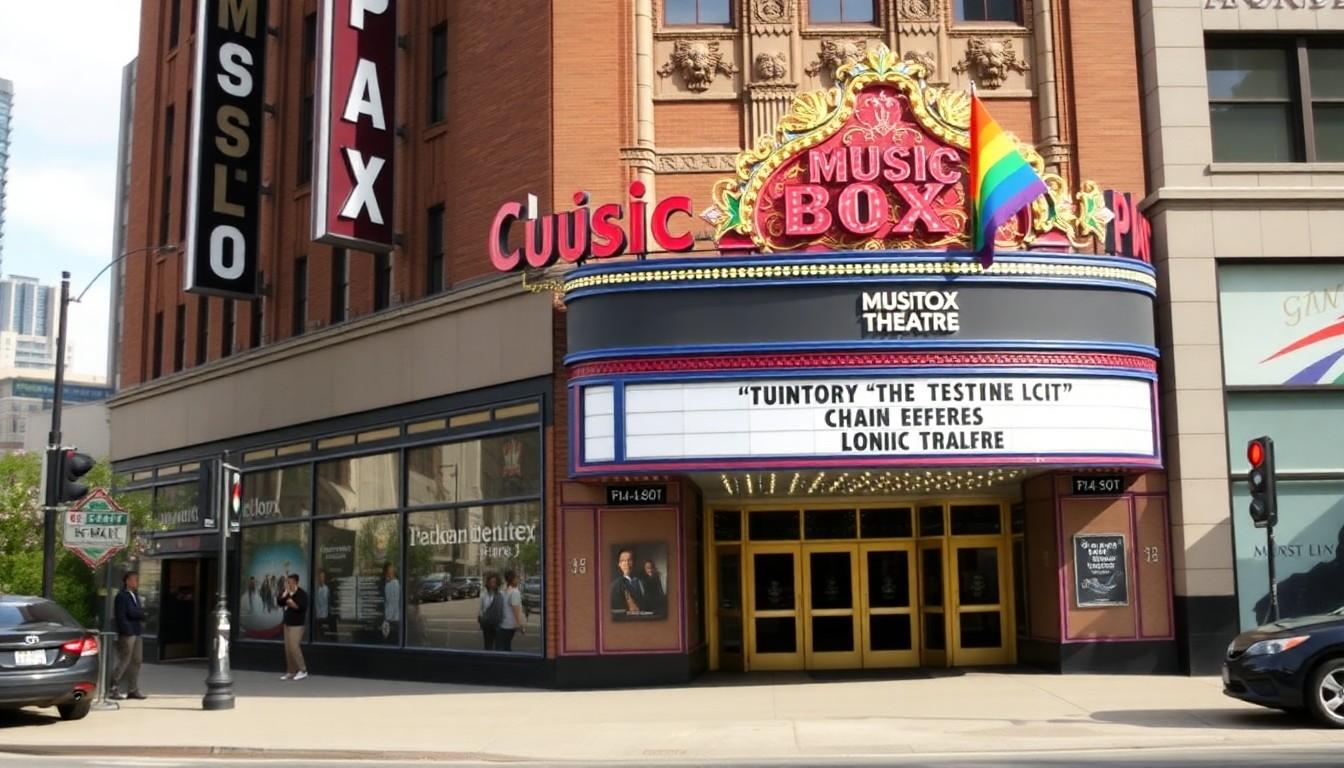
Film fans are heading to Chicago’s Reeling LGBTQ+ International Film Festival for 11 days of bold queer storytelling, major premieres and emerging voices. Running from 17 to 27 September, the 44th edition brings Oscar buzz, documentaries, dark comedies and intimate dramas to venues across the city.
Essential Takeaways
- Big opening night: La Bola Negra arrives ahead of its wider cinema release, with Cannes recognition and Netflix backing.
- A city-wide event: Screenings take place at the Music Box Theatre, Landmark Century Centre Cinema and Chicago Filmmakers.
- Something for every mood: The programme spans historical documentaries, horror-tinged drama, romance and sharp comedy.
- A festival with staying power: Reeling has been a fixture in Chicago’s LGBTQ+ cultural calendar for more than four decades.
- Book early for popular titles: High-profile premieres and special events are likely to attract the keenest audiences.
Reeling opens with a major cinematic statement
The strongest signal from this year’s Reeling line-up is its opening film. La Bola Negra, an ambitious Spanish-language drama inspired by an unfinished fragment by Federico García Lorca, launches the festival at the Music Box Theatre on 17 September.
The film won its director award at Cannes before Netflix acquired it, giving the festival a rare early showing of a title already attracting awards attention. It’s an encouraging moment for queer film festivals, which have often had to fight for access to the most prestigious releases.
According to the Chicago Sun-Times, the film’s festival appearance reflects a growing willingness to treat LGBTQ+ cinema as culturally significant rather than narrowly targeted. That distinction matters. A film can centre queer lives and still be sweeping, expensive-looking and built for a broad audience.
Three timelines, one story about cultural erasure
Set across 1932, 1937 and 2017, La Bola Negra connects private desire with Spain’s political history. One strand follows a queer man denied entry to an elite club, while another centres on two soldiers from opposing sides of the Spanish Civil War who fall in love.
The contemporary story follows a gay playwright who receives a mysterious inheritance linked to Lorca’s fragment. Together, the timelines explore what happens when authoritarian politics suppress artists, relationships and entire cultural memories.
That historical thread gives the film extra weight at Reeling. The programme isn’t simply offering romance or representation, although both are present. It’s also asking audiences to consider which stories survive, which disappear and who gets to decide.
What else should be on your Reeling 2026 list?
For something raw and character-led, Test follows an amateur bodybuilder in rural Ohio who hopes to turn professional and becomes entangled with his coach and manager. Its personal origins, with writer and star Brock Yurich drawing on the bodybuilding world, give the film a grounded feel.
Caity takes a stranger, more playful route. Set around a haunted-house farm, the feature follows a teenager who takes on adult responsibilities while developing feelings for one of the seasonal workers. The combination of family tension, rural oddness and behind-the-scenes Halloween spectacle sounds like a particularly tasty festival discovery.
Meanwhile, Loves Company brings Rachel Dratch into a darkly comic thriller about a fading television star and an obsessive admirer. If you like your cinema funny but slightly uncomfortable, this queer spin on Misery could be one to watch.
The documentaries add historical depth
Reeling’s non-fiction selections widen the conversation beyond new fiction. A Free Man examines the life and work of Spanish writer Agustín Gómez Arcos, a queer artist who left Franco-era Spain and later became an acclaimed French author.
The documentary sits neatly beside La Bola Negra, reinforcing the festival’s interest in the artistic damage caused by repression. It’s a reminder that censorship doesn’t only silence individual voices. It can scatter creative communities and leave later generations piecing together what was lost.
There’s also Mineshaft: The Cruising Murders, which revisits the controversy surrounding William Friedkin’s 1980 film Cruising. The documentary explores the protests that challenged its portrayal of gay life while also considering the film’s value as a record of New York’s leather scene before the AIDS crisis transformed it. That tension makes it more than a simple behind-the-scenes account.
How to plan your festival visit
Most screenings are scheduled at Landmark Century Centre Cinema in Lakeview, with additional events at the Music Box Theatre and Chicago Filmmakers in Edgewater. The spread makes Reeling feel like a proper city festival rather than a single-venue programme, but it does mean checking locations carefully before setting off.
Start with the films that have the strongest appeal for you, then build around them. A major premiere might be the obvious choice, but smaller features and documentaries are often where festivals reveal their personality. Leave enough time between venues, too. Chicago traffic has a habit of turning a leisurely plan into an unexpected short film.
Listings and ticket information are available through Reeling’s official website, with event details also published by Choose Chicago and local LGBTQ+ organisations. For newcomers, the best approach is simple: pick one buzzy title, one unfamiliar film and one documentary. That way, your festival experience has both a headline and a surprise.
Reeling remains a lively reminder that queer cinema can be intimate, historical, funny, frightening and spectacular, often within the same programme.
Source Reference Map
Story idea inspired by: [1]
Sources by paragraph:
- Paragraph 1: [2], [6]
- Paragraph 2: [3], [4]
- Paragraph 3: [6], [7]
- Paragraph 4: [2], [5]
- Paragraph 5: [3], [4]
- Paragraph 6: [2], [6]
- Paragraph 7: [3], [5]
- Paragraph 8: [4], [6]
- Paragraph 9: [2], [7]
- Paragraph 10: [3], [6]
- Paragraph 11: [4], [5]
- Paragraph 12: [2], [6]
- Paragraph 13: [5], [7]
- Paragraph 14: [2], [4]
- Paragraph 15: [6], [7]