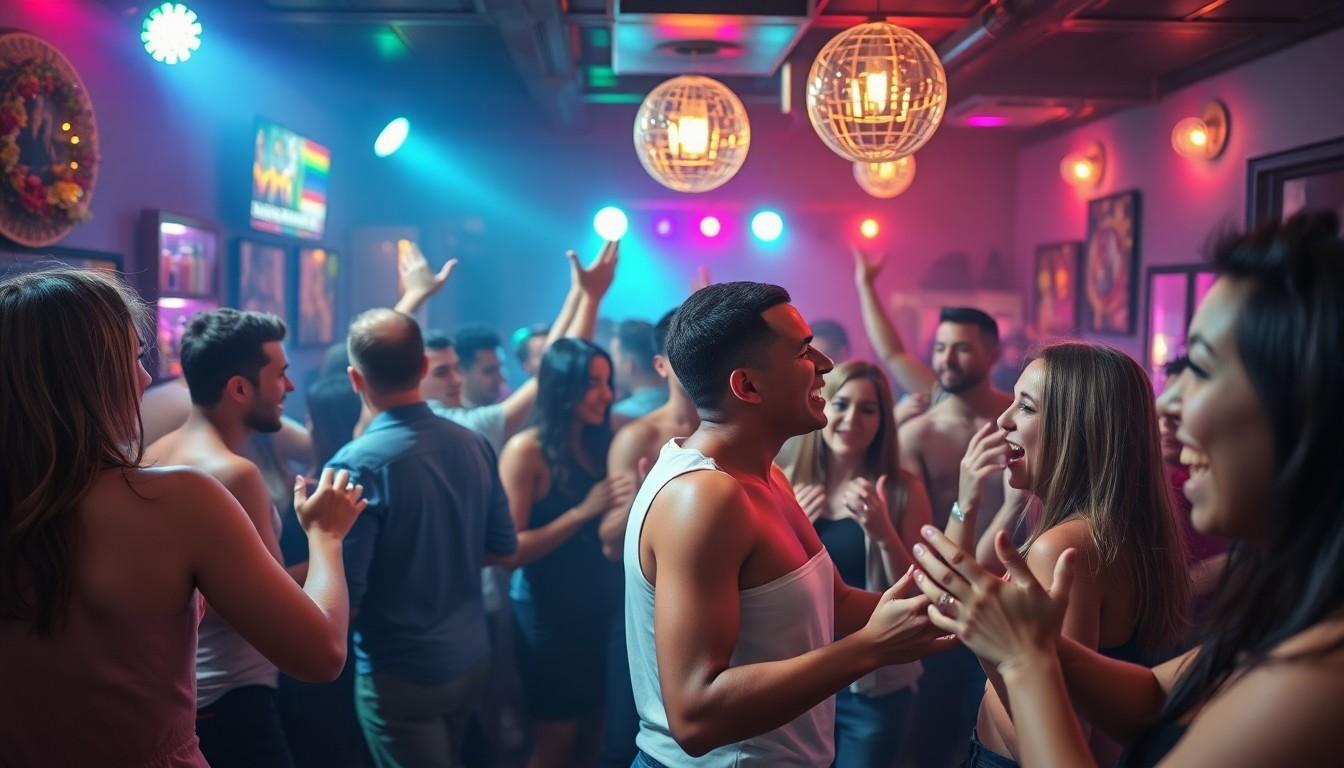
Dancers are turning social media and queer nightlife into welcoming spaces for movement, self-expression and connection. With National Dance Day spotlighting dance’s benefits, LGBTQ+ dancers are showing that you don't need professional training, perfect rhythm or a packed club to join in.
Essential Takeaways
- Start simply: A few easy steps can get you moving without overthinking it.
- Follow the room: Watching another dancer briefly can help you find the beat.
- Try different styles: Waacking, disco and country line dancing offer plenty of personality.
- Keep it welcoming: Respect personal space, ask before touching and read the room.
- Take care of yourself: Hydration and regular breaks matter, especially on a busy dance floor.
The easiest way to start dancing is simply to start
The first hurdle is often psychological, not physical. Standing at the edge of a dance floor while everyone else appears effortlessly brilliant can feel intimidating, but the room is rarely judging as closely as you imagine. Put on a favourite song, loosen your shoulders and let one small movement lead to another.
National Dance Day promotes dance as an accessible activity for people of all ages and abilities, with an emphasis on its physical, emotional and social benefits. That broad message matters in queer spaces, where dancing can be more than exercise. It can be a cheerful, visible way to feel at home. According to National Dance Day, the celebration is designed to make dance part of everyday life. [2]
A useful beginner's trick is to copy the energy rather than the exact choreography. Watch someone nearby for a few seconds, borrow the rhythm and then make it your own. Your feet don't need a legal defence strategy before they take the floor.
Why queer dance spaces feel so expressive
Dance has long offered LGBTQ+ communities a way to communicate identity, confidence and joy without needing a speech. The LGBT Cultural Heritage project highlights dance as part of queer cultural life, from social gatherings to performance traditions. That history helps explain why a club, ballroom or community event can feel so emotionally charged. [5]
There isn't one correct queer dance style, either. Waacking brings sharp arm movements and dramatic musicality, while disco invites a looser, more buoyant groove. Dance Spree describes waacking as a style rooted in expressive performance, making it a natural choice for anyone who enjoys big gestures and even bigger attitude. [3]
That variety is part of the appeal. One person might arrive for the music, another for the flirting and someone else simply wants to dance with friends. All three reasons are perfectly valid.
From waacking to line dancing, there’s room for every rhythm
Social dancing doesn't have to mean staying in one spot beneath flashing lights. Queer-friendly dance communities span club styles, partner dancing, disco, ballroom and country line dancing. The International Association of Gay Square Dance Clubs documents how LGBTQ+ square dancing developed into an organised social tradition, creating community alongside the steps. [4]
For beginners, structured styles can actually be less stressful than free-form dancing. A repeated sequence gives your brain something to hold on to, while classes offer a friendly route into meeting people. If you miss a step, keep moving and rejoin when the pattern comes around again. Most dancers have been there, and the music is usually far too loud for anyone to notice.
Social dance groups also tend to reward enthusiasm over technical perfection. Dance Magazine's coverage of queer-friendly social dancers points to the importance of inclusive communities where people can learn, experiment and enjoy movement without feeling scrutinised. [6]
How to feel more comfortable on a busy dance floor
Choose a position that suits your confidence. The centre offers energy and space to move, while the edge lets you observe before joining in. Wear something you can move in, keep your belongings secure and leave enough room for the people around you.
A little etiquette makes a big difference. Gay Hangouts advises nightlife visitors to respect boundaries, avoid unwanted contact and pay attention to consent and personal space. In practice, that means no grabbing, no persistent advances and no treating another dancer's body as part of the entertainment. [7]
If someone looks uncomfortable, give them room. If you want to dance with a particular person, a smile or simple question is usually better than guessing. The best dance floor is one where people can be playful without feeling trapped.
Social media is turning dance inspiration into a daily habit
Short dance videos have made inspiration wonderfully easy to find. A quick scroll can introduce you to new music, unusual footwork and performers who dance professionally, casually or somewhere in between. That low-pressure access can help people practise at home before they venture out.
The online world also shows how broad queer dance culture really is. Instead of presenting one polished ideal, social feeds can include bold performers, relaxed social dancers and people learning in public. Dance Magazine's discussion of queer-friendly social dancing reflects that wider push towards spaces where participation matters more than flawless execution. [6]
Still, videos are best treated as invitations rather than instructions. Borrow a move, change the tempo and make it yours. Whether you're dancing in a kitchen, at a community class or under a glittering club light, the point is to feel more alive when the song ends.
Dance doesn't need to be perfect to be memorable. Find your rhythm, respect the room and enjoy the moment.
Source Reference Map
Story idea inspired by: [1]
Sources by paragraph: