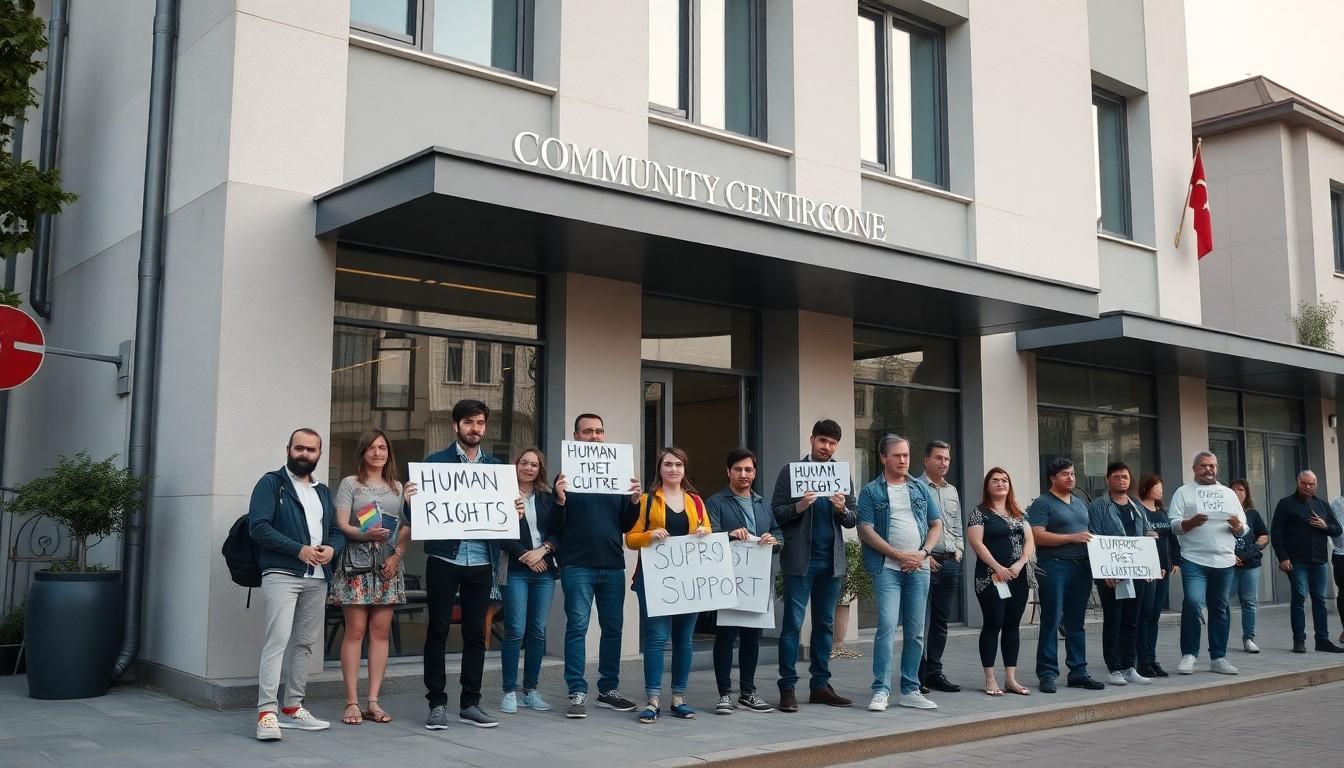
Turkey’s latest police raids on LGBT+ venues and activists have triggered renewed concern in Brussels, after at least 60 people were reportedly detained. The operation, framed by Ankara as a defence of traditional family values, has reignited questions about human rights, press freedom and Turkey’s long-stalled relationship with the European Union.
Essential Takeaways
- At least 60 people detained: Police reportedly targeted LGBT+ venues, activists’ homes and bathhouses.
- EU raises alarm: European officials said discrimination conflicts with the bloc’s fundamental values.
- Online accounts blocked: More than 10 Turkish LGBT+ organisations reportedly lost access to accounts on X.
- Rights groups under pressure: Activists, businesses and journalists have increasingly faced official scrutiny.
- Same-sex relationships remain legal: But hostility, discrimination and public pressure are widespread.
Raids turn family values into a political flashpoint
The operation reached far beyond a single venue. Turkish police reportedly entered gay bars, activists’ homes and men’s bathhouses, detaining dozens of people in a sweep authorities linked to the protection of children and the family. According to Agence Europe, the arrests formed part of a wider escalation against LGBT+ people and organisations.
The human impact is difficult to miss. At least one journalist was reportedly detained, while LGBT+ groups saw social-media accounts blocked following requests from Turkish authorities. For people already navigating a hostile public climate, the message is stark: private spaces, public advocacy and online organising can all attract official attention.
Brussels says Turkey is crossing a familiar line
The European Commission expressed concern over the arrests and legal proceedings involving activists, organisations and businesses. Its position is straightforward: as an EU candidate country, Turkey is expected to protect the rights and dignity of everyone, regardless of sexual orientation or gender identity.
That criticism has been echoed by European lawmakers and civil-society groups, although some observers have described the EU response as cautious. EUobserver noted that Brussels' reaction risked appearing restrained in the face of a sustained campaign, an awkward contrast with the bloc's repeated emphasis on democratic standards.
Ankara presents the crackdown as child protection
Turkey's government has framed the action in moral and social terms, with Justice Minister Akın Gürlek instructing prosecutors across the country to pursue obscenity and material officials believe could harm children. Authorities also described LGBT+ groups as threats to family life and social order.
That language matters because it shifts the debate away from individual rights and towards national identity. It also reflects a broader political pattern in which LGBT+ people are presented as responsible for social decline, including Turkey's falling birth rate. AP reporting has documented how government rhetoric has increasingly treated LGBT+ visibility as a convenient symbol of cultural conflict.
A legal grey area does not mean safety
Same-sex relationships aren't criminalised in Turkey, but legality offers limited protection when public rhetoric is hostile and institutions are used to restrict visibility. Rights organisations have warned that arrests, censorship and pressure on civil society can create a climate where people censor themselves long before a court case begins.
The National Education Union said the crackdown should be understood as part of a broader attack on LGBT+ people and civil society, rather than an isolated policing action. That distinction is important for visitors, residents and businesses alike: a community may be legal on paper while remaining vulnerable in practice.
Protests show the issue won't disappear quietly
A demonstration in Izmir was held in support of those detained, offering a reminder that Turkey's LGBT+ community and its allies haven't vanished from public life. They are still organising, speaking out and challenging the official narrative, even as the risks rise.
The coming test will be whether European pressure produces meaningful protection or simply another carefully worded statement. For now, the raids have made one thing clear: Turkey's argument over family values is also an argument over who gets to live openly and safely.
It's a small phrase, but a major principle: human rights apply to everyone.
Source Reference Map
Story idea inspired by: [1]
Sources by paragraph: