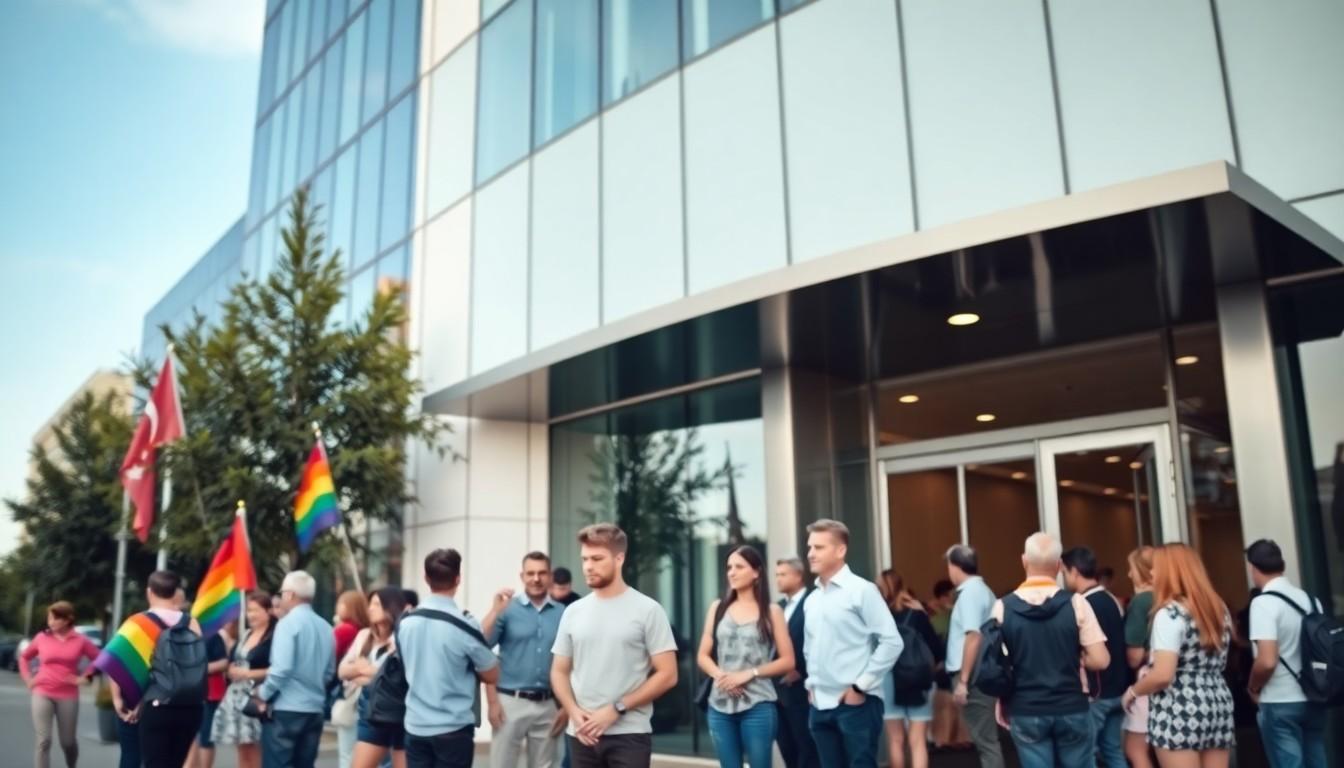
Turkish police have detained dozens of LGBT people in Ankara and Istanbul, while authorities have blocked community websites and social-media accounts. The raids, protests and alleged digital censorship point to a wider campaign, raising fresh concerns about safety, free expression and the future of LGBT rights in Turkey.
Essential Takeaways
- Dozens detained: Police carried out raids against LGBT people and organisations in Ankara, Istanbul and other cities.
- Protest arrests: At least 150 people were reportedly detained during a demonstration outside an Istanbul courthouse.
- Digital pressure: LGBT websites and social-media accounts were blocked alongside the physical raids.
- A difficult legal landscape: Homosexuality isn't formally illegal, but Pride events have been banned since 2015 and protections remain weak.
- Growing concern: Rights groups warn that political rhetoric is edging closer to criminalising LGBT identity and expression.
Raids turn fear into a daily reality
The latest arrests have sent a sharp jolt through Turkey's LGBT community. Police reportedly entered cafés, bars and offices, detaining people while authorities also moved against online accounts. For many, the combination feels especially alarming: the pressure isn't confined to a street protest or a single court case, but reaches into meeting places, organisations and phones.
Turkey's state news agency Anadolu said the operations were linked to investigations into an alleged organisation formed to commit crimes, citing accusations including prostitution, obscenity and drug possession. LGBT advocates reject the framing, arguing that broad criminal allegations are being used to target an entire community. The Associated Press reported that the arrests formed part of a wider security operation affecting activists and organisations. [2]
The timing has added to the anxiety. Community figures say the raids began during a weekend of heightened political significance, with offices searched and people taken into custody across several cities. Yildiz Tar, editor of Kaos GL, told Trouw that his own organisation was among those affected and described the operation as an attempt to push LGBT people out of public life. [4]
Why the court protest matters
The arrests didn't end with the police raids. A demonstration outside an Istanbul courthouse drew supporters and activists, but the gathering itself was met with further detentions. At least 150 people were reportedly arrested, turning a protest against state action into another major test of Turkey's tolerance for dissent.
That pattern has appeared before at Pride events. Amnesty International has documented the use of police force, detention and restrictions against Istanbul Pride participants, while Metro Weekly reported mass arrests during a 2023 Pride demonstration. The message for campaigners is stark: even peaceful assembly can carry a heavy personal risk. [6], [7]
For families and friends, that makes ordinary support more complicated. Showing up at court, sharing a post or attending a march can all feel like visible acts of opposition. It's a chilling calculation, and one that can quietly shrink public space even when no new law has yet been passed.
Homosexuality isn't banned, but rights remain fragile
Turkey doesn't formally criminalise consensual same-sex relationships, yet that fact offers limited reassurance when public events are prohibited and police operations target LGBT groups. Legal summaries point to a patchwork of restrictions, weak anti-discrimination protection and broad public-order rules that can be applied against activists. [5]
Pride marches have been banned in Turkey since 2015, often with authorities citing security concerns or public morality. Rights organisations say those justifications have become a recurring route to limiting assembly and expression rather than a neutral way of protecting the public.
The wider European comparison is also uncomfortable. Turkey ranks near the bottom of the Rainbow Europe assessment, which compares LGBT rights and legal protections across 49 countries. That ranking reflects more than one weekend of arrests; it captures a long-running gap between formal legality and the ability to live openly and safely. [4]
Family values have become a political weapon
President Recep Tayyip Erdogan's government says the crackdown is designed to protect children, families and traditional values. That language is central to the political argument, placing LGBT people on one side and an idealised national family on the other.
El Pais reported that activists see this as a deliberate strategy, portraying the LGBT community as an internal enemy while the government promotes a conservative social agenda. The paper linked the latest actions to Erdogan's broader family and population programme, which places marriage, birth rates and traditional household structures at the centre of government policy. [4]
The shift matters because rhetoric can prepare the ground for tougher enforcement. Proposals that could criminalise certain expressions connected with sexual orientation or gender identity would move Turkey closer to treating identity and visibility as public offences. Legal experts and rights campaigners have warned that existing restrictions already create room for selective enforcement. [5]
Digital censorship makes organising harder
Blocking websites and social-media accounts adds a quieter layer to the crackdown. A police raid is visible and dramatic; a disabled account can disappear without the same immediate public reaction. But the impact is practical and serious, cutting people off from legal advice, safety updates, event information and one another.
Activists told Trouw that LGBT organisations and online platforms were blocked at the same time as physical searches. That simultaneous pressure suggests a coordinated effort to disrupt not only demonstrations, but the networks that make community organising possible. [4]
Turkey has a long record of restricting online content and civic speech, according to reporting by the Associated Press and international rights groups. For LGBT people, digital censorship can also affect access to health information and support, especially for those living away from large cities. [2], [6]
What happens next?
The immediate concern is the safety of those in detention, particularly amid reports of homophobic insults and verbal abuse in custody. Longer term, campaigners fear that arrests, online blocks and hostile official language will become routine rather than exceptional.
Forbidden Colours director Rémy Bonny described the operation as policy rather than an isolated police action, arguing that the government is steadily narrowing the distance between discrimination and criminalisation. That assessment echoes broader concerns from European and international rights organisations about the direction of travel. [4], [6]
Turkey's LGBT community has continued to organise despite years of bans and pressure. But when cafés, charities, marches and social-media pages are all treated as potential targets, resilience comes at a steep price. The question now is whether international scrutiny can slow the crackdown, or whether the latest raids mark the beginning of an even more restrictive phase.
It's a reminder that legal recognition alone isn't enough when safety and visibility remain under threat.
Source Reference Map
Story idea inspired by: [1]
Sources by paragraph:
- Paragraph 1: [2], [4]
- Paragraph 2: [2], [5]
- Paragraph 3: [4]
- Paragraph 4: [6], [7]
- Paragraph 5: [6], [7]
- Paragraph 6: [5]
- Paragraph 7: [4]
- Paragraph 8: [4], [5]
- Paragraph 9: [4]
- Paragraph 10: [2], [6]
- Paragraph 11: [4]
- Paragraph 12: [4], [6]
- Paragraph 13: [4], [6]
- Paragraph 14: [2], [4]
- Paragraph 15: [4], [6]