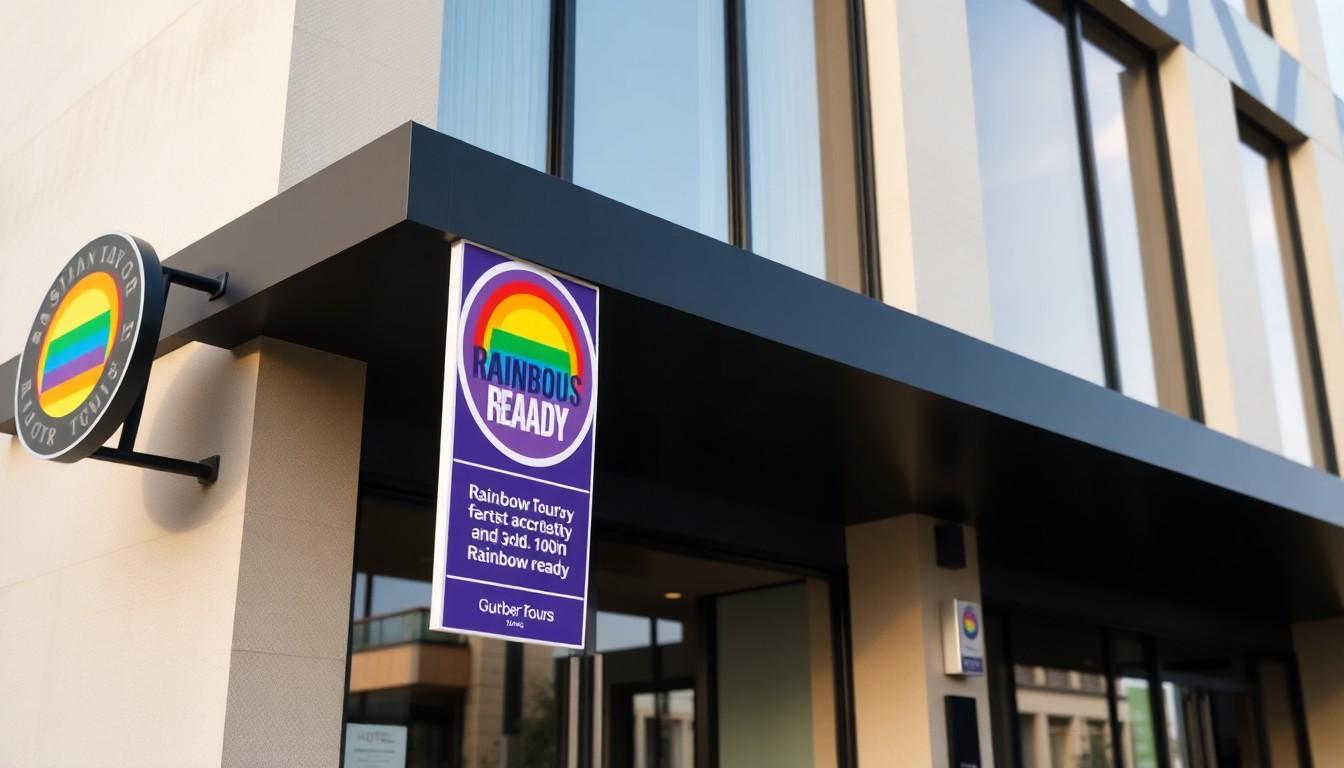
Travellers are getting a clearer way to spot inclusive Australian hospitality and tourism businesses, with the new Rainbow Ready accreditation offering a visible signal of safer, more welcoming experiences ahead of Brisbane 2032.
Essential Takeaways
- National scheme: Rainbow Ready is open to accommodation providers, attractions, hospitality venues and events across Australia.
- Visible reassurance: Accredited businesses can display a Rainbow Ready sign on-site and in their marketing.
- Practical focus: The programme covers workplace policies, staff training and responses to inappropriate behaviour.
- Traveller confidence: Research found many LGBTQIA+ visitors check businesses in advance before deciding where to stay, eat or explore.
- Commercial benefit: Operators may reach new customers while making their values easier to understand.
A small sign with a big job
For LGBTQIA+ travellers, choosing a hotel, bar or attraction can involve more than comparing prices and reading reviews. Rainbow Ready aims to make that decision a little less uncertain by giving accredited businesses a recognisable marker of inclusive practice.
The voluntary programme is overseen by the Australian Tourism Industry Council and is available to tourism attractions, accommodation providers, hospitality venues and events. Participating operators can use the sign at their premises and across promotional material, creating a simple visual cue before a customer even arrives.
That matters because, as research reported by The Shout suggests, some LGBTQIA+ travellers still investigate businesses in advance to work out whether they'll feel safe and welcome. A bright, clear sign can't answer every question, but it can open the door to greater confidence.
What does Rainbow Ready accreditation involve?
The accreditation isn't simply about putting up a colourful logo. It considers the policies and habits that shape a customer's experience, including staff training, workplace expectations and how employees respond when LGBTQIA+ guests face uncomfortable or offensive behaviour.
Research from the University of Queensland found that businesses may already have a useful foundation in place. Existing equality policies, for instance, can be developed further through staff communication and practical training, rather than being treated as paperwork that sits quietly in a folder.
That training could help staff avoid awkward assumptions, such as presuming two people sharing a room are friends rather than partners. It could also give employees clearer ways to challenge slurs or offer support when a customer feels targeted.
Why travellers may check before they book
A holiday is supposed to feel easy, but unfamiliar settings can make small uncertainties loom large. For LGBTQIA+ visitors, checking a venue's policies or reputation before travelling may be a sensible form of preparation, particularly when visiting somewhere new.
The research behind Rainbow Ready involved interviews with LGBTQIA+ travellers and tourism operators. Its findings underline a gap between general statements of acceptance and the practical signals people look for when deciding where to spend their time and money.
That distinction is important. A business may consider itself welcoming, yet customers need to see how that welcome works in practice, from booking conversations to room arrangements and the response to poor behaviour. Clear information can make a warm atmosphere feel more credible before the first drink is poured or the first key is handed over.
A commercial opportunity for Australian operators
Inclusion and commerce aren't competing ideas here. According to research shared by the University of Queensland, participating businesses could benefit from new customers, additional marketing opportunities and stronger perceived credibility, while also creating a more ethical and welcoming environment.
For smaller venues, that could be especially useful. A straightforward accreditation may help an independent hotel, restaurant or tour operator communicate its approach without relying on vague claims or hoping potential visitors discover the right information themselves.
The timing also gives the programme extra visibility. With Australia preparing for the Brisbane 2032 Olympic and Paralympic Games, the tourism industry will be thinking about how it presents itself to visitors from home and abroad. Rainbow Ready offers operators a practical way to show that welcome, rather than leaving travellers to guess.
How businesses can make the message feel genuine
Accreditation works best when it reflects everyday behaviour, not just a sign by the entrance. Operators should make sure policies are easy for staff to understand, training is relevant to real customer interactions and managers know how to respond if someone reports discrimination or harassment.
It also helps to check the details guests notice first. Booking forms, signage, room language and customer-service scripts can all reinforce, or undermine, an inclusive promise. A polished logo won't compensate for staff who make assumptions or fail to act when a customer is treated badly.
For travellers, the Rainbow Ready mark can be a useful starting point, alongside recent reviews and direct questions where needed. No accreditation replaces personal judgement, but a clear standard is more reassuring than silence.
Australia wants visitors to feel welcome
ATIC chief executive Erin McLeod said the scheme gives operators a way to communicate their approach to domestic and international visitors, particularly those who may exercise caution in unfamiliar places. The organisation's message is straightforward: visible support can help Australia present itself as an inclusive destination.
That ambition will be tested in the real world, where hospitality is measured in small moments. A respectful greeting, an informed answer and a confident response to offensive language can matter just as much as a formal policy.
Rainbow Ready is therefore less about decoration than consistency. If businesses carry its principles from the window sign to the staff room and the booking desk, the programme could make inclusive travel feel more ordinary, visible and dependable.
It's a modest sign that could make choosing where to stay, eat and explore feel considerably easier.
Source Reference Map
Story idea inspired by: [1]
Sources by paragraph: