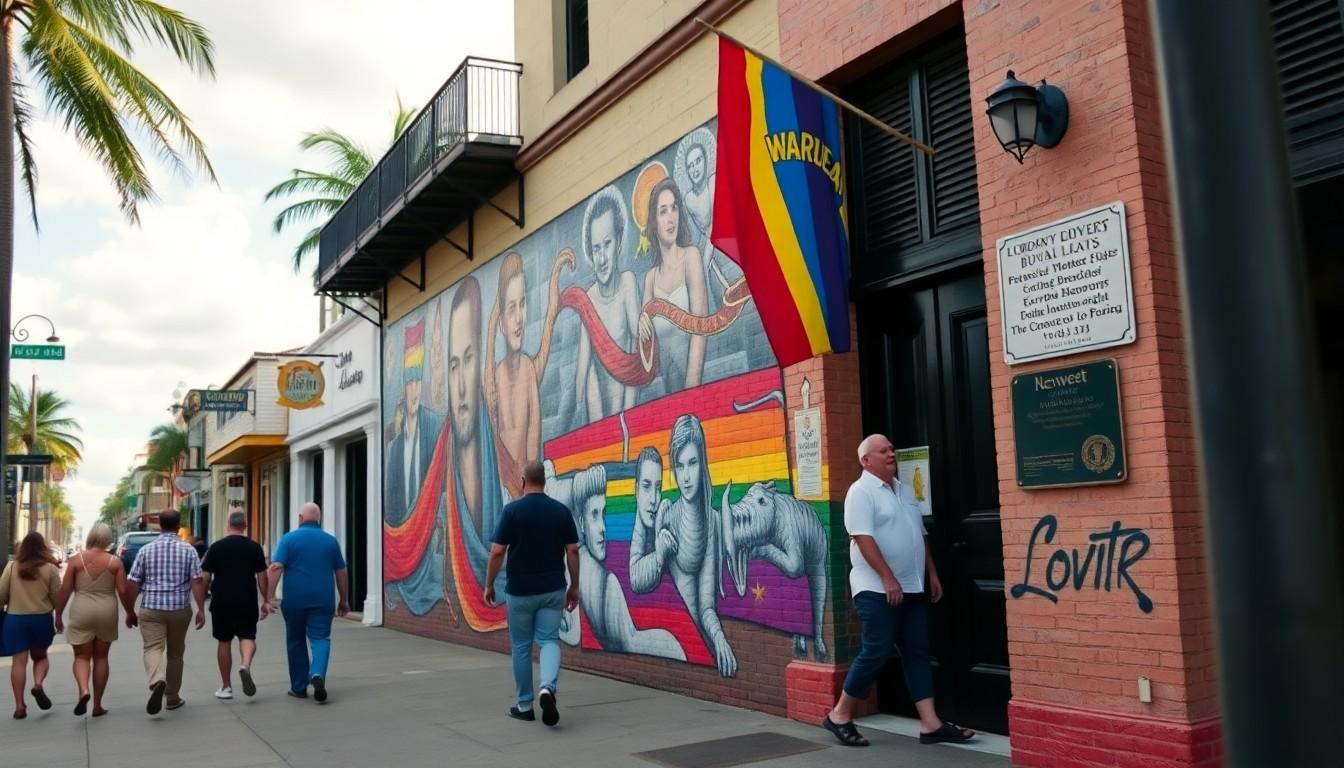
Key West’s newly reconfigured city commission has backed a mural and wider beautification work on Duval Street, giving the city a brief window to celebrate its LGBTQ heritage while inviting residents into bigger conversations about Higgs Beach and the future of the island.
A unanimous vote sets a different tone
The strongest signal from the commission’s first meeting was also the simplest: every member supported the proposed Duval Street improvements. According to Keys Weekly, the vote covered a mural on the building at 801 Duval Street, plus further projects intended to recognise Key West’s LGBTQ community.
That show of agreement matters in a city where local politics haven’t always felt so harmonious. Newly elected Mayor Sam Kaufman urged residents to ask difficult questions, join the process and treat disagreement as part of healthy civic life. He also said public comment would be allowed on every discussion item during his term, even when no formal vote was planned.
Why the Duval Street project matters now
The proposed work follows the state-ordered removal of rainbow-painted crosswalks from the 700 and 800 blocks of Duval Street. The change left a visible gap in an area closely associated with Key West’s colourful, welcoming identity, so the new mural is being framed as more than a decorative upgrade.
The city is working with the Key West Business Guild and its Art in Public Places board on additional tributes. Community groups have also supported LGBTQ-themed street features, including rainbow bike racks, while local artists have helped keep the island’s Stonewall history visible through mural work and public art.
Timing is crucial. The commission was told that a new state law due to take effect on 1 January will restrict public funding for projects involving the LGBT community. That gives officials only a narrow period to approve and progress suitable work, rather than leaving the ideas stranded in a planning folder.
A wider story than one rainbow landmark
Key West’s identity has never fitted neatly into one category. Bahamian, Conch, Cuban and LGBTQ histories overlap across its streets, businesses and public spaces, and residents argued that those strands should be treated as part of one shared local story.
That wider context helps explain why the conversation has moved beyond replacing a lost crosswalk. A mural can add colour, but it can also offer a permanent point of reference for visitors and residents who want to understand the people and movements that shaped the island.
Local guides describe Key West as a long-standing gay-friendly destination, while public-art projects such as the Spirit of Stonewall mural show how visual storytelling can turn history into something people encounter casually, on foot, rather than only in a museum.
Higgs Beach becomes the next public conversation
The commission is also preparing a master plan for Higgs Beach after the city took ownership of the site from Monroe County. Architects Bender & Associates have been given an $188,000 budget to develop proposals shaped by community feedback.
Rather than relying solely on a formal meeting room, commissioners want one or more weekend sessions at the beach itself. That should make it easier for people to discuss shade, access, landscaping, recreation and the feel of the waterfront while standing in the place being considered.
The approach is practical. A master plan can look polished on paper, but residents are more likely to notice whether a beach works comfortably on a hot, busy afternoon. Public input should help architects balance visitor appeal with the everyday needs of locals.
What visitors and residents can expect next
The Duval Street mural is likely to become the most immediate visual change, although the final design and schedule still depend on the city’s work with the building owner, community organisations and public-art advisers. Rainbow bike racks and other small-scale installations suggest that the result could be a collection of details rather than one isolated statement.
Meanwhile, the commission must handle a separate search for a permanent, full-time city attorney and continue dealing with legal challenges over rainbow-painted fence posts in Old Town. Those issues give the new administration plenty to test its promise of openness.
For Key West, the next phase is about deciding how public space should reflect the city’s character. Done thoughtfully, the mural and related projects could feel less like political symbols and more like part of the island’s lived-in landscape.
A brighter Duval Street could become a lasting reminder that local history belongs in public view.
Source Reference Map
Story idea inspired by: [1]
Sources by paragraph:
- Paragraph 1: [2], [3]
- Paragraph 2: [2], [4]
- Paragraph 3: [2], [6]
- Paragraph 4: [3], [7]
- Paragraph 5: [2], [5]
- Paragraph 6: [5], [7]
- Paragraph 7: [2], [3]
- Paragraph 8: [4], [6]
- Paragraph 9: [2], [5]
- Paragraph 10: [2], [5]
- Paragraph 11: [2], [3]
- Paragraph 12: [3], [6]
- Paragraph 13: [2], [4]
- Paragraph 14: [2], [7]
- Paragraph 15: [2], [5]
- Paragraph 16: [2], [3]