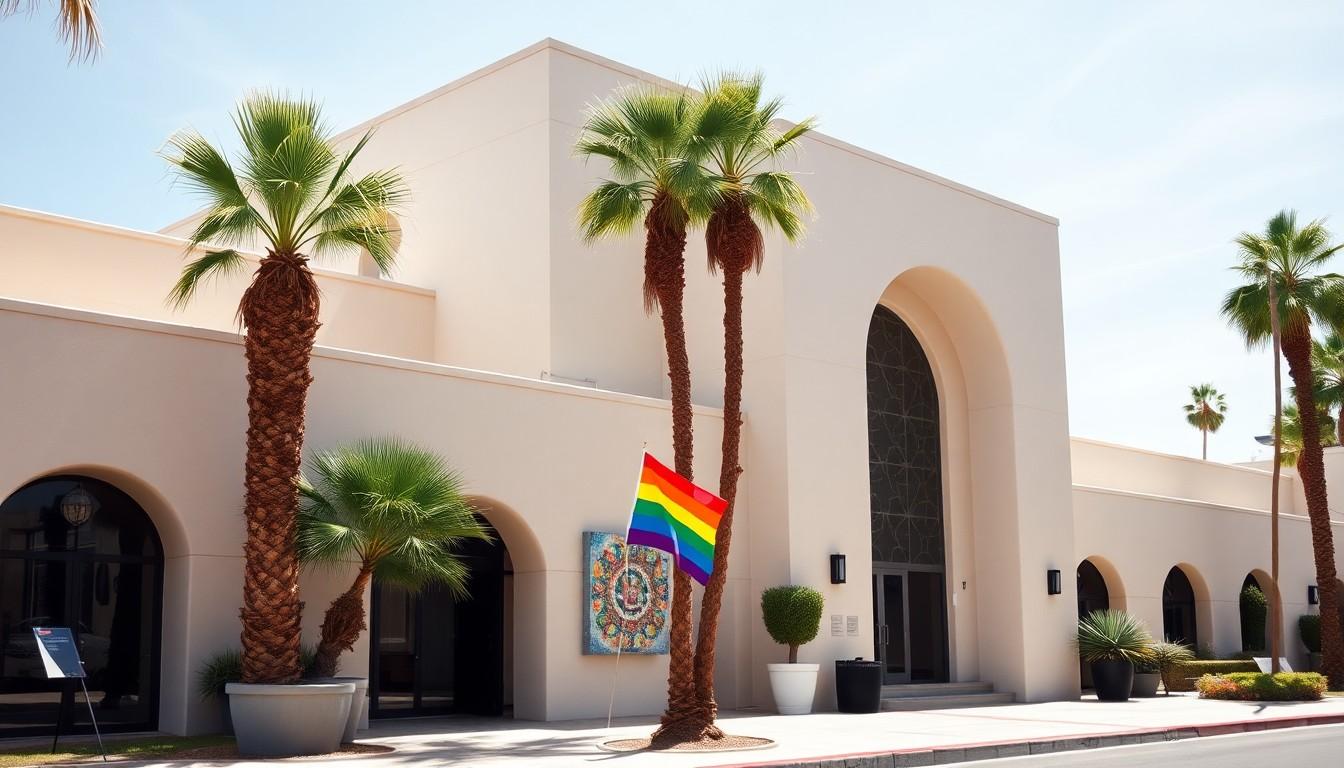
Film lovers are heading to Palm Springs for Cinema Diverse, where LGBTQ+ filmmakers bring intimate stories about love, identity, race, family and wealth to the screen. This year’s programme pairs a moving feature about a marriage under strain with a powerful short exploring housing discrimination, giving audiences plenty to discuss after the lights come up.
Essential Takeaways
- Two films stand out: In This Moment explores marriage, caregiving and forgiveness, while Redlining examines race, sexuality and housing inequality.
- Personal stories lead the programme: Both filmmakers draw on lived experience and observations from their communities.
- The festival is back in Palm Springs: Cinema Diverse remains a key local showcase for LGBTQ+ cinema and emerging voices.
- Dates to note: In This Moment screens on 18 September, followed by Redlining on 19 September.
- Expect more than entertainment: These films connect private lives with wider questions about representation, rights and generational wealth.
Cinema Diverse puts lived experience centre stage
There’s something especially affecting about watching a filmmaker turn a personal truth into a public conversation. That’s the mood surrounding Cinema Diverse’s return to Palm Springs, where LGBTQ+ stories are being presented not as a single category, but as a broad mix of family dramas, social history and identity-led storytelling.
The festival’s wider programme reflects that range, according to Palm Springs Cultural Center information. Its appeal lies in the chance to see experiences that mainstream cinema can still overlook, presented with the immediacy and warmth of independent filmmaking.
A marriage tested by family, care and betrayal
In This Moment, the feature debut from Mike Placido, follows longtime partners Luis and David as their relationship faces pressure from family responsibilities, caregiving, betrayal and the difficult possibility of forgiveness. It sounds emotionally heavy, but that’s precisely where the film’s interest lies: this is a relationship story shaped by ordinary life rather than a tidy romantic formula.
Placido told NBC Palm Springs that the film grew from his experience as a gay Filipino immigrant and from the limited representation he encountered on screen. The story is set in the American South, adding another layer to its portrait of identity, belonging and partnership.
The film screens on 18 September at 7.15pm at the Palm Springs Cultural Center. For audiences looking for a thoughtful LGBTQ+ drama about long-term relationships, it could be one of the festival’s most intimate offerings.
Why Redlining reaches beyond the history books
Jason Stewart’s 18-minute short Redlining takes a different route, connecting sexuality and women’s rights with the discriminatory housing practices that shaped American communities. Set in 1970s Georgia, it looks at how decisions about who could buy property continued to influence families long after the original barriers were put in place.
The film’s central question is both simple and unsettling: what happens to a home, and the wealth tied to it, when its owner dies? Stewart’s comments, reported by NBC Palm Springs, underline how homeownership can become a foundation for generational wealth, while exclusion from the housing market can leave families playing catch-up for decades.
With 22 festival selections and eight best film wins listed in its presentation, Redlining has already travelled widely. Its local screening on 19 September at 7.30pm, as part of the festival’s civil rights programme, adds a personal note because Stewart lives in Palm Springs.
Two films, one bigger conversation
Although In This Moment and Redlining focus on very different subjects, they share a useful quality: neither treats identity as a slogan. Instead, each connects LGBTQ+ lives with family, place, race, money and the quiet decisions that shape people’s futures.
That breadth is part of Cinema Diverse’s staying power. The Palm Springs Cultural Center describes the event as a platform for LGBTQ+ cinema, while local listings from Palm Springs Life present it as a major cultural weekend for the area. In practice, that means viewers can arrive for one film and leave with a much wider sense of the stories being made today.
How to make the most of the festival
If you’re choosing between screenings, consider the mood you want. In This Moment is likely to suit viewers who prefer character-led drama and emotionally complicated relationships, while Redlining offers a brisker, issue-driven experience with plenty of historical weight.
It’s also worth leaving time around each screening. Independent festivals are often at their best when audiences linger, compare reactions and discover filmmakers whose work they might not encounter elsewhere. Sometimes the conversation in the foyer is almost as memorable as the film itself.
Cinema Diverse’s return is a reminder that representation works best when it feels specific, textured and human. These films aren’t simply asking audiences to look at different lives; they’re inviting them to recognise the forces that connect those lives to their own.
Explore the programme and choose the screening that speaks to you.
Source Reference Map
Story idea inspired by: [1]
Sources by paragraph:
- Paragraph 1: [2], [3]
- Paragraph 2: [3], [4]
- Paragraph 3: [1], [3]
- Paragraph 4: [1], [5]
- Paragraph 5: [1], [6]
- Paragraph 6: [1], [7]
- Paragraph 7: [1], [3]
- Paragraph 8: [2], [4]
- Paragraph 9: [3], [6]
- Paragraph 10: [1], [7]
- Paragraph 11: [1], [3]
- Paragraph 12: [4], [6]
- Paragraph 13: [3], [7]
- Paragraph 14: [1], [2]
- Paragraph 15: [3], [4]