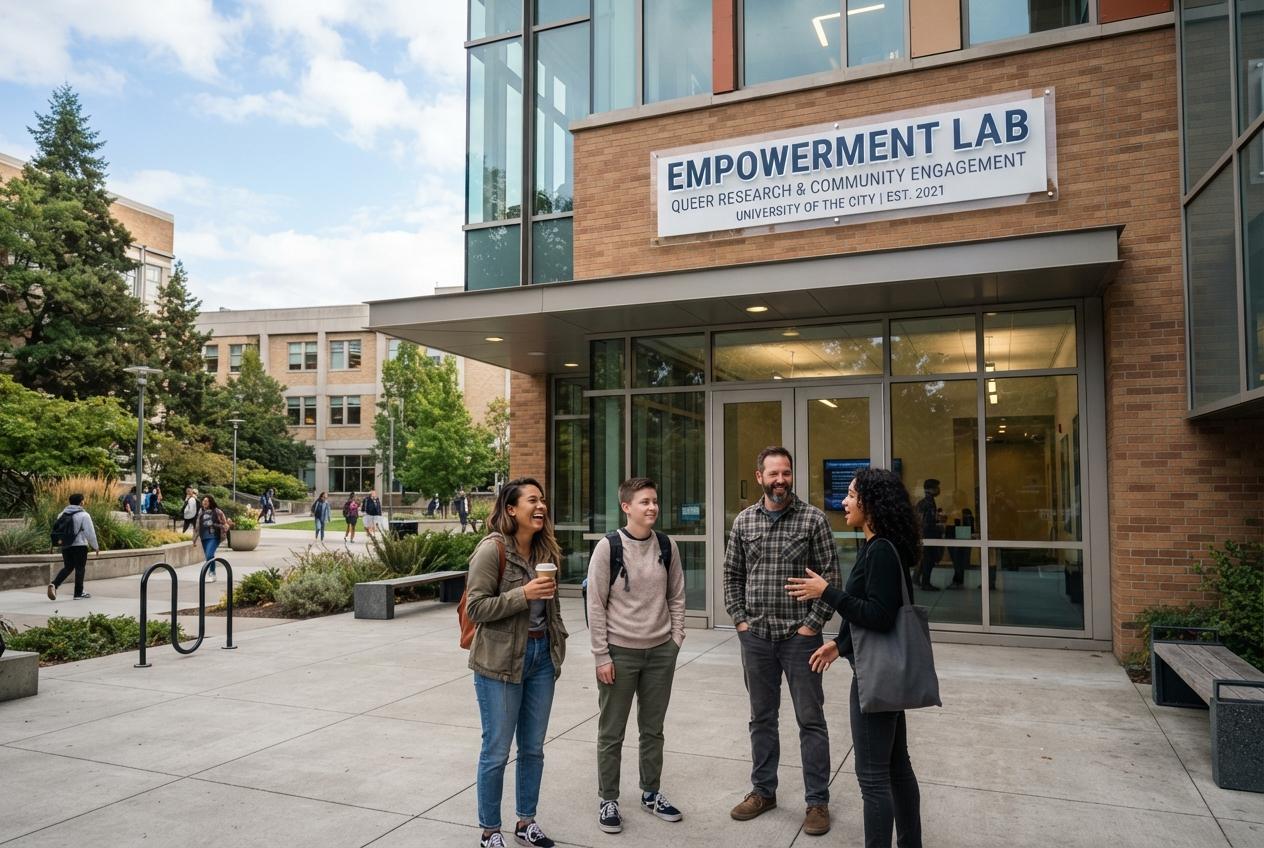
Arizona State University’s Empowerment Lab is drawing attention for programmes supporting parents and mental-health professionals working with transgender and non-binary young people. The approach has prompted sharp criticism from opponents, while broader ASU research highlights the value of helping families navigate difficult transitions with care, evidence and open communication.
Essential takeaways
- A university-backed programme: ASU’s Empowerment Lab focuses on trans and non-binary experiences, psychology and community research.
- Support for parents: Its online materials encourage caregivers to reflect on stress and respond supportively to young people.
- Training for professionals: The lab has promoted LGBTQ-affirmative cognitive behavioural therapy training for clinicians and students.
- Critics want scrutiny: Opponents question the balance of viewpoints and the role of a publicly funded university.
- Transition support matters: Other ASU programmes show how structured guidance can help families and students manage major life changes.
Why the Empowerment Lab has become a flashpoint
The controversy centres on an ASU lab that says it aims to amplify trans and non-binary voices in psychology. Its work includes research, professional training and a Parent Support Program designed to help caregivers respond to young people experiencing gender dysphoria.
That mix has proved combustible. The College Fix reported that an ASU professor invited trans and non-binary teenagers to share their experiences online, prompting concerns from critics about how universities should engage with minors and sensitive medical questions. The story has since become part of a wider argument over academic freedom, parental responsibility and the boundaries of youth healthcare.
For families, those issues aren't abstract. A teenager discussing identity can bring relief, fear, confusion and hope into the same room. Any programme dealing with that reality needs to be clear about its evidence, safeguards and limits.
What the parent programme is designed to do
The lab's parent materials focus on listening, reducing conflict and helping caregivers understand the pressures faced by trans and non-binary young people. According to the programme description, parents are encouraged to consider their own emotions, learn about relevant theories and avoid forcing a child to disclose more than they're ready to share.
That emphasis on communication echoes other ASU initiatives. University research on supporting parents of first-year students, for example, has explored the barriers families face when young people move into a new stage of life. The setting is different, but the basic lesson is familiar: transitions are easier when expectations are explained and conversations remain open.
Still, supportive language doesn't remove the need for independent judgement. Parents may want to ask who wrote a course, what research it relies on, whether medical advice is involved and how disagreements are handled. A calm second opinion can be more useful than an online argument.
Critics challenge the university's approach
Critics quoted by The College Fix argue that ASU's programme promotes a particular ideological view of sex and gender rather than presenting competing interpretations. They also object to the university's involvement in discussions that may lead towards medical transition, especially where teenagers are concerned.
The Empowerment Lab and ASU Media Relations did not respond to the publication's reported requests for comment. That silence leaves room for predictable suspicion, even though the existence of criticism doesn't by itself establish that every allegation is correct.
The debate also touches on cultural claims made in educational materials, including references to Indigenous identities. Those topics demand precision. Historical terminology can be complex, and broad statements about cultures should be checked against Indigenous scholarship rather than used as quick evidence in a modern political dispute.
The bigger lesson from ASU's transition research
ASU's wider programmes suggest that transition support is a recurring theme across the university, from helping parents understand barriers at home to helping new students adjust to college. Its psychology research pages also show how labs often combine teaching, community engagement and studies of wellbeing.
That context matters because not every support programme is medical care, and not every online course should be treated as a clinical recommendation. Families should separate emotional support, counselling, diagnosis and medical treatment, then seek appropriately qualified advice for each.
A useful starting checklist is simple. Look for named instructors, transparent funding, current evidence, clear safeguarding policies and a willingness to acknowledge uncertainty. If a programme treats questions as hostility, that's a warning sign; if it promises easy answers to a complicated situation, that's another.
Families need room for care and disagreement
The strongest argument on any side is the one that keeps the young person's welfare at the centre. Parents should be able to ask difficult questions without being shamed, while teenagers deserve privacy, dignity and access to trustworthy support.
ASU's Empowerment Lab has become a symbol of a much larger culture-war dispute, but real families rarely experience these questions as slogans. They experience them at kitchen tables, in counselling rooms and during long, quiet car journeys.
The most constructive path is likely to involve careful listening, robust evidence and genuine room for challenge. That's less dramatic than a social-media clash, but far more useful.
A thoughtful support plan should make space for questions as well as reassurance.
Source Reference Map
Story idea inspired by: [1]
Sources by paragraph:
- Paragraph 1: [2], [4]
- Paragraph 2: [3], [6]
- Paragraph 3: [4], [5]
- Paragraph 4: [1], [6]
- Paragraph 5: [1], [4]
- Paragraph 6: [1], [2]
- Paragraph 7: [1], [4]
- Paragraph 8: [1], [6]
- Paragraph 9: [5], [7]
- Paragraph 10: [4], [6]
- Paragraph 11: [1], [3]
- Paragraph 12: [1], [4]
- Paragraph 13: [5], [7]
- Paragraph 14: [1], [6]
- Paragraph 15: [1], [4]
- Paragraph 16: [5], [7]
- Paragraph 17: [1], [2]
- Paragraph 18: [1], [4]
- Paragraph 19: [1], [6]
- Paragraph 20: [4], [5]