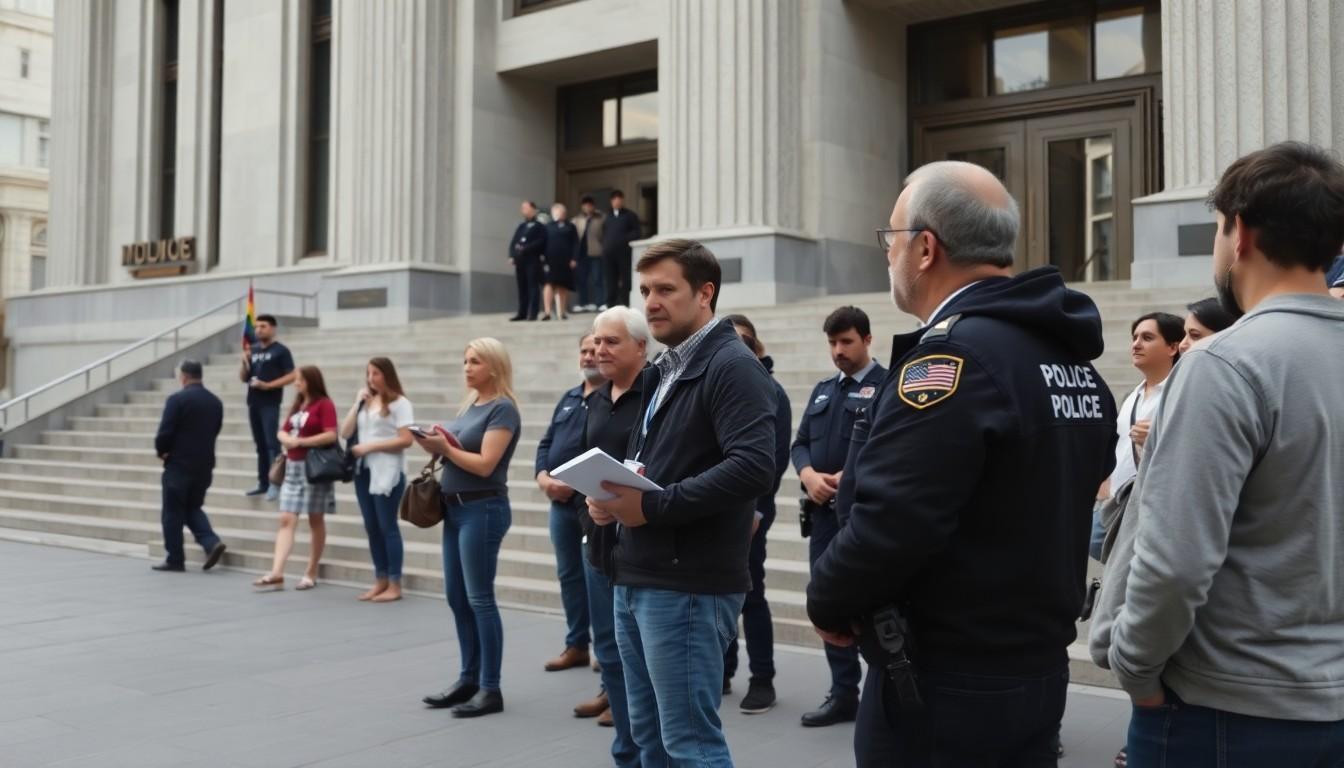
Protesters in Istanbul and Ankara have been detained as Turkey’s latest LGBTQ+ crackdown widens from raids on organisations and venues to arrests at demonstrations. The operation, framed by officials as a defence of family values, has prompted concern from rights groups over civil society, free expression and the safety of queer communities.
Essential Takeaways
- More than 100 detained: At least 126 people were reportedly detained during protests in Istanbul and Ankara.
- Raids are widening: Authorities targeted LGBTQ+ groups, venues, homes and HIV-support organisations across several cities.
- Activists jailed: Eight Kaos GL members were ordered to remain in pre-trial detention.
- Government justification: Officials say the operation protects children, families and public order.
- Rights groups object: Critics describe the action as discriminatory and warn that peaceful activism is being criminalised.
Detentions turn protests into a new flashpoint
The latest arrests came after demonstrators gathered outside Istanbul’s Çağlayan courthouse, where they called for LGBTQ+ activists to be released. Protesters carried a banner stating that being LGBTQ+ isn’t a crime, while police warned that the gathering was unauthorised before moving in. Reuters reported that detentions across Istanbul and Ankara reached 126. [2], [6]
Journalists covering the protest were also among those taken away, according to reports. That detail matters because the pressure is no longer limited to people inside LGBTQ+ organisations. It’s now reaching those documenting events and those publicly challenging the arrests. [3], [7]
What triggered Turkey’s latest LGBTQ+ crackdown?
The demonstrations followed coordinated raids on LGBTQ+ organisations, queer venues and private homes in Istanbul, Ankara, Izmir, Mersin and other areas. Reports also identified HIV-support groups among the targets, raising concern that the operation could disrupt essential health and outreach services. [4], [6]
Turkey’s authorities have linked the investigation to alleged offences including obscenity and promoting or facilitating prostitution. Those allegations remain unproven, and rights advocates argue that the scale and focus of the raids suggest a broader campaign against LGBTQ+ communities rather than a narrow criminal inquiry. [4], [5]
Kaos GL members face pre-trial detention
A Turkish court ordered eight members of the prominent LGBTQ+ organisation Kaos GL to remain in jail while investigations continue. Seven other people connected with the group, including a journalist, were released under judicial supervision. [3], [5]
Pre-trial detention can carry a heavy practical and emotional cost even before a case reaches court. Offices may be searched, online material can disappear and staff can be left uncertain about whether routine advocacy work might now attract criminal scrutiny. For smaller groups, that atmosphere alone can be paralysing. [2], [4]
Ankara’s family-values argument meets international concern
Justice Minister Akın Gürlek said the wider investigation involved 162 suspects, nine associations and 13 businesses across 15 provinces. The government has presented the operation as part of President Recep Tayyip Erdogan’s “Decade of Family and Population” programme, which responds to concerns about falling birth rates and an ageing population. [5], [6]
Same-sex relationships remain legal in Turkey, but Pride events have repeatedly been banned and LGBTQ+ organisations have faced increasing restrictions. The government says it’s pursuing alleged criminal conduct, not identity itself. Critics counter that official language about traditional family values, combined with raids and website blocks, creates a very different message on the ground. [4], [5]
Why the crackdown matters beyond the arrests
The Turkish Human Rights Association has described the raids as state-led discrimination and an assault on civil society. Council of Europe Commissioner for Human Rights Michael O’Flaherty called for the release of anyone held solely for legitimate human-rights or civil-society work, while the European Commission said it was monitoring developments. [2], [3]
For LGBTQ+ people and their allies, the concern is the cumulative effect: arrests, blocked websites, threatened organisations and the detention of people protesting those actions. A single raid can be alarming; several forms of pressure arriving together can make everyday community support feel suddenly fragile. [4], [7]
Turkey’s authorities are likely to face continued scrutiny as investigations proceed. The central question will be whether the cases produce evidence of specific criminal acts, or whether peaceful organising and LGBTQ+ identity become increasingly treated as evidence of wrongdoing. [2], [5]
It's a small sentence with a large meaning: being LGBTQ+ is not a crime.
Source Reference Map
Story idea inspired by: [1]
Sources by paragraph: