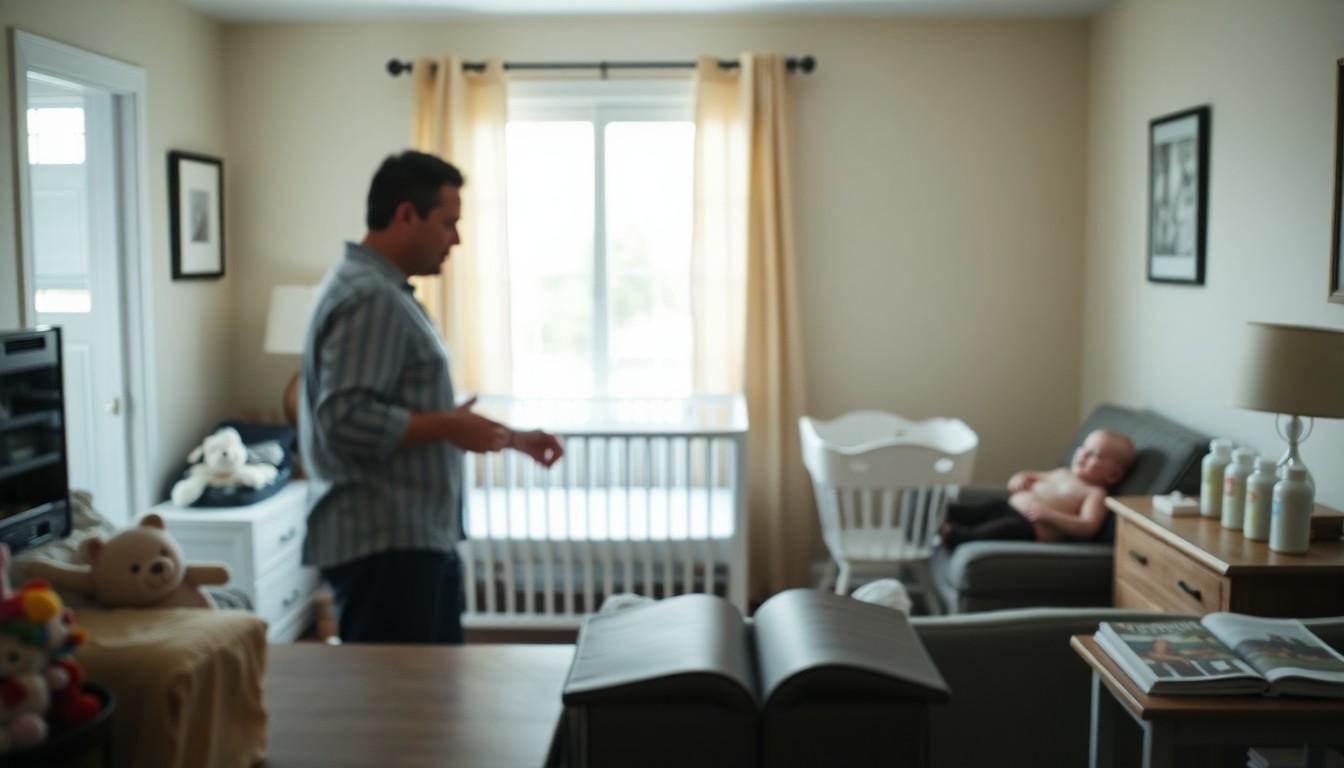
New research is reshaping how we think about fatherhood, showing that becoming a parent can alter men’s brains, hormones and daily priorities. These changes don’t look identical for every family, but they offer a useful counterpoint to sensational stories about new parents, reminding us that caregiving is a demanding biological and emotional shift, not simply a lifestyle accessory.
Essential Takeaways
- Fatherhood affects the brain: Research links becoming a parent with measurable changes in regions involved in care, attention and emotional processing.
- Hormones can shift: Studies have associated fatherhood and partnered parenting with changes in testosterone and other biological systems.
- Caregiving is learned and practised: Daily routines, touch and responsibility appear to help shape the paternal response.
- Families vary widely: Brain research can explain broad patterns, but it can't judge an individual parent or household.
- The baby still sets the timetable: Feeding, sleep and constant supervision make practical caregiving the centre of early family life.
Fatherhood is more than a new title
The first months with a baby can feel like an enforced change of weather. Sleep becomes patchy, every small sound matters and even a quiet cup of tea can seem like a luxury. For fathers, that upheaval isn't merely social, according to research reviewed in academic medical literature. Parenthood can be accompanied by changes in the brain and body that support attention to an infant.
A recent scientific review indexed by PubMed examines the biological processes associated with fatherhood, including hormonal and neurological changes. It doesn't suggest that every father responds in exactly the same way, but it does reinforce a simple point: paternal care is not just a matter of personal preference or household branding.
That matters because public conversations about family life often swing between sentimentality and cynicism. The reality is more interesting. Fathers can develop powerful caregiving responses, but those responses are shaped by proximity, responsibility, sleep disruption and repeated hands-on care.
The paternal brain starts adapting
Brain scans have given researchers a closer look at what happens when men become fathers. ScienceAlert reported on research indicating that fatherhood can alter networks involved in empathy, motivation and the interpretation of infant cues.
The changes aren't a magical switch that flips at delivery. Instead, the brain appears to respond to the practical work of parenting: holding a baby, noticing a cry, soothing distress and learning what a particular grimace means. In other words, the apparently small jobs are doing some very substantial neurological heavy lifting.
Researchers at the National Institute of Child Health and Human Development have also highlighted evidence of growth in the paternal hippocampus. This area is involved in memory and learning, both of which are handy when every day brings a new feeding pattern, sleep puzzle or nappy-related surprise.
Hormones can help move attention towards care
Fatherhood is also linked with hormonal changes. An influential study published in the journal Hormones and Behavior found that men’s testosterone levels were associated with relationship status and paternal investment, suggesting that biology can shift alongside a man's involvement with a partner and child.
That doesn't mean lower testosterone automatically makes someone gentle, attentive or dependable. Biology is not a character certificate. It does, however, suggest that becoming a father can coincide with a temporary rebalancing of priorities, particularly when men are closely involved in everyday care.
Further research has examined testosterone and paternal behaviour across different stages of family life. The broad picture is that hormones, brain activity and behaviour influence one another. A father who spends more time caring may become more responsive, while a more responsive father may be more likely to keep taking on the next demanding task.
Why hands-on care makes such a difference
A baby doesn't care whether a parent has read every parenting book. The baby wants warmth, food, comfort and someone who recognises that a particular cry means "I am tired" rather than "I have launched a formal complaint". Repetition turns these moments into a relationship.
Research indexed in PubMed has explored the connection between paternal involvement, hormones and child-directed behaviour. These studies point towards the importance of contact and participation, rather than treating fatherhood as a passive identity acquired at the hospital door.
For new parents, the practical lesson is straightforward. Share the unglamorous work, not only the enjoyable milestones. Nappy changes, night feeds, doctor’s appointments and soothing an unsettled baby may feel repetitive, but they’re precisely the experiences that build confidence and familiarity.
Research offers context, not a verdict
It would be a mistake to use neuroscience as a scoreboard for different family structures. The studies show patterns, not guarantees, and they can't determine whether one individual is loving, safe or responsible. A brain scan can't replace observation of how a child is treated day after day.
The research is most useful when it challenges the idea that fathers are naturally detached spectators. As the evidence develops, it paints a picture of parenthood as a two-way process: babies depend on adults, and sustained care can change those adults in return.
That leaves a more constructive question for families. Are both parents making room for the practical, sometimes exhausting work that helps a child feel secure? The answer will always matter more than a label.
Fatherhood can reshape attention, behaviour and the brain, but caring choices are what turn those changes into family life.
Source Reference Map
Story idea inspired by: [1]
Sources by paragraph:
- Paragraph 1: [3], [4]
- Paragraph 2: [2], [5]
- Paragraph 3: [6], [7]
- Paragraph 4: [3], [4]
- Paragraph 5: [4], [5]
- Paragraph 6: [2], [6]
- Paragraph 7: [5], [7]
- Paragraph 8: [2], [4]
- Paragraph 9: [3], [6]
- Paragraph 10: [4], [7]
- Paragraph 11: [2], [5]
- Paragraph 12: [3], [4]
- Paragraph 13: [6], [7]
- Paragraph 14: [2], [3]
- Paragraph 15: [4], [5]