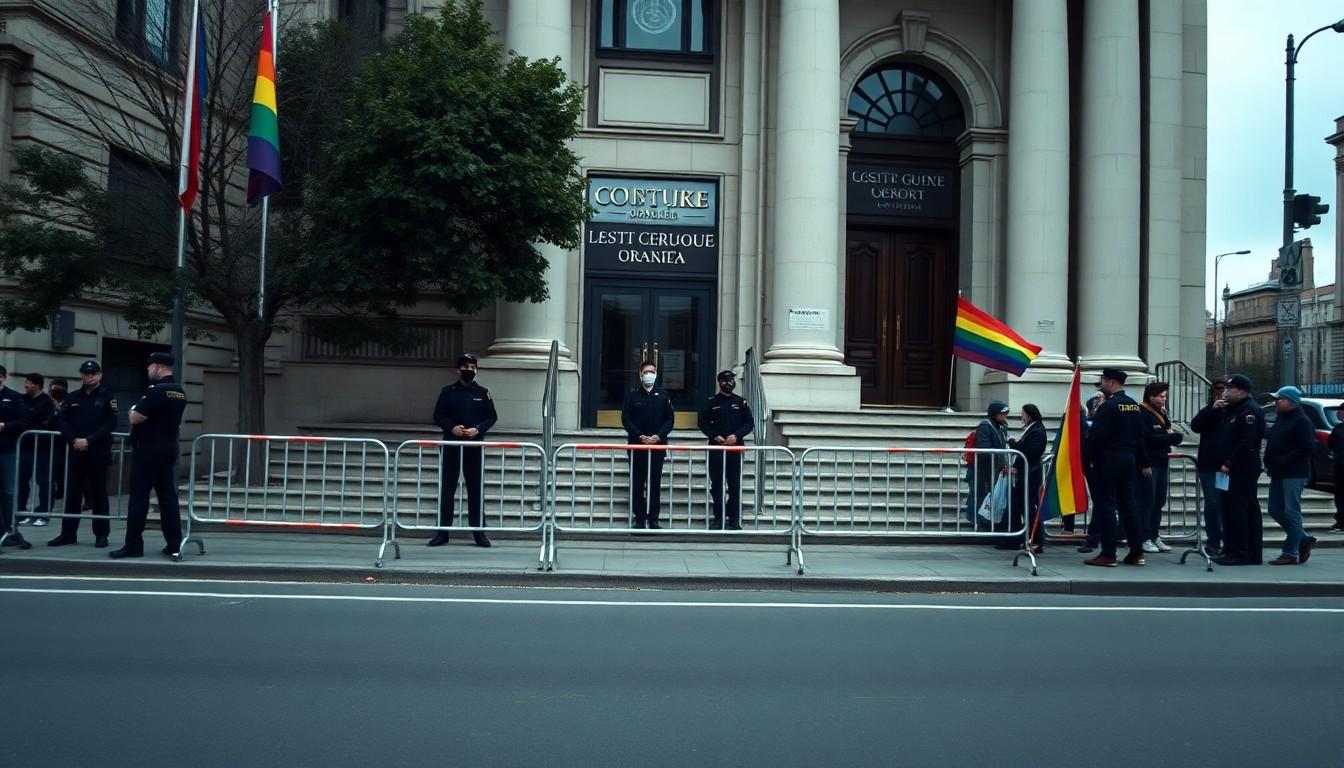
Turkey’s latest LGBTQ+ arrests have placed rights groups, journalists and community members at the centre of a widening legal and political storm. Dozens are reportedly in pre-trial detention, while further court appearances and protest arrests underline the mounting pressure on LGBTQ+ people and civil society across the country.
Essential Takeaways
- Dozens detained: At least 62 people have reportedly been remanded in custody, with more court hearings expected.
- Nationwide raids: Arrests have been reported in Istanbul, Ankara, Izmir, Aydin and Mersin.
- Rights groups targeted: Those detained reportedly include Kaos GL members, transgender people and a journalist.
- Officials cite public morality: Prosecutors allege offences linked to obscene material and pornography, while campaigners reject the claims as politically motivated.
- International concern is growing: Amnesty International, the European Union and Council of Europe officials have criticised the crackdown.
A sweeping crackdown reaches LGBTQ+ groups
Turkey’s latest LGBTQ+ crackdown has spread across several provinces, with raids reportedly targeting gay venues, activists’ homes and community organisations. The scale is striking: rights groups say around 110 people were arrested during one nationwide operation, while others were detained after protesting against it.
The arrests have left families and campaigners waiting for news as court proceedings unfold. According to Associated Press reporting, the operation has been framed by authorities as part of a broader effort to defend children, family life and public order, but critics say those justifications are being used to stigmatise an already vulnerable community.
Among those detained in Ankara were members of Kaos GL, one of Turkey’s best-known LGBTQ+ rights organisations. The reported presence of transgender people and a journalist has sharpened concerns that the operation extends beyond individual allegations and into a wider assault on advocacy and independent reporting.
What prosecutors allege
Court documents reviewed by Reuters reportedly accuse suspects of helping distribute obscene material, including content that could be accessed by children. Prosecutors are also said to have pointed to social media posts, organisational roles and evidence gathered during police searches.
Those allegations remain contested. Kaos GL has described the arrests as a political operation rather than a legitimate legal process, calling for the immediate release of people it says were targeted through false accusations and a hostile public campaign.
That distinction matters. Turkey does not criminalise homosexuality, but legal protections for LGBTQ+ people remain limited, and broad public-morality provisions can create serious risks for activists, venue owners and community organisers. Human rights advocates say the language of protecting children can become especially powerful when it is used to blur the line between safeguarding minors and suppressing LGBTQ+ expression.
Arrests and protests multiply the pressure
The reported detentions have not been limited to the original raids. In Istanbul, more than 100 people were reportedly arrested for protesting against the crackdown, adding a second layer of pressure to an already tense situation.
Other arrests and remand decisions have been reported in Mersin, Izmir and Aydin. The figures have shifted as authorities process cases, but the pattern is clear: a large police operation has been followed by court hearings, protest arrests and continued scrutiny of civil society groups.
Associated Press reports have also highlighted the wider political context, including the government’s “Year of the Family” campaign. Officials say the initiative is intended to promote traditional family structures and protect children. For LGBTQ+ campaigners, however, it appears to reinforce a political narrative in which queer people are presented as a threat to social stability.
Why the wider political climate matters
President Recep Tayyip Erdogan and senior officials have repeatedly used hostile language about LGBTQ+ people. Critics argue that this rhetoric has helped create an environment in which raids, restrictions and public accusations can be presented as ordinary law enforcement rather than discrimination.
The pressure also fits a broader pattern affecting Turkish civil society. Reporting by international outlets, including The Jerusalem Post, has described growing concern over restrictions on activists, protest movements and organisations viewed as politically inconvenient.
That context makes the current arrests particularly significant. Even where prosecutors rely on existing criminal provisions, campaigners say the selective use of those provisions can chill speech well beyond the people formally charged. A venue may close, a journalist may self-censor and an organisation may hesitate before holding a public event. The fear travels quickly, even when the legal cases move slowly.
International condemnation intensifies
Amnesty International has rejected the government’s family-protection argument, saying the crackdown has nothing to do with protecting families and instead deepens discrimination against LGBTQ+ people. The Council of Europe’s human rights commissioner and European Union representatives have also expressed concern.
International criticism may not immediately alter the cases, particularly as the government appears committed to continuing its campaign. But it adds pressure and creates a public record of how the arrests are being viewed beyond Turkey’s borders.
For LGBTQ+ communities inside the country, the immediate issue is more personal and more urgent: access to lawyers, fair hearings and protection from intimidation. “Family values” may sound reassuring in a political slogan, but it offers little comfort to someone waiting in custody because of their identity, work or protest.
The coming court hearings will show whether the detentions lead to sustained prosecutions or begin to unravel under legal scrutiny. Either way, the operation has already sent a powerful message about the shrinking space for LGBTQ+ visibility and civil society in Turkey.
It's a small phrase in a legal document, but for many people it can mean the difference between safety and silence.
Source Reference Map
Story idea inspired by: [1]
Sources by paragraph:
- Paragraph 1: [2], [4]
- Paragraph 2: [3], [5]
- Paragraph 3: [4], [6]
- Paragraph 4: [2], [3]
- Paragraph 5: [4], [5]
- Paragraph 6: [2], [6]
- Paragraph 7: [3], [5]
- Paragraph 8: [4], [6]
- Paragraph 9: [2], [5]
- Paragraph 10: [3], [4]
- Paragraph 11: [2], [6]
- Paragraph 12: [4], [5]
- Paragraph 13: [2], [3]
- Paragraph 14: [4], [6]
- Paragraph 15: [2], [5]