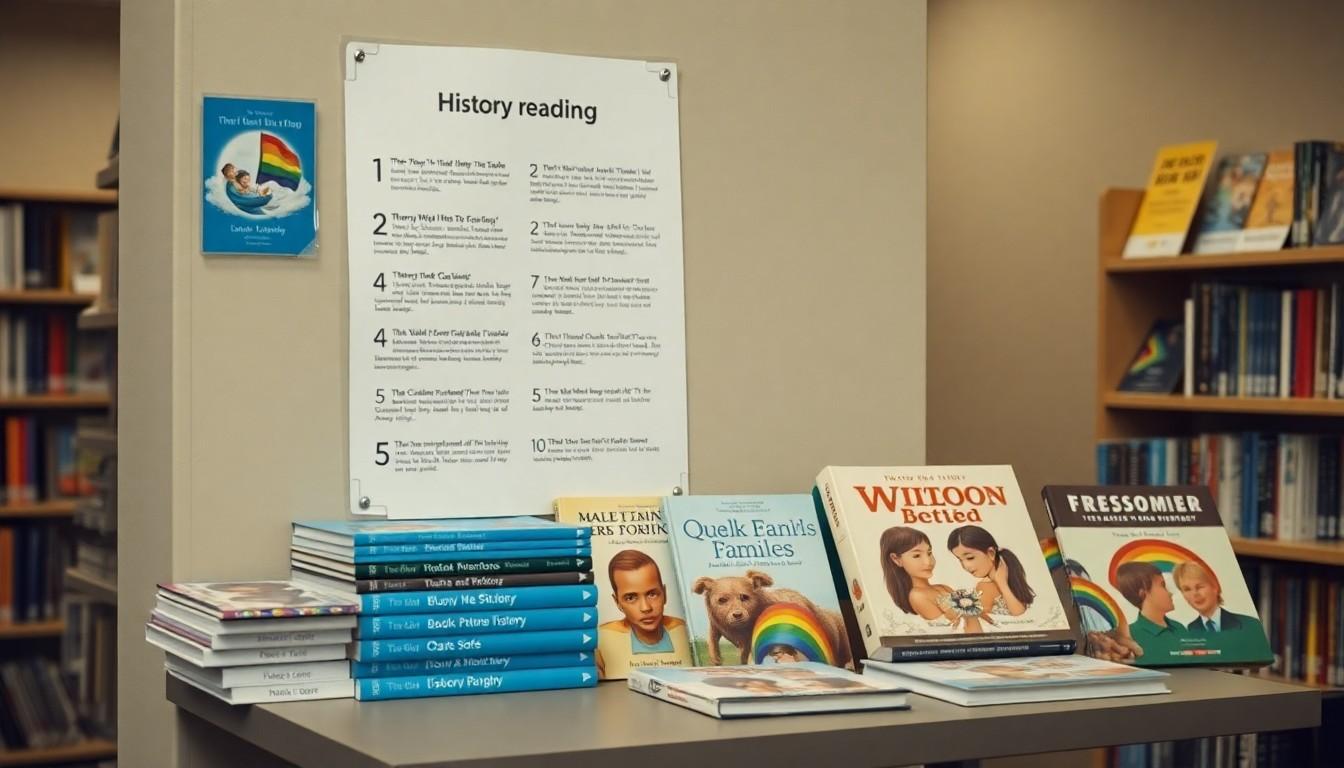
Families, schools and libraries are finding fresh ways to introduce children to LGBTQ Canadian history, from lively picture-book biographies to broader collections celebrating activists, artists and community leaders. These titles make a powerful case for inclusive reading, especially when young readers want real stories with warmth, courage and a distinctly Canadian sense of place.
Essential Takeaways
- Jim Egan’s story: A new picture-book biography introduces children to a pioneering Canadian LGBTQ activist and public figure.
- A wider Atlantic view: One middle-grade collection profiles more than 50 2SLGBTQIA+ people from Atlantic Canada.
- History with heart: Jim Egan’s legal and political work helped shape later LGBTQ rights protections.
- Useful classroom reading: Broader Pride titles can support discussions about activism, identity and community.
- More than famous names: The books highlight contributions across arts, education, sport, science, politics and social justice.
Two books bring Canadian LGBTQ history to life
The strongest feature of these LGBTQ Canadian children’s books is their sense of movement. They don't treat history as a dusty list of dates; instead, they show people pushing, organising and creating change, often when public opinion was firmly against them.
Meet Jim Egan, written by Elizabeth MacLeod and illustrated by Mike Deas, focuses on one of Canada's earliest openly gay public figures. Its comic-style artwork and energetic presentation should make a difficult history feel approachable rather than intimidating. Historica Canada has also helped bring Egan's story to a wider audience through a Heritage Minute about his activism.
Egan's influence reached beyond visibility. His challenge for spousal benefits contributed to legal developments that helped establish wider protections for LGBTQ2S+ people under Canada's Charter of Rights and Freedoms. As the University of Toronto noted while discussing the Heritage Minute, telling this story is also a way of recognising how individual persistence can become part of national history.
Why Jim Egan still matters to young readers
Egan's life offers children a clear example of how change can begin with one person refusing to stay quiet. He and his partner, Egan's longtime companion, campaigned for recognition at a time when gay Canadians faced deep discrimination in public life, employment and law.
The story also carries an uncomfortable but important reminder: progress doesn't always arrive in time for the people who began the fight. Egan and his partner didn't live to see full marriage equality in Canada, giving the book an emotional edge alongside its hopeful message. Historical Canada describes Egan as a significant figure in the country's LGBTQ rights movement, while contemporary coverage of his Heritage Minute has helped preserve that legacy for new audiences.
For parents and teachers, this makes the title particularly useful. It can open conversations about fairness, protest and the difference between legal change and lived equality, without asking children to absorb an overwhelming amount of information at once.
Atlantic Canada gets a bigger spotlight
Rebecca Rose's Amazing 2SLGBTQIA+ People in Atlantic Canada: Stories of Activism, Education, and Pride broadens the picture considerably. The middle-grade collection profiles more than 50 people from Nova Scotia, New Brunswick, Newfoundland and Labrador, and Prince Edward Island, showing that queer history isn't confined to a handful of nationally recognised names.
Readers encounter people connected to activism, writing, performance, education, politics, science and sport. Elliot Page is among the better-known figures, but the real pleasure of a collection like this lies in the discoveries around him. It gives young people a chance to see how local and regional lives can have national or international significance.
That wider lens matters. LGBTQ communities have often contributed to other movements too, including Indigenous rights, environmental campaigns and disability justice. For a child who doesn't immediately see themselves in a traditional history book, finding that overlap can feel quietly revolutionary.
Pride reading works best when it shows struggle as well as celebration
Robin Stevenson's Pride: The Celebration and the Struggle offers a broader companion for homes, classrooms and libraries. It looks at Pride in Canada, the United States and other parts of the world, balancing colourful celebration with the political battles that made those celebrations possible.
That balance is crucial. Children deserve joyful stories, but they also benefit from understanding why Pride exists, who had to fight for it and why rights can never be taken entirely for granted. A good inclusive bookshelf should have room for all three: personal stories, historical context and the sheer fun of seeing families and communities represented.
Books such as Families add another layer by showing everyday life rather than focusing only on public figures. Set in Iqaluit, the picture book follows an Inuit boy learning about different family structures, including a family with two mothers and an involved birth mother. Representation feels most convincing when it appears as part of ordinary community life, not as a special announcement.
How to choose inclusive Canadian books for children
Start with the child's age and reading confidence, then consider whether they're looking for biography, fiction or a reference-style overview. Picture books work well for shared reading and short discussions, while middle-grade collections invite children to dip in and follow their own interests.
It's also worth looking beyond the most familiar names. A book about an activist may suit a child who enjoys history, while profiles of athletes, artists or scientists can reach someone who doesn't yet think of themselves as a history reader. Letting children choose a few entries themselves often makes the experience feel less like homework and more like discovery.
For families considering parenthood, Conceivable: A Guide to Making 2SLGBTQ+ Family offers a separate adult resource from Canadian fertility support practitioner Laine Halper Zisman. Meanwhile, databases of LGBTQ family books can help readers find further titles by Canadian publishers such as Nimbus, Orca, Scholastic Canada and Tundra.
A bookshelf that makes room for more voices
The lasting value of these books isn't simply that they add LGBTQ names to a reading list. They show children that Canadian history has always been more varied, regional and community-minded than a standard textbook might suggest.
And that may be the best reason to share them. A young reader might arrive for a lively illustration or a famous actor, then leave with a new understanding of courage, belonging and what change can look like in real life.
Build an inclusive shelf around stories that celebrate identity, explain the struggle and leave room for curiosity.
Source Reference Map
Story idea inspired by: [1]
Sources by paragraph: