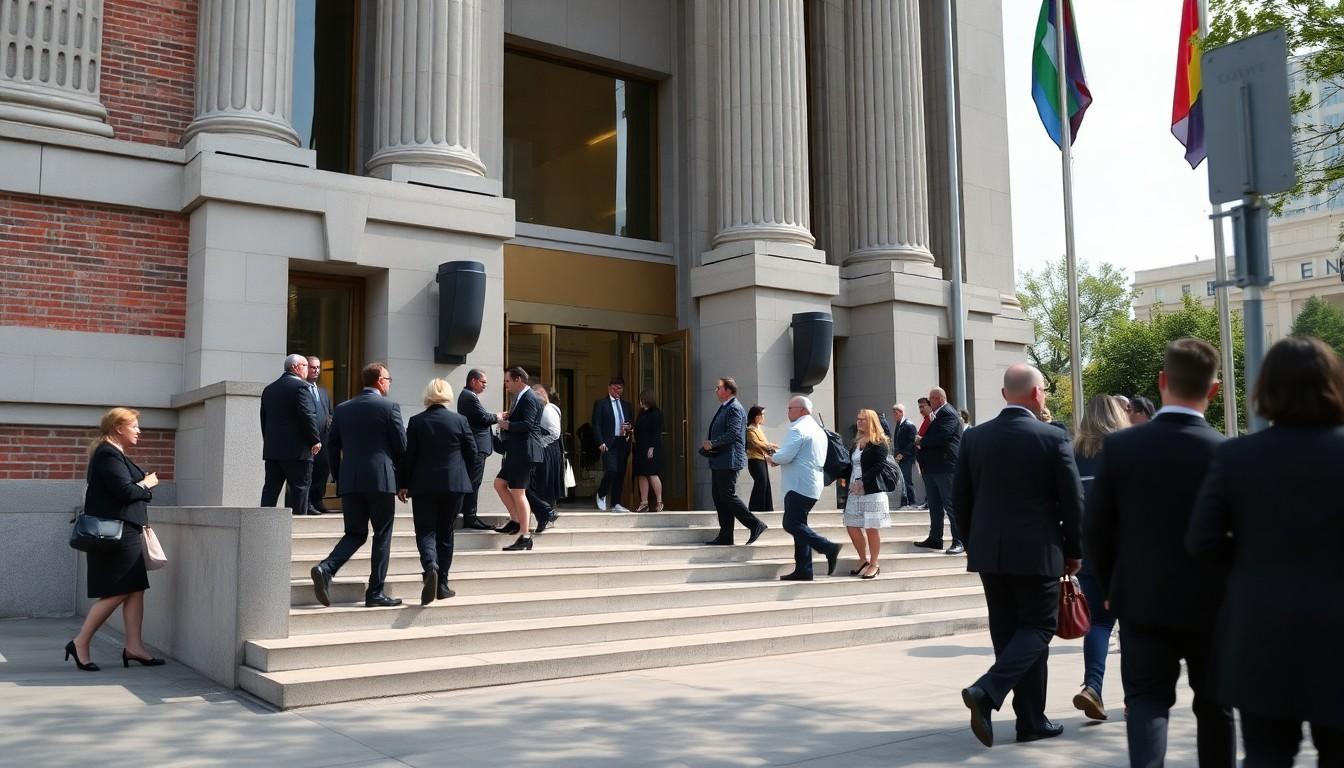
Community organisers, lawmakers and supporters will gather in Washington, DC, for OUT On The Hill, a major Black LGBTQ+ justice event spotlighting leadership, advocacy and collective action. The 2026 reception will honour Congresswoman Ayanna Pressley, Baltimore Safe Haven founder Iya Dammons and the Dr. Martens Foundation for their contributions to equity and community-building.
Essential Takeaways
- Three honourees: Ayanna Pressley, Iya Dammons and the Dr. Martens Foundation will receive NBJC justice awards.
- A key gathering: OUT On The Hill is scheduled for 17 September 2026 during the Congressional Black Caucus Foundation’s Annual Legislative Conference.
- Community focus: The event brings together Black LGBTQ+/same-gender loving leaders, advocates and emerging professionals.
- Practical support matters: Baltimore Safe Haven works with transgender people facing housing insecurity and systemic barriers.
- Where to go: The reception will take place at the Human Rights Campaign Equality Forum in Washington, DC.
A Washington reception with a bigger purpose
The strongest message behind OUT On The Hill isn't simply celebration. It's visibility with intent, creating space for Black LGBTQ+/same-gender loving people to connect, organise and influence the conversations shaping public life.
The National Black Justice Collective, or NBJC, will host the reception on 17 September 2026 alongside the Congressional Black Caucus Foundation's Annual Legislative Conference. According to the Congressional Black Caucus, the wider conference provides a platform for policy discussion, civic engagement and Black leadership, making it a fitting setting for this gathering.
There should be plenty of networking, but the atmosphere is likely to feel more purposeful than corporate. For many attendees, the value lies in meeting people who understand the work, pressures and possibilities of building change from within their own communities.
Why Ayanna Pressley's award stands out
Congresswoman Ayanna Pressley is being recognised for advocacy spanning racial, economic, gender and LGBTQ+ justice. Her public work has also included support for reparations-related legislation and efforts to make federal policy more equitable.
Her approach is notably broad. Rather than treating racial justice, reproductive freedom and LGBTQ+ rights as separate concerns, Pressley has consistently linked them through the everyday realities faced by communities navigating overlapping barriers.
In a recent statement reported by Pressley's congressional office, she emphasised the continuing influence of the civil rights movement on today's racial justice work. Her record has also included criticism of restrictions on abortion access and support for families affected by the post-Dobbs landscape, according to her office.
That combination helps explain why her recognition carries weight. It reflects not just visibility in Congress, but an insistence that policy should meet people where their lives actually intersect.
Iya Dammons brings housing and safety into focus
Iya Dammons, founder and chief executive of Baltimore Safe Haven, represents a more local and direct form of leadership. The organisation supports transgender people in Baltimore and the surrounding region, with particular attention to Black transgender people facing homelessness, poverty and exclusion.
That practical emphasis matters. Justice can sound abstract from a podium, but it becomes much more tangible when it means a safer place to sleep, trusted support, access to services or a community that doesn't require someone to explain their identity before offering help.
The wider reparative justice conversation increasingly reflects this point. As coverage of Congressional Black Caucus discussions has shown, policy strategies are being connected to historic harm as well as present-day conditions, including economic inequality and unequal access to opportunity.
Dammons' work sits firmly in that space between immediate care and long-term change. It's a reminder that national advocacy and neighbourhood-level support aren't competing models. They need each other.
The Dr. Martens Foundation's role is less visible, but vital
The Dr. Martens Foundation is being honoured for supporting NBJC programmes, including its Digital Action Hub, Equity Week, OUT On The Hill and the Black Institute.
Funding rarely gets the same applause as public campaigning, yet it often determines whether ideas survive beyond a single event. Grants can pay for training, digital tools, convening spaces and leadership development, all the unglamorous infrastructure that helps a movement keep moving.
That support also reflects a broader shift in corporate and philanthropic giving. Organisations are increasingly expected to back community-led work rather than simply attach their names to a campaign. The most useful partnerships tend to be the ones that strengthen existing expertise instead of trying to take over the microphone.
For attendees, the foundation's recognition offers a quiet but important lesson: lasting advocacy needs both passionate people and dependable resources.
What guests can expect at OUT On The Hill
The reception is scheduled for 6pm to 9pm Eastern time at the Human Rights Campaign Equality Forum, 1640 Rhode Island Avenue NW, Washington, DC. It will bring together elected and appointed officials, advocates, movement partners, community members and young professionals.
If you're planning to attend, arrive ready for conversation rather than a passive programme. Events like this work best when guests make introductions, seek out people outside their usual circles and leave room for unexpected connections. A simple, thoughtful question can be more useful than a polished elevator pitch.
The event's timing is significant, too. With civil rights and LGBTQ+ protections facing sustained political pressure, gathering in person can offer something that online advocacy often can't: warmth, trust and the feeling that you're not carrying the work alone.
As NBJC executive director Dr David J. Johns said in the organisation's announcement, the aim is for Black LGBTQ+/same-gender loving people not merely to be present in decision-making spaces, but to help shape what happens there. That feels like the evening's clearest promise.
It's a celebration, certainly, but also a reminder that community power grows when people meet, share resources and keep showing up.
Source Reference Map
Story idea inspired by: [1]
Sources by paragraph:
- Paragraph 1: [2], [3]
- Paragraph 2: [3], [6]
- Paragraph 3: [2], [4]
- Paragraph 4: [5], [6]
- Paragraph 5: [4], [6]
- Paragraph 6: [2], [5]
- Paragraph 7: [3], [7]
- Paragraph 8: [6], [7]
- Paragraph 9: [2], [4]
- Paragraph 10: [3], [6]
- Paragraph 11: [2], [7]
- Paragraph 12: [3], [6]
- Paragraph 13: [2], [4]
- Paragraph 14: [3], [7]
- Paragraph 15: [2], [6]
- Paragraph 16: [3], [4]