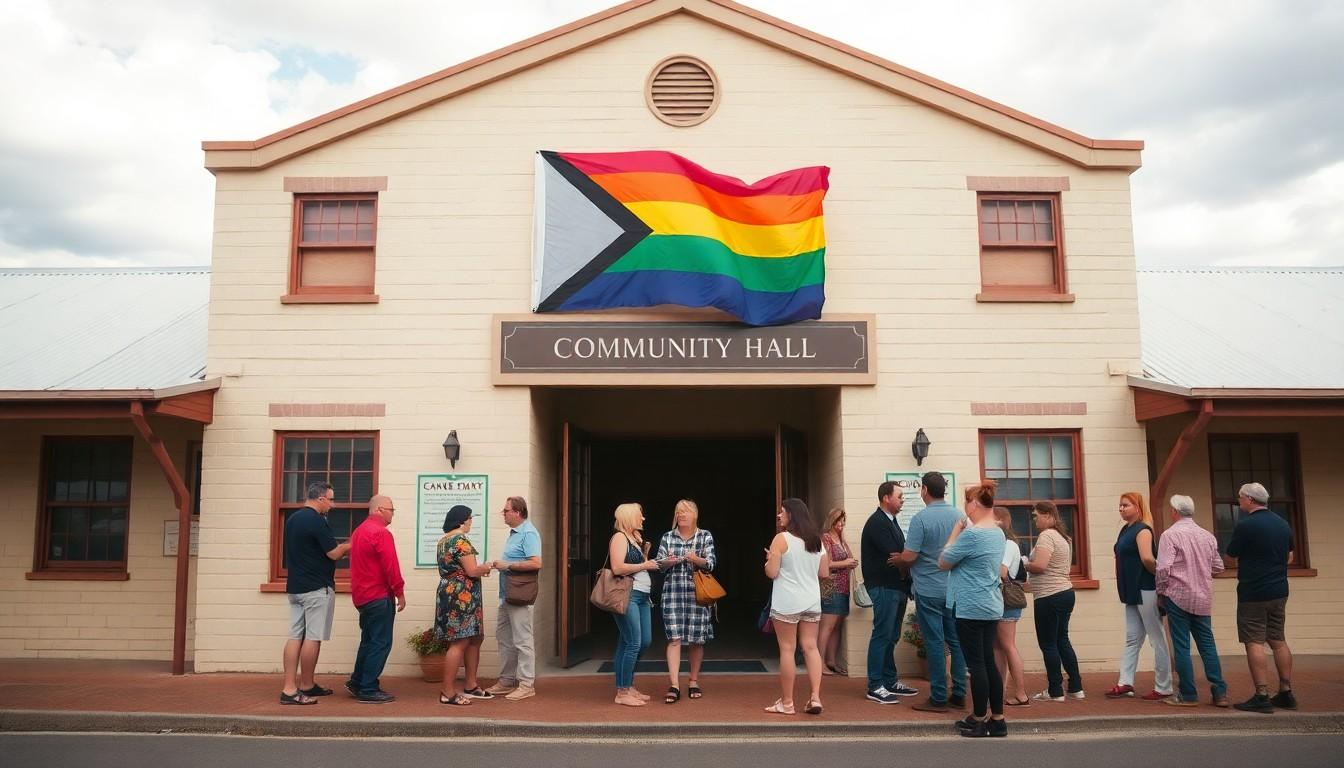
Organisers across regional Western Australia are warning that Pride events can disappear even when communities value them. Queernarvon's 2026 parade has been cancelled after volunteer numbers fell, while Busselton has redirected its energy elsewhere. In contrast, Pilbara Pride continues to grow, showing what sustained local backing can achieve.
Essential Takeaways
- Queernarvon is ending its parade: The Carnarvon event has run for three years but no longer has enough organisers.
- Busselton is changing direction: Its Pride group is focusing on education and wellbeing activities instead of a parade.
- Pilbara Pride is expanding: Events across Port Hedland, Karratha and Onslow could attract about 1,500 people.
- Volunteers make the difference: Reliable helpers, council support and community partnerships are crucial.
- The stakes are personal: For many LGBTQIA+ people, regional Pride offers rare space to meet, talk and feel safe.
When a popular parade still can't continue
The hardest part of Queernarvon's cancellation is that the event wasn't struggling for interest. More than 300 people attended its first year, and the parade had become a visible, welcoming fixture in Carnarvon, around 900 kilometres north of Perth. The problem was quieter and more familiar: too few people were left to do the work. According to the ABC, most of the organising committee had either stepped down or moved away.
That pattern is appearing elsewhere. PerthNow reported that Fremantle's Pride festival won't return in 2026 because of limited resources and funding, while ITV has covered similar cancellations in Exeter and Liverpool linked to volunteer shortages, rising costs or both. A cheerful public event can look effortless from the street, but behind it are months of permits, insurance, fundraising, accessibility planning and risk management.
Why regional Pride matters
For LGBTQIA+ residents outside major cities, a local festival can be much more than a colourful afternoon. It may be one of the few chances to meet people with similar experiences, find support services or simply spend time somewhere that doesn't require explaining who you are.
Carmen Reilly, chair of Queernarvon, told the ABC that direct contact matters at a time when social media and AI-generated material can shape attitudes without much connection to real people. Her point is disarmingly simple: conversations over a fence, in a school or at a community event can do what online arguments rarely manage.
That need is especially clear in the experience of Johnathan Trace, a trans man working in Carnarvon. The ABC reported that he had left the United States partly because he felt unsafe amid the rise of far-right politics, yet still encountered hostility in Australia. Without a regular local gathering, finding a place for honest conversations about identity and discrimination becomes harder.
The volunteer problem is bigger than Western Australia
This isn't just a regional WA story. Pride events in several countries have been cancelled or disrupted when volunteer teams became overstretched, funds fell short or organisers couldn't secure the necessary approvals. ITV reported that Exeter Pride was called off amid a volunteer shortage and rising costs, while Liverpool Pride organisers described their cancellation as devastating. In the United States, the Los Angeles Times reported that Long Beach cancelled its festival over a permit issue, and CityNews covered Montreal's parade cancellation after serious organisational problems.
The details vary, but the lesson is similar. Community enthusiasm doesn't automatically translate into an operational team. Often, a small number of committed people carry the bulk of the workload until exhaustion, employment changes or relocation leaves the group without a safety net.
For organisers, that makes succession planning as important as publicity. A smaller programme with a dependable rota may be more sustainable than a large annual event that depends on the same few people doing everything.
Pilbara shows what steady support can unlock
There is a more hopeful model in the Pilbara, where a modest games night has grown into a regional festival spanning Port Hedland, Karratha and Onslow. Pilbara Pride now expects around 1,500 people across its events, according to the ABC, with organisers crediting volunteers, local government and support from the resources sector.
Gloria Jacob of Port Hedland Lesbian, Allies, Gays Society said high school students had asked for a workshop, and a school agreed to host it. That kind of invitation suggests Pride is becoming part of everyday community life rather than remaining a once-a-year spectacle.
The journey hasn't been perfectly smooth. Jacob told the ABC that a church initially opposed the events but later marched in the parade. It's a useful reminder that attitudes can shift through repeated contact, patience and visibility. Progress may arrive less like a grand announcement and more like an unexpected group joining the procession.
How communities can keep Pride events going
The practical answer is not simply to tell volunteers to work harder. Organisers need shared responsibility, clear roles and realistic event plans. Councils, schools, employers, health services and local businesses can help with venues, funding, promotion, staff time and practical expertise.
Support also needs to extend beyond the parade itself. Workshops, wellbeing sessions, social gatherings and youth activities can keep connections alive when an annual festival isn't possible. Busselton's decision to focus on education and wellbeing shows that cancelling a parade doesn't have to mean abandoning the community.
Most importantly, local groups need room to grow new leaders before existing organisers burn out. As the ABC reported, Pilbara organisers worry that without visible welcome and support, LGBTQIA+ people will leave for larger cities. A Pride event is therefore not only a celebration. In some places, it's a signal that people can stay, belong and be themselves.
Regional Pride will survive where communities treat it as shared infrastructure, not a favour performed by a handful of exhausted volunteers.
Source Reference Map
Story idea inspired by: [1]
Sources by paragraph: