Rights groups are urging Türkiye to release detained activists after a sweeping operation targeting LGBTQ+ organisations, businesses and supporters. The campaign, framed by officials as a way to protect families, has triggered fresh concern over free expression, civil society and the safety of queer communities across the country.
Essential Takeaways
- More than 60 detained: Activists were arrested across 15 provinces during raids and protests.
- Broad operation: Officials said “My Family Is Safe” targeted 162 people, nine organisations and 13 businesses.
- Online restrictions: More than 180 websites and social media accounts were reportedly blocked or limited.
- Rights groups object: Amnesty International, Human Rights Watch and UN experts say family rhetoric cannot justify repression.
- A wider pattern: Restrictions on Pride, protest and LGBTQ+ organising have intensified in recent years.
A crackdown presented as family protection
The latest Türkiye LGBTQ+ crackdown has put a familiar political phrase under a harsh spotlight: “family values”. Authorities say the operation was designed to protect children, young people and social order, but rights organisations argue that the language is being used to stigmatise an already vulnerable community.
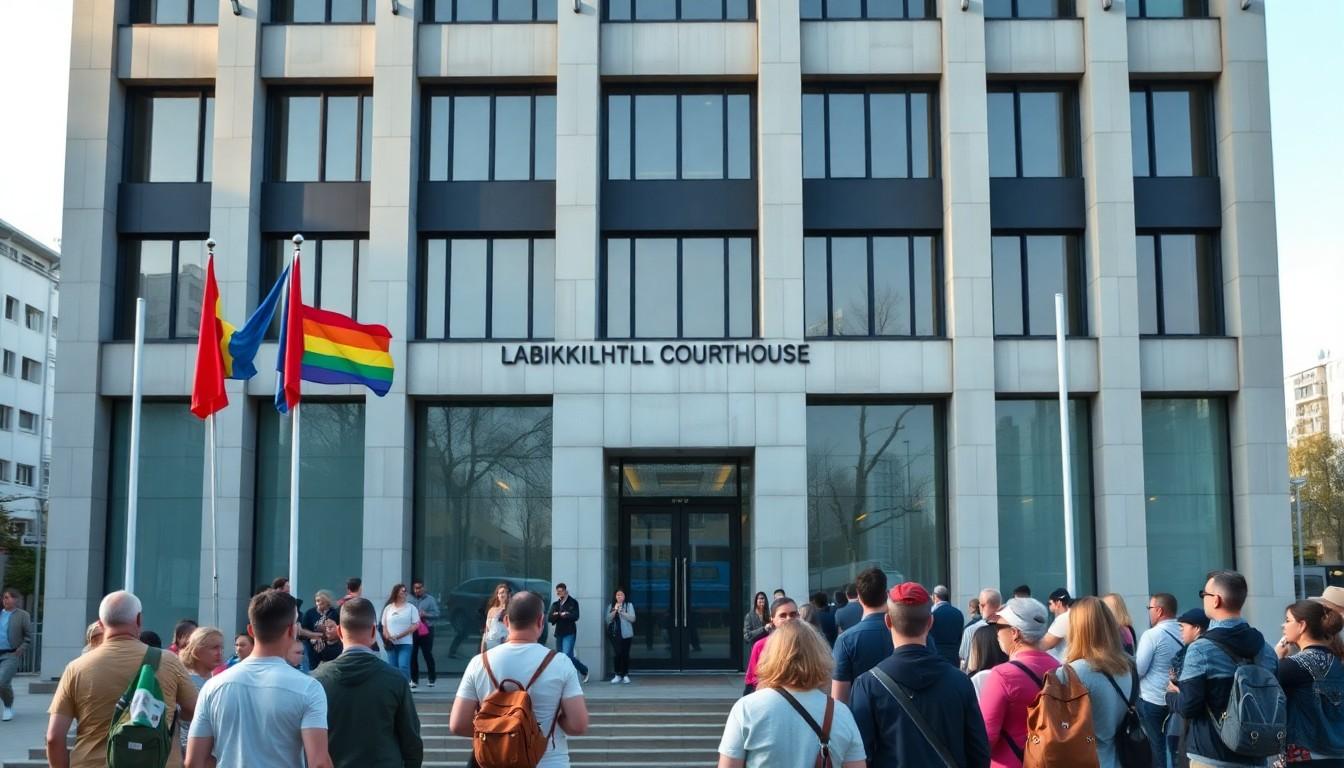
According to Amnesty International, police detained dozens of people outside Istanbul’s Çağlayan Courthouse as protesters called for the release of activists arrested during raids. The scene was tense and deeply symbolic, with a courthouse becoming the backdrop for a fight over whether LGBTQ+ advocacy should be treated as legitimate civic work or criminal conduct.
Amnesty described the escalation as a full-scale assault on LGBTI rights and those defending them. Earlier reporting by the organisation has also documented restrictions and violence affecting Pride protesters, showing that the latest arrests sit within a longer pattern rather than appearing out of nowhere.
Why the arrests have alarmed rights groups
Turkish Justice Minister Akın Gürlek said the operation involved 162 people, nine organisations and 13 businesses. Authorities linked the arrests to alleged offences including obscenity, prostitution and drug use, while Human Rights Watch said the accusations appeared to conflate LGBTQ+ rights work with criminal behaviour.
That distinction matters. Human Rights Watch has warned that using criminal investigations to silence lawful expression weakens the rule of law far beyond the LGBTQ+ community. When advocacy groups, journalists and independent organisations can be targeted under broad claims about public morality, the chilling effect spreads quickly.
Amnesty’s country reporting has repeatedly highlighted how vague restrictions on assembly and expression can be used against civil society. For activists, the fear isn't only arrest. It can also mean seized equipment, blocked accounts, cancelled events and the quiet loss of spaces where people once felt safe.
Online pressure adds another layer
More than 180 websites and social media accounts belonging to organisations, activists, journalists and media outlets were reportedly blocked or restricted. Amnesty International Türkiye’s X account was among those affected, adding a striking digital dimension to the crackdown.
For campaigners, online access isn't a luxury. It’s how they share legal updates, locate missing detainees, document raids and organise support. Cut off those channels and a government can make a rapidly moving crisis feel strangely invisible, even while the consequences remain immediate and personal.
The pressure also lands at a time when digital platforms are central to LGBTQ+ communities. A post may look fleeting, but it can connect someone to legal help, a support network or a safe event. Removing that link can leave people isolated before they’ve even reached a police station.
Türkiye’s longer shift on LGBTQ+ rights
Homosexuality remains legal in Türkiye, but legal status alone doesn't guarantee safety or equality. Under President Recep Tayyip Erdoğan and the Justice and Development Party, restrictions on public expression, assembly and civil society have increasingly narrowed the space available to LGBTQ+ people and their allies.
Amnesty’s documentation of Pride-related restrictions and violence points to a wider trend: public visibility is being treated as a political provocation. Pride marches have faced bans and police intervention, while politicians have increasingly used anti-LGBTQ+ rhetoric during election campaigns.
The government has also considered proposals that could criminalise LGBTQ+ identity or activism more directly. That possibility has made the current arrests feel even more serious to campaigners. As one protester told the Associated Press, LGBTQ+ people are being portrayed as the cause of every problem in society, a bleak reminder of how quickly scapegoating can become policy.
International condemnation is growing
Amnesty, Human Rights Watch and a UN special rapporteur have all called for detained activists to be released and for LGBTQ+ defenders to be allowed to work without intimidation. The Council of Europe’s human rights commissioner also stressed that references to family values or child protection cannot, by themselves, justify restrictions on fundamental rights.
A coalition of more than 110 women’s organisations in Türkiye condemned the raids, linking them to the country’s broader history of authoritarian repression. Their message was blunt: organising around gender identity and sexual orientation is not a crime.
The reaction from abroad has been similarly direct. Barcelona mayor Jaume Collboni condemned the pressure on LGBTQ+ people and organisations, while international rights groups continue to monitor the arrests and online restrictions. For campaigners, the immediate hope is release; the larger demand is an end to policies that make solidarity itself feel dangerous.
The latest developments leave Türkiye’s LGBTQ+ community facing an anxious question: will this remain a concentrated operation, or become a model for wider criminalisation? For now, rights groups are urging governments and international institutions to keep watching closely. Silence, they argue, would only make the crackdown easier to expand.
Closing Line
Protecting families should never mean criminalising the people who defend human rights.
Source Reference Map
Story idea inspired by: [1]
Sources by paragraph:
- Paragraph 1: [2], [4]
- Paragraph 2: [5], [6]
- Paragraph 3: [3], [7]
- Paragraph 4: [2], [4]
- Paragraph 5: [3], [5]
- Paragraph 6: [6], [7]
- Paragraph 7: [2], [4]
- Paragraph 8: [5], [6]
- Paragraph 9: [3], [7]
- Paragraph 10: [2], [4]
- Paragraph 11: [5], [6]
- Paragraph 12: [3], [7]
- Paragraph 13: [2], [4]
- Paragraph 14: [5], [7]