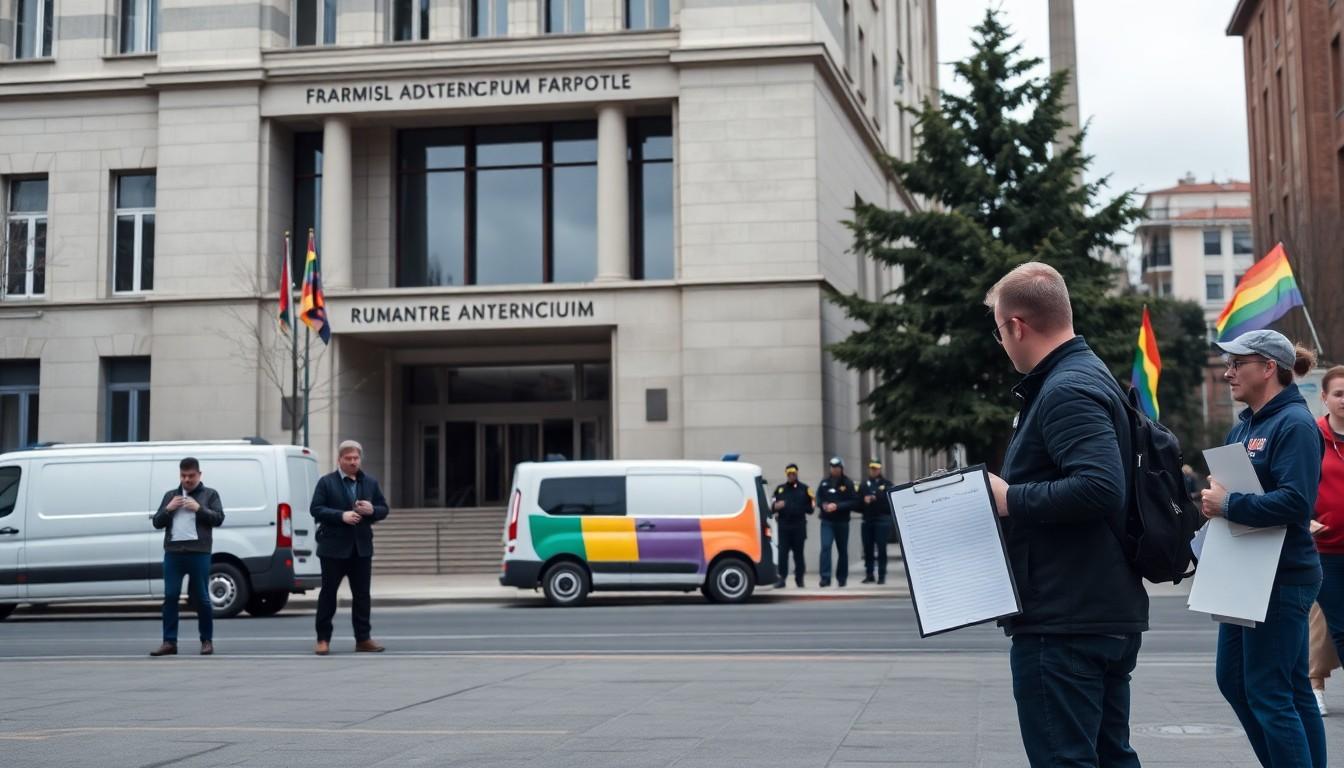
Authorities in Turkey have launched a sweeping LGBTQ+ crackdown spanning several provinces, with journalists, campaigners, HIV organisations and members of the public detained. The operation, framed by the government as a defence of family values, has prompted anger from rights groups and renewed concern over freedom of expression.
Essential Takeaways
- More than 160 proceedings: Turkey's justice minister said legal action had begun against people and organisations nationwide.
- Broad targets: Arrests reportedly included activists, journalists, HIV support workers and people detained in bars, cafes or their homes.
- LGBTQ+ groups blocked: Several organisations, media outlets and human rights accounts were restricted online.
- Homosexuality remains legal: But officials have intensified anti-LGBTQ+ rhetoric and enforcement in recent years.
- Rights groups condemn the operation: Critics describe it as state-led discrimination and a serious escalation of repression.
A crackdown reaching far beyond activists
The operation's scale is what has alarmed observers most. According to reports from the Associated Press and LGBTQ Nation, arrests and detentions were spread across 15 provinces, with activity concentrated in five. The alleged offences include obscenity, assisting prostitution and suspected overseas financial links.
That language matters. It allows authorities to present a political campaign as a public-order operation, while the people caught up in it include not only high-profile campaigners but ordinary LGBTQ+ citizens. Reports say some were detained during raids on gay venues, while others were taken from their homes. (Associated Press; LGBTQ Nation)
For many people, the most unsettling detail is the breadth of the action. A bar raid is visible; a journalist's detention or an organisation's blocked account can make the pressure feel much wider, reaching into newsrooms, charities and private life.
Kaos GL becomes a central target
Kaos GL, one of Turkey's best-known LGBTQ+ organisations, was among the most prominent targets. The Ankara chief prosecutor's office said 21 people connected to the group were arrested as part of an investigation, while journalist Tugba Tekerek was detained over an article about LGBTQ+ people in Georgia, according to Middle East-focused reporting and the Washington Post.
Yildiz Tar, Kaos GL's editor-in-chief, said the arrests represented an unprecedented level of pressure on LGBTQ+ activism and visibility. He also described a striking divide among those detained, with roughly half being journalists or campaigners and the remainder ordinary people.
The focus on publishing is particularly significant. When an article can become the basis for detention, the consequences extend beyond one writer. It can encourage self-censorship, silence specialist reporting and leave vulnerable communities with fewer reliable sources of information. (The Washington Post; Middle East Eye)
Family values become the political frame
Turkey's government has increasingly presented LGBTQ+ rights as a threat to traditional family life. President Recep Tayyip Erdogan has described the years ahead as a "Decade of the Family", while officials have branded the latest operation "My Family is Safe", according to the Jerusalem Post and the Inquirer.
That framing turns a complex social debate into a stark political choice: family or LGBTQ+ rights. Yet campaigners argue that families are more directly affected by poverty, inadequate social support and violence against women than by LGBTQ+ visibility. The argument is familiar across the region and beyond, but its consequences become sharper when paired with arrests and restrictions.
Turkey has not criminalised homosexuality, and attitudes vary considerably between communities. Still, legal status offers little reassurance when vague morality-based accusations are used against organisations, journalists or citizens. (The Jerusalem Post; The Inquirer)
Online restrictions widen the pressure
The crackdown has also moved into Turkey's digital sphere. X reportedly restricted accounts belonging to Amnesty International Turkey, the Evrensel newspaper, Academics for Peace and the Media and Law Studies Association after requests from Turkish authorities.
Accounts and websites linked to Kaos GL, human rights lawyer Levent Piskin and women's rights organisation Mor Dayanisma were also blocked, according to reporting from the Associated Press and the Washington Post. These restrictions can be as disruptive as a physical raid, particularly for organisations that rely on social media to share legal updates, health information and emergency support.
For LGBTQ+ people and HIV organisations, that communication network is practical rather than symbolic. Losing access can mean fewer routes to advice, referrals and community safety information. A blocked account may look like a technical inconvenience, but in a hostile climate it can become a locked front door. (Associated Press; The Washington Post)
Protesters push back despite the risks
The response has not been muted. Around 150 people were detained outside Istanbul's Caglayan courthouse while protesting against the operation, with demonstrators chanting in defiance of hatred as police intervened, according to the Inquirer and LGBTQ Nation.
Rights organisations in Turkey and European officials have condemned the arrests. The Turkish Human Rights Association described the operation as state-backed discrimination and an attack on civil society, while the European Parliament's Turkey rapporteur called it a major escalation of repression. The DEM Party also warned that repression sits uneasily alongside efforts to pursue peace talks involving the Kurdistan Workers' Party. (The Inquirer; LGBTQ Nation)
The immediate outlook is uncertain, but the wider message is clear. When a government targets visibility, journalism and community support at the same time, the impact is designed to reach well beyond those arrested. For LGBTQ+ people in Turkey, the coming months may test not only legal protections but the resilience of the organisations that help make everyday life safer.
It's a small phrase, but a powerful one: visibility can be a form of resistance.
Source Reference Map
Story idea inspired by: [1]
Sources by paragraph:
- Paragraph 1: [2], [4]
- Paragraph 2: [4], [6]
- Paragraph 3: [2], [7]
- Paragraph 4: [5], [7]
- Paragraph 5: [6], [5]
- Paragraph 6: [2], [7]
- Paragraph 7: [2], [7]
- Paragraph 8: [6], [4]
- Paragraph 9: [6], [4]
- Paragraph 10: [5], [6]
- Paragraph 11: [2], [7]
- Paragraph 12: [6], [4]
- Paragraph 13: [6], [4]
- Paragraph 14: [5], [7]
- Paragraph 15: [6], [7]