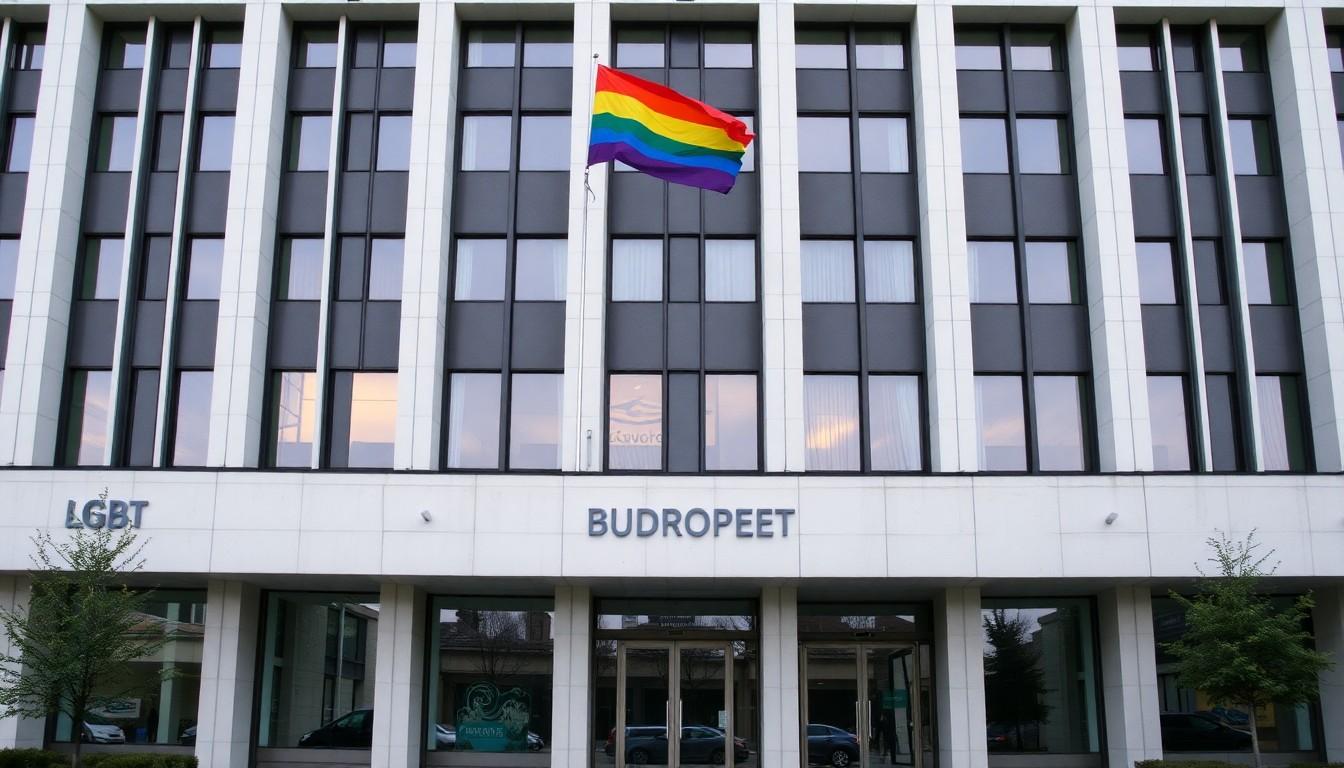
Hungary's government is preparing to withdraw a controversial anti-LGBTQ law after the EU's top court ruled that it breaches European law. The move could mark a significant break with Viktor Orban's former administration, while testing Prime Minister Peter Magyar's promise to repair relations with Brussels and protect fundamental rights.
Essential takeaways
- The law: Introduced in 2021, it restricted depictions and discussion of homosexuality and gender transition in content available to under-18s.
- The court ruling: The Court of Justice of the European Union found that the legislation stigmatises and marginalises LGBTQ people.
- The proposed change: Hungary's government has put forward legislation intended to remove the disputed rules.
- The wider stakes: The repeal will be watched as a test of Hungary's new government's pro-European commitments.
- Why it matters: The case reaches beyond media regulation, touching equality, free expression and the rule of law.
Budapest signals a sharp change of direction
Hungary's proposed repeal is more than a technical legal tidy-up. It signals a deliberate attempt to distance the new government from the confrontational approach associated with Viktor Orban, whose administration introduced the restrictions in 2021.
The disputed law barred the portrayal or promotion of homosexuality and gender transition in media content that could be accessed by children. In practice, critics said the wording was broad enough to affect books, television, advertising and educational material. The European Court's ruling made clear that the issue wasn't simply where content appeared, but whether the state was treating LGBTQ identities as inherently harmful.
As Reuters reported, the government submitted its rollback proposal late on Monday, following the court's decision and earlier comments from Justice Minister Marta Gorog that Hungary would need to change the rules.
Why the EU court found the law unlawful
The Court of Justice of the European Union concluded that the legislation violated EU law and fundamental rights. Its reasoning focused on the law's effect: rather than offering a narrowly tailored protection for children, the measures were judged to stigmatise and marginalise LGBTQ people.
The ruling also placed the dispute firmly within the EU's legal framework. Euronews reported that the court linked the Hungarian law to core European values, while the Guardian described the judgment as a major blow to one of Orban's signature culture-war policies.
That distinction matters. Governments can regulate material aimed at children, but restrictions still need to be clear, proportionate and compatible with equality protections. The court's decision says Hungary crossed that line.
A test for Peter Magyar's pro-EU promise
The repeal proposal gives Prime Minister Peter Magyar an opportunity to demonstrate that his government intends to rebuild trust with Brussels. The issue had become one of several long-running points of friction between Hungary and the EU under the previous administration.
ILGA-Europe said the infringement ruling would test whether Magyar's pro-European commitments would translate into concrete action. That makes the next stage important: announcing repeal is one thing, but passing the bill and applying the court's judgment consistently will carry greater weight.
For Hungary's LGBTQ community, the change could also have a symbolic importance that reaches beyond the legal text. Removing a rule that treats ordinary representation as dangerous would be a small but meaningful reversal of years of hostile political messaging.
What happens next?
The government's proposal must still move through Hungary's legislative process. The final wording will matter, particularly if other regulations or administrative practices continue to restrict LGBTQ visibility after the central law is removed.
The court's own judgment provides the legal foundation for the change. Human Rights Watch and other rights organisations have called for the legislation to be repealed, not merely softened or replaced with similar restrictions. JURIST reported that campaigners viewed the ruling as an opportunity for Budapest to bring its laws into line with European rights standards.
The most revealing measure will be whether the repeal becomes part of a wider shift. If it does, Hungary could begin repairing a particularly damaged relationship with EU institutions. If not, the announcement may look more like a tactical response than a genuine reset.
A consequential moment for Hungary and the EU
The dispute shows how culture-war legislation can become a constitutional issue once it collides with shared European rules. It also illustrates why court judgments matter beyond the courtroom: they can force governments to reconsider laws that have shaped public life and political debate.
For now, the proposed repeal offers a cautious sign of change. But many observers will be watching the detail, the timetable and what follows afterwards. In rights disputes, the small print often tells the real story.
Repealing the law would be a meaningful first step, but lasting change will depend on what Hungary does next.
Source Reference Map
Story idea inspired by: [1]
Sources by paragraph: