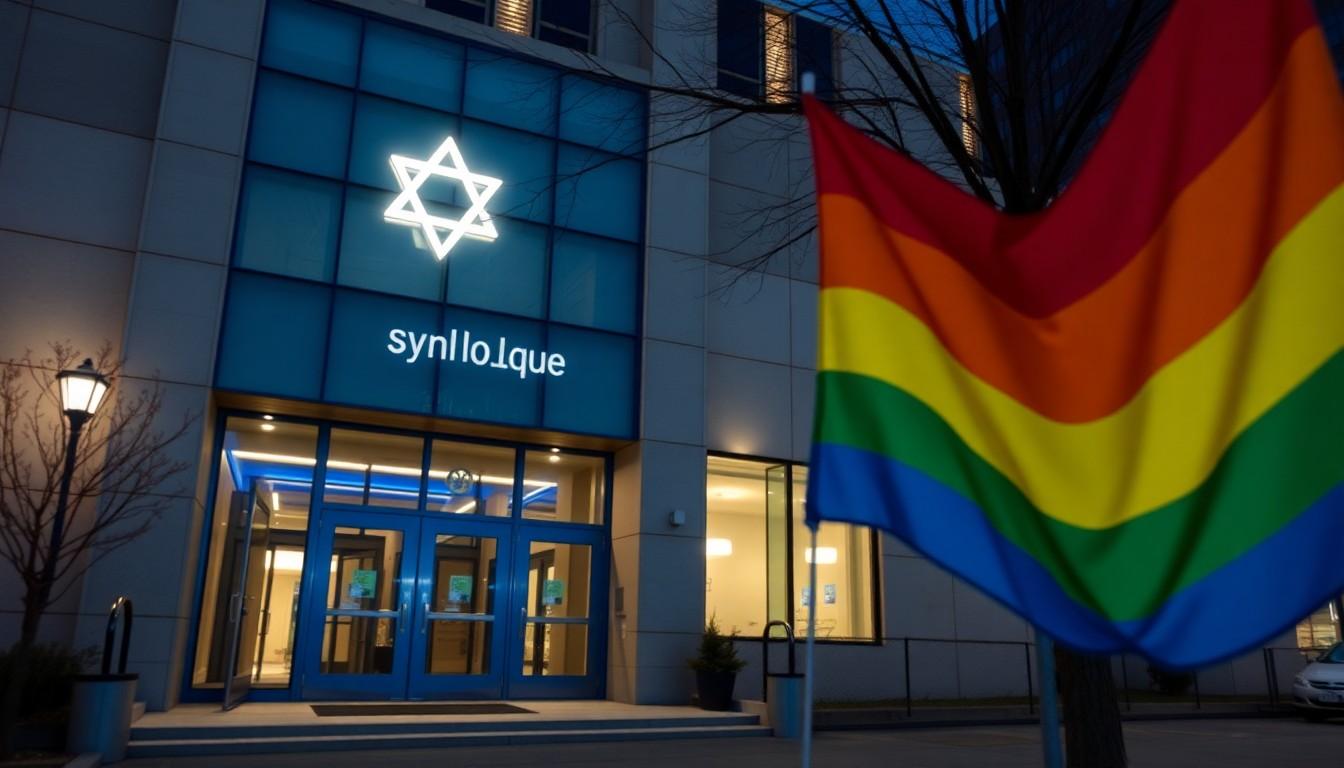
LGBTQ Jews are preparing for High Holiday services amid rising antisemitism and growing hostility towards LGBTQ people. For synagogues across the US, clear communication, respectful security and practical inclusion can turn a stressful arrival into something more meaningful: a genuine sense of home.
Essential Takeaways
- Two pressures overlap: LGBTQ Jews face antisemitism alongside hostility towards LGBTQ identities and families.
- Security needs humanity: Check-in procedures should protect congregants without humiliating anyone whose documents or appearance differ.
- Say welcome clearly: A direct message on websites, emails and from the bimah can ease anxiety before people arrive.
- Train the front line: Greeters, clergy and staff should understand names, pronouns, partners and varied family structures.
- Inclusion must continue: Support shouldn't disappear after Yom Kippur or Pride Month.
For some LGBTQ Jews, the synagogue entrance feels loaded
The High Holidays are meant to offer reflection, renewal and a powerful sense of belonging. Yet for some LGBTQ Jews, arriving at synagogue can bring a string of private worries: whether a partner will be recognised as family, whether a child's name will be respected, or whether security staff will treat them with care.
That unease is unfolding alongside a wider security concern for Jewish communities. Axios has reported increased spending on protection around the Jewish holidays, as congregations respond to fears about threats against synagogues and communal spaces.
For LGBTQ Jews, these concerns aren't separate. They can arrive together, making what should feel like a homecoming seem more like a risk assessment at the door.
The wider climate is making belonging harder
The concern isn't simply emotional. FBI hate-crime reporting recorded offences motivated by sexual orientation and gender identity, while Jewish people continued to account for a large share of religiously motivated hate-crime victims. The agency's reporting also makes clear that hate-crime figures reflect incidents known to law enforcement, not every act of harassment or intimidation.
That distinction matters. A hostile comment, a humiliating question or a family being treated as somehow provisional may never appear in official statistics, but it can still shape whether someone returns to a congregation.
Meanwhile, legal and political fights over LGBTQ rights have made public life feel less settled for many families. The Associated Press has reported on continuing disputes around gender-affirming care and related restrictions, developments that can feel especially immediate to young people and their parents.
A clear welcome can do more than a rainbow graphic
The simplest step is also one of the most useful: say plainly that LGBTQ Jews and their families belong. Put it in pre-holiday messages, on the synagogue website and in remarks from the bimah. People shouldn't have to decode a congregation's values before deciding whether it is safe to attend.
This isn't about imposing one religious approach on every movement or congregation. Reform, Conservative, Reconstructionist and Orthodox communities may differ in theology and practice, but basic dignity is not a denominational luxury.
A short, specific statement can also prevent awkward guesswork. Saying that partners and spouses are welcome, names and pronouns will be respected, and families won't be questioned unnecessarily gives people something far more valuable than vague reassurance: useful information.
Train the people congregants meet first
The warmest policy can fall apart in a crowded lobby. Synagogues should decide in advance who can handle sensitive questions, how staff will respond to name discrepancies, and what happens if someone is challenged over seating, toilets, ritual honours or family relationships.
The FBI's hate-crime guidance emphasises the importance of recognising and reporting bias-related incidents. For congregations, the everyday lesson is broader: staff need to know when a moment has moved beyond confusion and into harassment, and they need permission to intervene.
Greeters, educators, clergy and security teams don't need to be experts in every aspect of LGBTQ life. They do need a shared script, calm training and the confidence to avoid assumptions. No one should have to explain their identity in a public queue while other people watch.
Safety and welcome should work together
Security is essential, particularly when Jewish institutions are facing credible concerns. But a safer synagogue isn't one where every unfamiliar document or appearance is treated as suspicious. It is one where procedures are consistent, private where possible and applied with respect.
That might mean briefing security teams before services, offering a discreet route for resolving identification questions, and ensuring volunteers know how to call for help without escalating embarrassment. It also means setting a firm boundary around slurs, bullying and interrogation by other congregants.
The test comes when something goes wrong. A welcome statement matters, but a practiced response proves whether the promise is real. For many families, that visible follow-through will be more convincing than any slogan.
The commitment has to last beyond Yom Kippur
High Holiday planning creates a natural moment to review policies, but inclusion cannot be packed away with the prayer books. Congregations can continue the work through staff training, family events, youth programmes, pastoral care and regular feedback from LGBTQ members.
The FBI's broader civil-rights resources underline why communities need both prevention and response. A synagogue doesn't have to wait for a crisis to decide how it will protect people or address discrimination.
Yom Kippur's emphasis on collective responsibility offers a fitting reminder. Belonging isn't something LGBTQ Jews should have to earn by staying quiet or making themselves easy to accommodate. A sanctuary should be able to say, clearly and consistently, you are one of us.
It's a small sentence, but in an anxious season, it can feel like the door opening.
Source Reference Map
Story idea inspired by: [1]
Sources by paragraph: