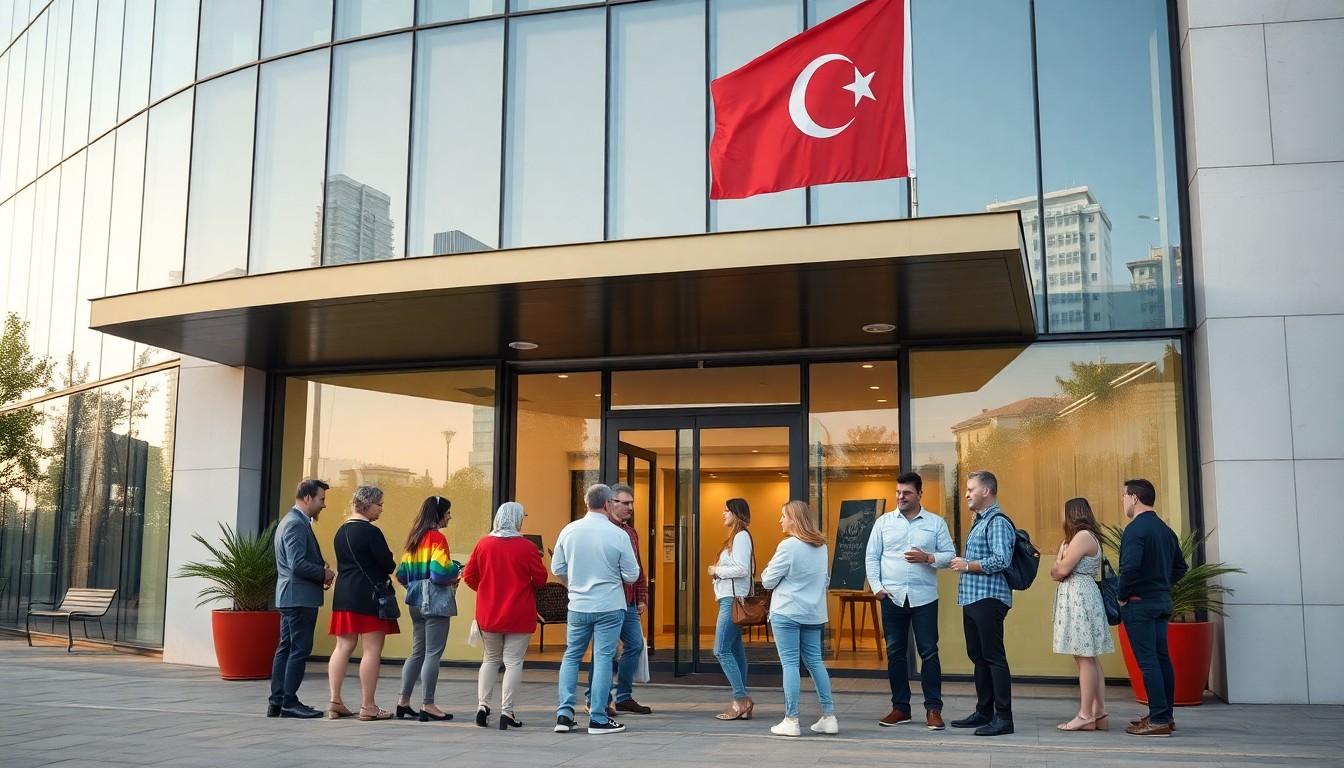
A new wave of arrests targeting LGBT+ organisations has intensified debate in Turkey, alongside fresh political manoeuvring, an İmralı meeting and controversial court decisions. The developments matter because they bring civil society, elections, Kurdish politics and judicial independence into one increasingly charged national conversation.
Essential Takeaways
- LGBT+ organisations targeted: Searches and arrests reportedly took place across 15 provinces under the “My Family Is Safe” operation.
- Funding under scrutiny: Authorities cited overseas transfers, while organisations said the money supported lawful, publicly disclosed human-rights work.
- İmralı meeting held: A DEM Party delegation met Abdullah Öcalan after Parliament approved a framework law.
- Election rhetoric is sharpening: MHP figures and President Recep Tayyip Erdogan have signalled confidence ahead of future electoral battles.
- Court rulings deepen concern: Ekrem Imamoglu received a prison sentence and political ban in a case where he had previously been acquitted twice.
LGBT+ raids put civil society under pressure
The most striking development is the operation aimed at LGBT+ associations, activists, rights defenders and some businesses. Searches reportedly stretched across Istanbul, Ankara, Izmir, Aydin and Mersin, with dozens of people detained and several organisations facing restrictions on their websites and social-media accounts.
The investigation cites allegations including forming an organisation to commit crime, obscenity, prostitution and possession of drugs for personal use. Authorities also framed the inquiry around protecting children, family life and what prosecutors described as shared moral values. That language is likely to intensify an already bitter debate over whether public policy is being used to shield children or suppress a vulnerable minority.
The scale of the action has drawn criticism from lawyers, politicians and human-rights groups. The Associated Press has also reported on the wider pressure facing LGBT+ communities in Turkey, where activism and public visibility have become increasingly contested. [2]
Why the funding claims matter
Officials said financial checks had identified overseas transfers to several associations. The sums mentioned were substantial, but rights groups and the organisations involved said the payments were legitimate international grants for human-rights projects, with details published transparently online.
That distinction matters. Foreign funding can become politically explosive, particularly when civil-society groups are already being portrayed as agents of outside influence. Yet receiving an international grant isn't, by itself, evidence of criminal activity. The crucial questions are whether the funds were lawful, properly recorded and spent for the purposes declared.
For readers trying to make sense of the allegations, the legal process will be more revealing than the rhetoric. Evidence, judicial oversight and the right to challenge restrictions will determine whether this becomes a conventional financial investigation or another major test for independent civil society.
DEM Party delegation meets Öcalan
Meanwhile, a DEM Party delegation has met Abdullah Öcalan on İmralı, marking its first visit since Parliament approved a framework law linked to the “Terror-Free Turkey” process. The delegation included Pervin Buldan, Mithat Sancar and Özgür Faik Erol, with the party saying a fuller statement would follow.
The meeting is politically significant because it comes as parties attempt to define the next stage of a delicate process involving Kurdish representation, security policy and the future of armed conflict. Coverage from Euronews and Deutsche Welle noted the importance of the delegation's renewed contact with Öcalan, although the immediate political direction remains unclear. [4], [5]
There is plenty of room for speculation, but very little certainty. Until the promised statement is released, the meeting is best understood as a signal that dialogue remains active, rather than proof that a final settlement is close.
Election language grows more pointed
MHP figures have been using party meetings and seminars to build support for the framework law and the broader political process. One senior MHP figure even spoke of a future in which the party could become the largest force in Parliament while President Erdogan is re-elected.
Erdogan has also spoken about successfully navigating the coming elections, prompting a sharp response from opposition leader Ozgur Ozel. The exchange reflects a familiar pattern in Turkish politics: economic pressure and legal disputes are quickly folded into a wider contest over legitimacy, institutions and the ballot box.
The dispute has also spread to local government. Arguments over the Istanbul district of Uskudar, including a deputy-mayor election and competing interpretations of official correspondence, show how even procedural decisions can become national political flashpoints. The temperature is high, and the paperwork is somehow just as dramatic.
Court decisions add to the tension
Ekrem Imamoglu, Istanbul's detained mayor, was sentenced to two years and one month in prison and given a political ban over remarks concerning former Tuzla mayor Sadi Yazici. The case is especially controversial because Imamoglu had previously been acquitted twice before an appeal court sent it back on procedural grounds.
The ban won't take effect unless the ruling passes through the appeal and Supreme Court stages, but the decision still carries major political weight. It adds to concerns among opposition supporters that legal proceedings are being used to shape electoral competition before voters have their say.
Other cases have produced similarly strong reactions. Families affected by the Kahramanmaras earthquake criticised the release of two defendants after convictions in the Ezgi Apartment case, while the Constitutional Court's finding of violations in Tayfun Kahraman's file has renewed attention on fair-trial rights. Together, these cases suggest that public trust in the justice system remains one of Turkey's most fragile political issues.
The week's events therefore connect in an uncomfortable way. LGBT+ groups face sweeping legal action, political figures trade increasingly direct election messages, and courts continue to make decisions with consequences far beyond individual defendants. For many people, the question is no longer simply what happened, but whether institutions are being applied evenly.
It's a small distinction in wording, but a major one in democracy: scrutiny should follow evidence, not identity or political convenience.
Source Reference Map
Story idea inspired by: [1]
Sources by paragraph: