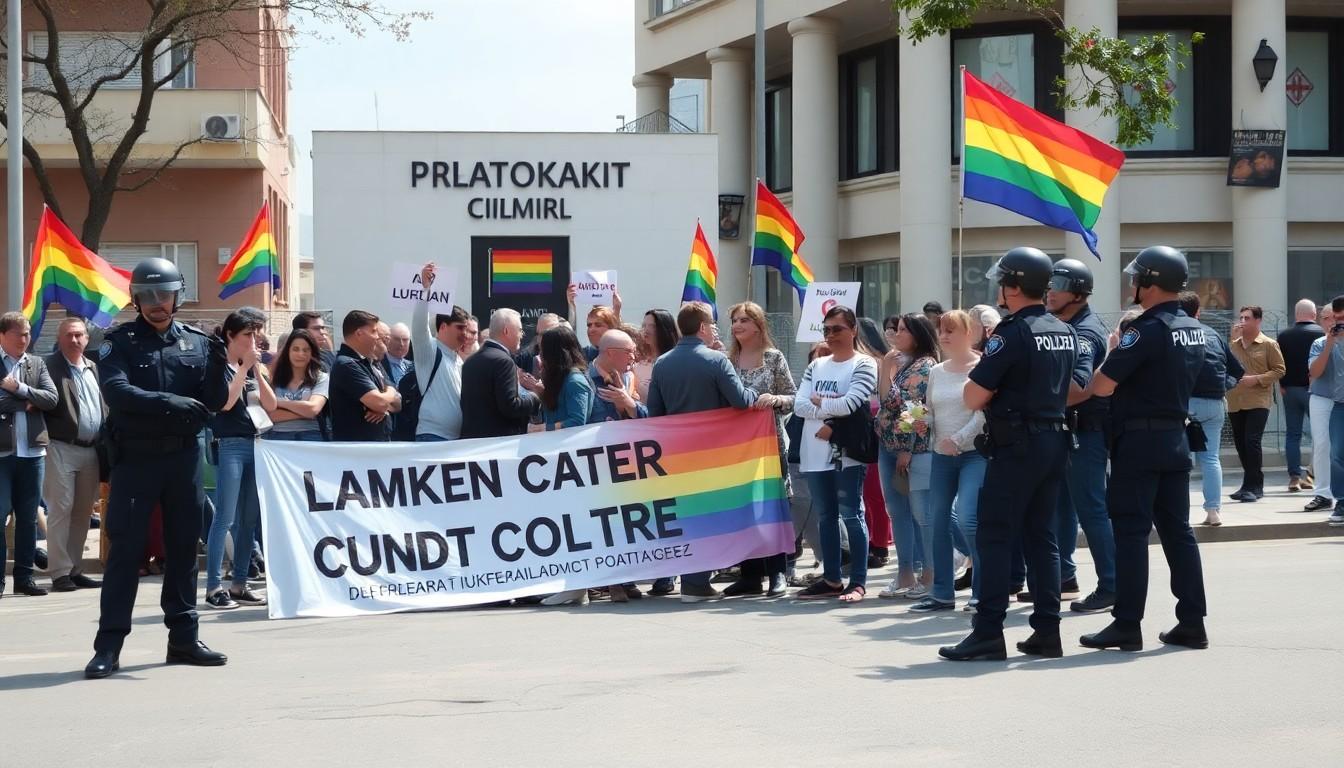
Protesters in Izmir gathered to oppose operations targeting LGBT+ people, but their planned march was initially blocked by police. After negotiations allowed the group to reach the cultural centre, officers intervened following the statement, with pepper spray reportedly used.
Essential Takeaways
- The march was delayed: Police initially stopped the group and objected to its planned banner.
- Negotiations changed the route: Lawyers and labour representatives helped secure permission for the crowd to walk to the cultural centre.
- The gathering remained tightly controlled: The area was surrounded by police, and journalists were reportedly prevented from entering.
- Pepper spray was used: Officers intervened after protesters attempted to display the banner again.
- The protest followed wider operations: Related reports describe arrests and legal action involving LGBT+ groups in Izmir.
Police block march before negotiations reopen route
The gathering began near the Alsancak examination centre, where campaigners from Izmir labour and democracy groups and the Izmir Feminist Night March came together. The planned destination was the nearby Türkan Saylan Cultural Centre, but police stopped the group before it could set off.
The dispute centred partly on the banner protesters wanted to carry. According to Ege Medya, officers refused permission for it to be displayed, turning what might have been a short march into a tense standoff. For people at the scene, the atmosphere shifted quickly from organised protest to negotiation.
Representatives including DİSK Ege regional official Deniz Sahin Gumustekin and Izmir Bar Association president Sefa Yilmaz spoke with security officials. Following those talks, police allowed the group to walk to the cultural centre. (Sources: Ege Medya; Son Dakika.)
A permitted walk, but a tightly controlled gathering
Permission to move did not mean the protest proceeded freely. Once the group reached the cultural centre, police surrounded the area, creating an enclosure around the crowd. Reports also said members of the press weren't allowed into the space, limiting independent access to the statement.
The restriction is significant because public demonstrations depend not only on attendance, but also on visibility. When journalists are kept outside, images, testimony and the precise sequence of events become harder to verify. Turkey has previously seen LGBT+ marches and gatherings restricted through bans, court decisions and heavy police presence, according to reports from Haberler and the Associated Press.
That broader backdrop helps explain why a banner can become such a flashpoint. For protesters, it carries the central message of the demonstration; for authorities, it can become the point at which a permitted gathering is treated as a public-order issue. (Sources: Haberler; Associated Press.)
Why the Izmir protest matters beyond one afternoon
The demonstration was organised in response to operations referred to as "Ailem Güvende", which campaigners say target LGBT+ people. Other reports linked to the same wider dispute describe arrests in Izmir, including the detention of 16 people, and continuing court proceedings involving LGBT+ organisations.
The legal consequences have made public protest especially charged. Reuters-republished reporting from WSAU said a Turkish court jailed 16 people after raids connected to LGBT+ groups, while Artı Gerçek also reported on arrests in Izmir. These accounts show that the march wasn't an isolated disagreement over a route or placard; it formed part of a wider conflict over organising, identity and state power.
Supporters of the protesters argue that LGBT+ rights are human rights and that peaceful assembly should be protected. That message has also appeared in statements surrounding legal cases involving youth LGBT+ groups, as reported by Sendika. (Sources: Artı Gerçek; WSAU; Sendika.)
Pepper spray follows renewed banner attempt
After the press statement, protesters tried to display the banner again. Police then intervened, and pepper spray was reportedly used as officers moved against the crowd. Security measures remained in place in the area afterwards.
The report doesn't establish the full sequence of every exchange or identify all those affected, so claims about injuries or arrests at the scene should be treated carefully. Still, the use of chemical spray marks a sharp escalation after the earlier compromise had allowed the march to proceed.
For anyone covering or attending demonstrations, the practical lesson is unglamorous but important: keep a clear exit route, carry water and avoid touching the face if exposed to irritants. The incident also underlines how quickly a protest can move from negotiated access to confrontation when officials and demonstrators disagree over signs or slogans. (Sources: Son Dakika; Ege Medya.)
The wider outlook for LGBT+ assembly in Turkey
The Izmir episode reflects a difficult environment for LGBT+ public organising. Restrictions on Pride events, police interventions and prosecutions have made even carefully planned demonstrations vulnerable to sudden changes on the ground.
Yet the turnout and the involvement of trade unionists, feminist groups and lawyers point to a broader coalition. That matters because these protests aren't only about one banner or one route; they're also about whether people can gather publicly, speak collectively and have their account heard.
The next stage will likely unfold through court cases, statements from rights groups and further restrictions or challenges to them. For observers, the key questions are whether authorities provide clear legal reasons for interventions and whether journalists and monitors can document events independently. (Sources: Associated Press; Haberler; Sendika.)
It's a small change in route, but a telling measure of how public space is being contested.
Source Reference Map
Story idea inspired by: [1]
Sources by paragraph: