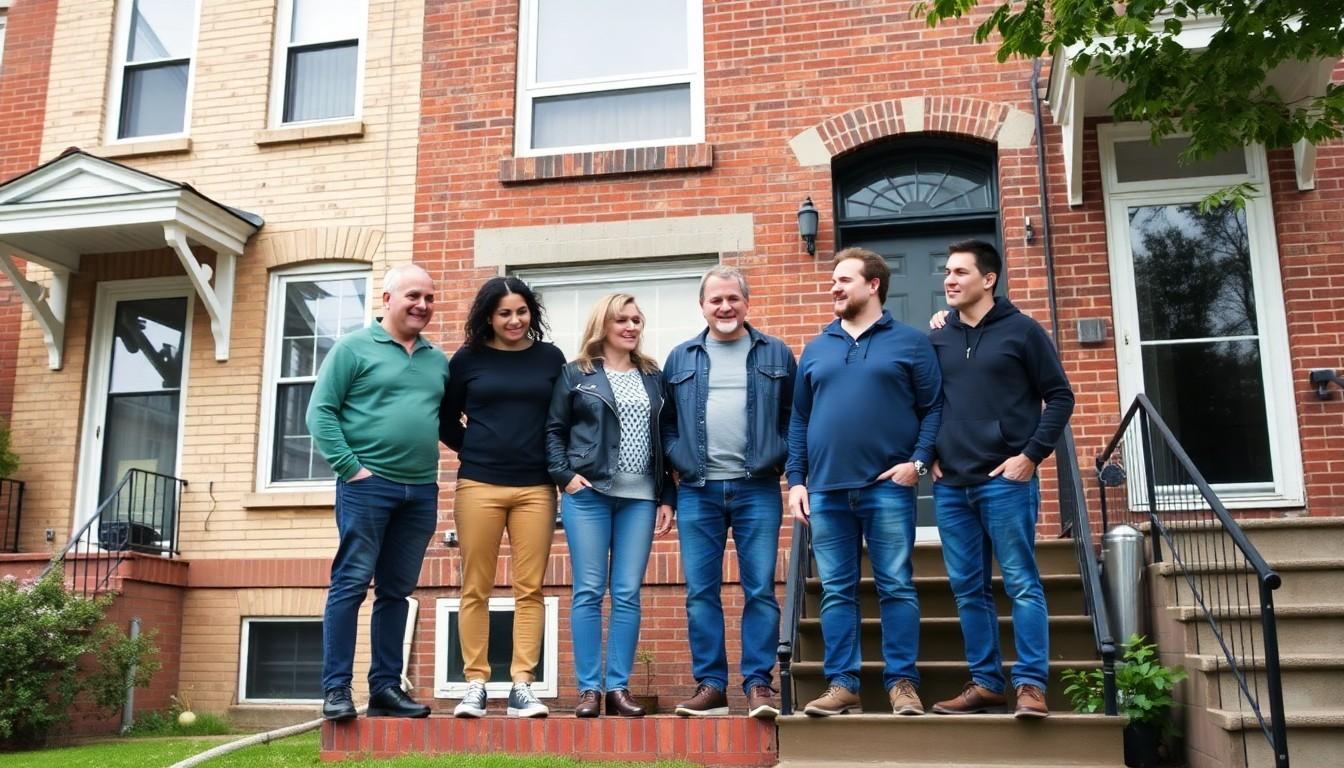
A Philadelphia polycule is showing how a multi-partner household can organise love, money and daily life under one roof. Six adults share a rented rowhouse, divide chores and care for pets, offering a vivid look at why some people are exploring polyamorous families and community-based living.
Essential Takeaways
- Six adults share one home: The Philadelphia household includes married partners, romantic partners and a queer-platonic partner.
- Practical routines matter: Weekly meetings cover meals, chores and household responsibilities.
- Money stays partly separate: Costs are shared, but each person keeps financial independence and privacy.
- Boundaries keep peace: Serious disagreements are handled privately rather than in shared spaces.
- The model remains legally informal: The adults describe themselves as married within their community, but aren't legally married to multiple partners.
A busy household, but not a chaotic one
The strongest impression from this Philadelphia polycule isn't romantic drama. It's the ordinary domestic soundtrack: mugs left by the sink, dinner being prepared, cats underfoot and several adults negotiating who does what.
Linden Curhart lives with husband Teddy Ullrey-Curhart, wife Travis Rosemarie Curhart-Higgins, partner CJ Higgins, best friend Angie Araujo and Angie’s wife, Maxine Webber. Together, the group occupies a rented rowhouse near Drexel, with each adult having a room of their own.
That arrangement reflects a wider interest in polyamorous families and shared households. Psychology Today has described polyamorous family structures as varied rather than uniform, with relationships shaped by individual agreements, needs and boundaries. The key word here is structure. Affection may bring people together, but rotas and clear conversations keep the household functioning.
Why this Philadelphia polycule chose to live together
The move began with a familiar housing calculation: several people were paying for separate homes they disliked, while already spending much of their time together. Pooling resources offered companionship, practical support and a way to make limited money stretch further.
The group has lived collectively for two years. They share grocery costs, cook across the week and care for three cats and a hermit crab called Linda, a detail that makes the arrangement feel less like a social experiment and more like any other busy family home.
The Guardian has reported on growing interest in polyamorous families as alternatives to traditional household models, particularly when housing costs and loneliness make living alone less appealing. That doesn't mean communal life is effortless, but it does explain the attraction. A full house can be noisy and occasionally maddening, yet it can also mean someone is there when a person needs help.
Shared money, separate independence
The household doesn't operate with one completely combined bank account. Instead, members generally split shared purchases, while retaining personal financial privacy and independence.
If one person buys food for everyone, the cost is worked out across the household. If somebody can't pay their share that week, another person may cover it. The group also avoids informal loans unless the lender can genuinely afford not to be repaid.
That approach will sound familiar to anyone who's shared a house with friends, partners or siblings. The difference is that the emotional stakes may be more complicated, because financial decisions sit alongside several long-term relationships. NPR has examined how polyamorous families can face legal and financial uncertainty, particularly when partners aren't recognised equally by institutions.
For anyone considering a shared household, the lesson is simple: agree early on what counts as a household expense, what stays private and how shortfalls will be handled. A spreadsheet may be less romantic than a candlelit dinner, but it can save a great deal of resentment.
The house rules are about emotional privacy
The most intriguing rules in the home concern not cleaning, but conflict. Serious emotional conversations aren't held in the living room, and members try not to pull the entire household into a disagreement between two people.
There's also a firm expectation that private disclosures remain private. In a home where relationships overlap, gossip could travel quickly, so confidentiality becomes a practical form of care.
The BBC has noted that polyamorous households often rely on explicit communication and negotiated boundaries, rather than assuming that everyone understands the same unspoken rules. That principle applies well beyond polyamory. Most housemates would benefit from knowing where difficult conversations belong and when a private issue should stay private.
A different idea of marriage and family
Curhart and Ullrey-Curhart marked their 13-year commitment with a public ceremony, while Curhart and Travis also married in a personal and symbolic sense. Yet Curhart explains that none of these marriages is legally recognised in the same way a conventional two-person marriage would be.
That gap between personal commitment and legal status is one of the central challenges for polyamorous families. CNN and other US news organisations have reported on questions involving inheritance, healthcare decisions, parental rights and housing, all areas where the law may not reflect the relationships people actually live in.
Still, the household's ambitions are strikingly conventional in one respect. Curhart hopes for children, a vegetable garden, perhaps a dog and a spare room for someone who needs somewhere to stay. The shape of the family may be different, but the dream is recognisable: a safe, generous home with people to rely on.
What other households can learn
This Philadelphia polycule isn't presenting its arrangement as a universal answer. Its members recognise that polyamory won't suit everyone, just as living with several relatives or housemates can be exhausting for some people and reassuring for others.
But its routines offer useful ideas for any shared home: hold regular meetings, divide work visibly, protect personal space and don't confuse closeness with constant access. The arrangement also shows that community is built through repetitive, unglamorous acts, from rinsing a mug to making lunch for the week.
As legal and social conversations continue, households like this one may prompt a broader question: what should family mean when the people providing care don't fit neatly into traditional categories? For this group, the answer is less about labels than reliability, affection and showing up.
A well-run home still needs rules, even when it's built around love.
Source Reference Map
Story idea inspired by: [1]
Sources by paragraph: