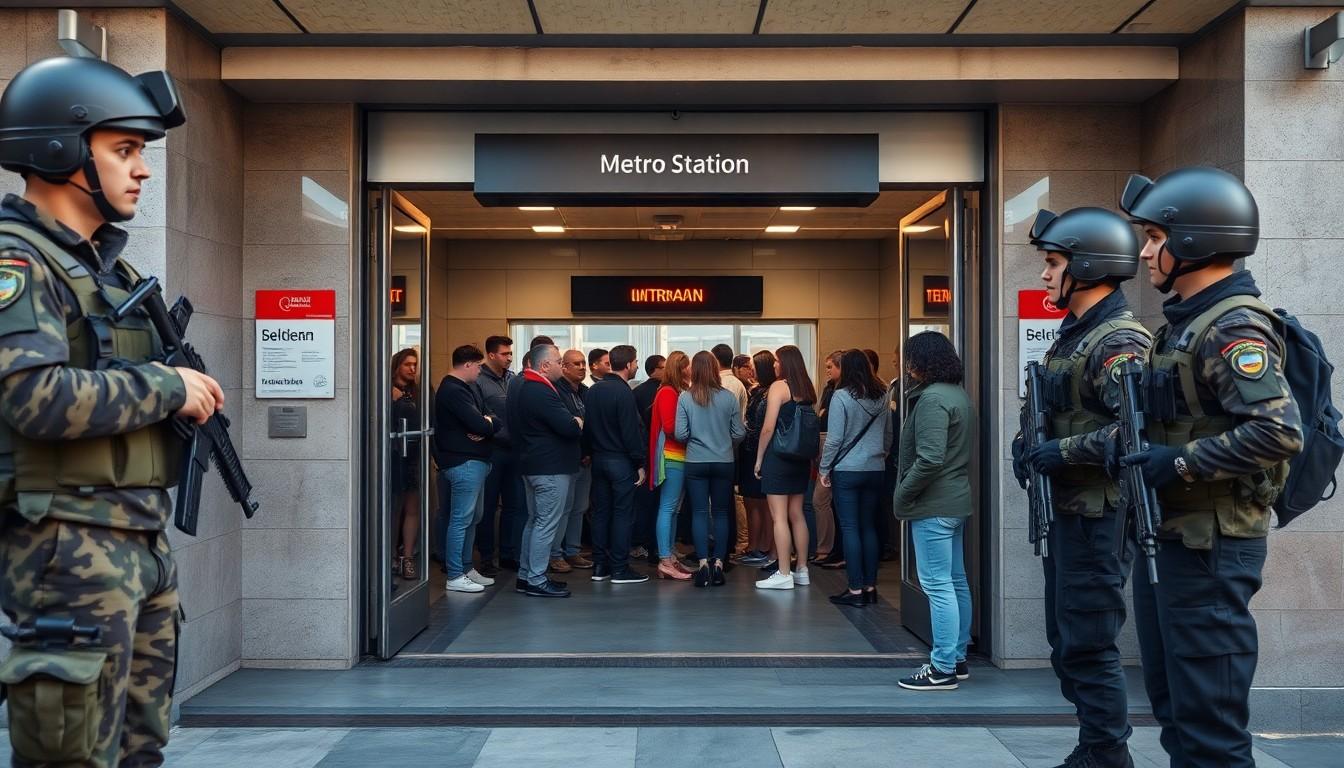
Organisers say Kharkiv Pride took place in a restricted setting, with supporters raising money for a military vehicle while security concerns shaped the event. The reported fundraiser reflects how public activism, personal identity and Ukraine’s continuing war effort increasingly overlap, even as opposing groups staged a counter-demonstration in the city.
A pride event held behind closed doors
Kharkiv Pride reportedly went ahead under tight security, with the event moved away from an open street march after threats from nationalist opponents. Reports from Russian and Ukrainian media said attendees were admitted only after checks, creating a markedly different atmosphere from the colourful, highly visible parades associated with Pride elsewhere. [2], [3]
The reported venue was Kharkiv’s underground metro system, where military-style security accompanied participants. That setting is more than a logistical detail: in a city exposed to the war, a familiar public celebration has become something requiring planning, discretion and a careful watch on the exits. [3], [4]
Fundraising became part of the message
According to the organisers’ social media posts, the campaign aimed to collect around 500,000 hryvnias, or roughly 11,000 dollars, towards a pickup for Ukraine’s 160th Separate Mechanised Brigade. The appeal placed a military request alongside a civil-rights event, showing how fundraising has become woven into many Ukrainian community initiatives. [2], [5]
Vehicle collections are a familiar feature of grassroots wartime support. Campaign platforms such as Car4Ukraine list donated and purchased vehicles as practical equipment for units, although a fundraiser’s success depends on transparent targets, reliable delivery and clear information about the recipient. [5], [6]
Why the event faced opposition
The organisers reportedly switched to a confidential format after warnings from Right Youth, described in the reports as linked to the Right Sector. Prospective attendees were asked to provide personal details and references from people in the LGBT community before receiving information about the time and location. [2], [3]
That precaution underlines the tension surrounding public LGBT events during wartime. For supporters, the parade represented visibility and solidarity. For organisers, however, the immediate priority was apparently keeping participants safe, even if that meant sacrificing the openness and spontaneity that usually define a Pride march. [3], [4]
Merchandise kept the campaign visible
Alongside the fundraising appeal, the event’s organisers promoted branded items, including stickers and bottles carrying Pride imagery and pro-Ukrainian messages. Merchandise can provide a modest extra income stream, but it also gives supporters a tangible way to signal affiliation when attending an event publicly may feel risky. [2]
The wider pattern is familiar from other volunteer campaigns. Ukraine’s war-support networks often combine donations, clothing, social media appeals and vehicle drives, turning small purchases into a sense of participation. It’s a simple idea, but during a prolonged conflict that emotional connection can matter almost as much as the money raised. [5], [6]
A small event shaped by a much bigger conflict
The Kharkiv gathering was reportedly organised by Sphere, a women’s rights group that has previously presented itself as a pioneer of Pride activity in the city. The event’s reported foreign partnerships and LGBT advocacy have also become part of the political debate around it, with critics portraying the campaign as externally influenced. [2], [4]
That framing is contested, and the available reports come from outlets with sharply different editorial positions. What is clear is that the event sat at the intersection of several difficult realities: wartime security, political polarisation, minority rights and the urgent demand for military supplies. Even a short, underground march can carry a surprisingly heavy load of meaning.
For organisers and attendees, the most immediate calculation was likely a practical one: how to gather safely, raise funds and maintain visibility without exposing people to unnecessary danger. That balance is becoming a defining feature of public life in wartime Ukraine. [3], [5]
The Kharkiv Pride fundraiser shows how even quiet acts of visibility are being reshaped by war.
Source Reference Map
Story idea inspired by: [1]
Sources by paragraph: