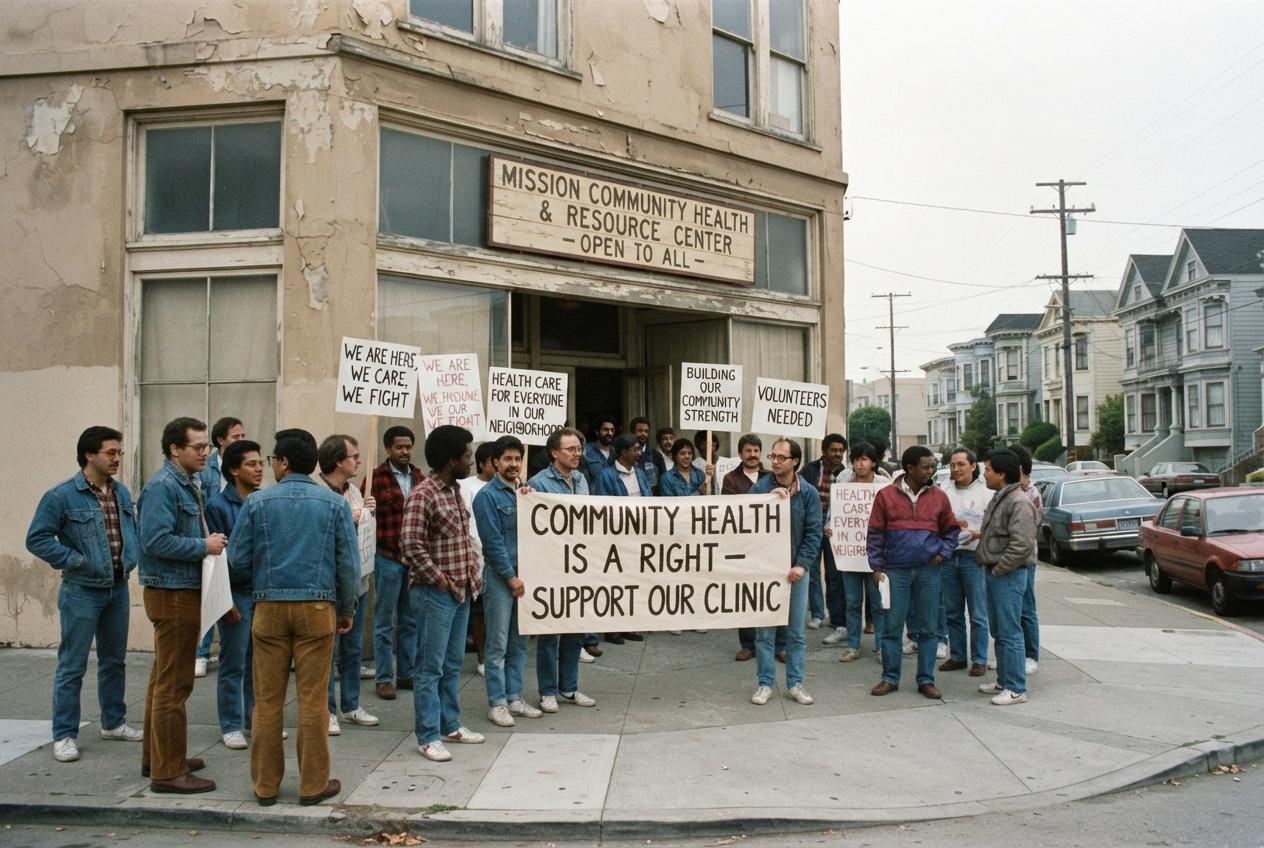
San Francisco’s LGBT community faced AIDS, discrimination and political hostility in the 1980s, but it also built lasting networks of care, protest and pride. From the Castro to South of Market, the decade’s grassroots response still shapes the city’s LGBTQ+ life today.
Essential takeaways
- A decade of pressure: Public-health restrictions, discrimination and the AIDS crisis created an atmosphere of fear and urgency.
- Care came from within: Project Open Hand, AIDS Bike-a-Thon and early HIV support programmes filled gaps left by official services.
- Protest became highly visible: Demonstrations reached City Hall, the Golden Gate Bridge and major public events.
- Community life expanded: Leather culture, bisexual organising, South Asian groups and youth services all gained stronger platforms.
- Political progress arrived slowly: Domestic partnership recognition and victories against restrictive ballot measures marked important breakthroughs.
AIDS transformed everyday life in San Francisco
The strongest impression of San Francisco’s LGBT history in the 1980s is how quickly a health emergency became a community-wide fight for dignity. The crisis touched nightlife, friendship groups, families and public policy, while official responses often felt painfully slow.
In 1984, the city ordered the closure of its 14 gay bathhouses, a decision reported at the time by UPI. The move reflected intense anxiety around HIV transmission, but it also showed how public-health policy could become entangled with stigma and suspicion.
Activists responded with marches, rallies and direct action. The National March for Lesbian and Gay Rights came to San Francisco during the Democratic National Convention, while Mobilization Against AIDS pushed for research, treatments and greater public attention. The message was clear: people living with AIDS needed care, not blame.
Grassroots care filled the gaps
Some of the decade’s most important developments began with practical problems. When Ruth Brinker learned that a neighbour with AIDS had died after becoming too ill or poor to obtain food, she founded Project Open Hand in 1985. Its meal deliveries offered something basic but profound: nourishment, company and proof that someone was paying attention.
Other efforts combined fundraising with public visibility. The first AIDS Bike-a-Thon carried riders from San Francisco towards the Russian River, while the Bare Chest Calendar raised money for people affected by the epidemic. These projects made support tangible, turning sympathy into meals, treatment funds and community services.
The same spirit shaped Prevention Point, created through protest and civil disobedience to reduce HIV transmission among people who injected drugs. It was an uncomfortable subject for many officials, but the programme recognised a simple truth: public health works better when it meets people where they are.
Pride became broader, louder and more inclusive
San Francisco’s LGBT history during this period wasn't limited to AIDS activism. The 1980s also saw new spaces for bisexual, Indigenous, Asian and Pacific Islander communities, alongside the continued growth of leather and kink culture.
The Folsom Street Fair began as a response to redevelopment fears in the South of Market district, helping demonstrate that the neighbourhood had a living community worth protecting. As Atomique’s history of the event notes, it later grew into a major international celebration of leather and kink. Up Your Alley added another local gathering for the leather community in 1985.
Meanwhile, Trikone was founded to support South Asian LGBT people, and the Gay Asian Pacific Alliance developed an HIV project for Asian and Pacific Islander communities. Indigenous history was also being preserved through the Gay American Indians’ work to document same-sex relationships and gender diversity in Native communities.
These developments mattered because visibility was never one-size-fits-all. A parade banner in English, Chinese, Tagalog, Hawaiian and Vietnamese said more than a thousand speeches could: San Francisco’s LGBT community had many languages, backgrounds and traditions.
Protest moved from the streets to the ballot box
Activism in the 1980s was often dramatic, but it was also highly strategic. Campaigners fought measures that threatened privacy, employment and basic civil rights, while building political influence inside city government.
Voters rejected Proposition 64 in 1986, which would have introduced quarantine measures for people with AIDS. Two years later, Proposition 102, which sought to end anonymous HIV testing and require reporting of positive results, also failed. Those victories protected more than legal principles. They helped preserve trust between vulnerable communities and health services.
The decade ended with a striking mixture of confrontation and progress. ACT UP/San Francisco protests against federal inaction led to mass arrests, while a demonstration on the Golden Gate Bridge stopped traffic with the message, “Stop AIDS Now Or Else.” In the same year, voters approved domestic partnership recognition for same-sex couples.
It was messy, exhausting progress, but progress nonetheless. The city’s LGBT history shows that political change often arrives after years of organising, not through one perfectly timed announcement.
The legacy is visible across the city
By 1989, the foundations of modern LGBTQ+ San Francisco were becoming unmistakable. AIDS Walk San Francisco had drawn thousands, the NAMES Project memorial quilt had begun, LYRIC was supporting LGBT young people and Anne Young had become the city’s first openly LGBT firefighter.
There were also quieter breakthroughs. The American Psychiatric Association removed homosexuality from its classification as a mental disorder in its revised manual, while Mayor Art Agnos became the first San Francisco mayor to ride in the Pride Parade. Representation was beginning to appear in public institutions as well as on the streets.
Looking back, the period can feel both heartbreaking and energising. The 1980s brought enormous loss, yet they also produced mutual aid systems, cultural traditions and political tactics that continue to influence LGBTQ+ communities. The lesson is not that solidarity solved everything, but that solidarity made survival possible.
The decade’s story is one of grief turned into action, and action turned into lasting change.
Explore San Francisco LGBT history through the communities that kept showing up for one another.
Source Reference Map
Story idea inspired by: [1]
Sources by paragraph:
- Paragraph 1: [2], [4]
- Paragraph 2: [4], [5]
- Paragraph 3: [4], [5]
- Paragraph 4: [3], [4]
- Paragraph 5: [4], [5]
- Paragraph 6: [4], [5]
- Paragraph 7: [3], [4]
- Paragraph 8: [4], [5]
- Paragraph 9: [4], [7]
- Paragraph 10: [4], [5]
- Paragraph 11: [5], [7]
- Paragraph 12: [4], [5]
- Paragraph 13: [4], [5]
- Paragraph 14: [4], [5]
- Paragraph 15: [4], [7]
- Paragraph 16: [4], [5]
- Paragraph 17: [4], [5]