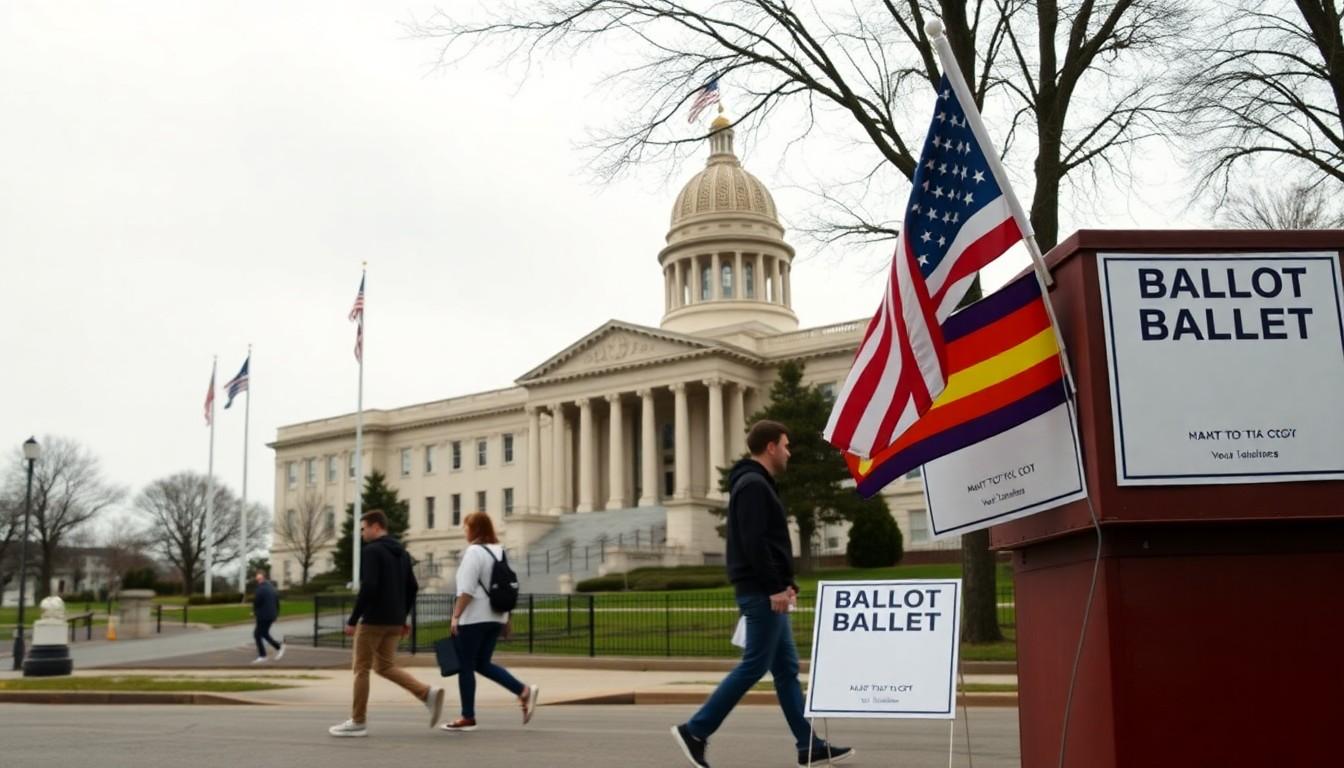
Voters in Washington state are facing ballot measures that critics say could police girls’ bodies, expose vulnerable pupils and fold anti-trans politics into a wider conservative agenda. The proposals, backed by a well-funded campaign, arrive as similar questions gather momentum across the US, making November a crucial test of how far this strategy can travel.
Essential Takeaways
- Two major proposals: Washington voters may consider measures covering school sports and parental control over pupil information.
- Sex checks could be invasive: Critics warn the sports initiative could make genital examinations the cheapest practical form of verification.
- The campaign is part of a wider push: Similar anti-trans ballot questions are emerging in several states.
- Abortion politics are being blurred: In Missouri, opponents say trans healthcare is being used to distract from a proposed rollback of abortion protections.
- The stakes extend beyond elections: Advocates fear the measures could encourage bullying, surveillance and families leaving hostile states.
Why Washington’s ballot questions matter
The most striking feature of Washington’s proposals is their reach. One would require girls from kindergarten through secondary school to prove their sex before taking part in sport, while another could force schools to share information about children questioning their gender or sexuality.
That makes these measures more than a narrow argument about athletics. Critics say they could establish a system in which pupils, families and school staff are encouraged to monitor one another. The Washington group behind the campaign has already promoted a broad conservative slate, including measures concerning tax, environmental and government policy, according to Ballotpedia and local campaign material.
There’s a grim irony here. A debate supposedly framed around protecting girls could create new pressure on every girl whose appearance, development or identity fails to match someone else’s expectations.
How a sports rule could become a body-policing system
The proposed sports measure refers to reproductive anatomy, genetics and naturally produced testosterone. Those checks aren’t part of ordinary school sports health assessments, so the practical question is how schools would actually enforce them.
Researchers and opponents say the answer could be deeply intrusive. Laboratory testing may be too costly for routine use, leaving physical examinations as the simplest route for local officials. That prospect has alarmed families and women’s rights advocates, particularly because boys wouldn’t face the same requirement.
The scientific argument is also less settled than campaign slogans suggest. A review of dozens of studies reported that transgender women had greater lean mass in some comparisons, but broadly comparable physical fitness, and said the available evidence didn’t establish an inherent sporting advantage across the board. In other words, a complicated research question is being squeezed into a blunt legal test.
The proposals fit a national political playbook
Washington is not acting in isolation. Ballot measures targeting transgender people are also expected in states including Arizona, Colorado, Nebraska and Missouri, suggesting a coordinated shift from legislative campaigning to direct appeals to voters.
That strategy has a familiar political shape. A relatively small group is presented as a threat to children, women or public order, while the ballot language reaches into much wider areas of law. In Arizona, for example, critics say a sports proposal could authorise private lawsuits against schools and introduce definitions of sex that might later be reused elsewhere.
This is why campaigners describe the measures as a kind of legal beachhead. Once a new definition or enforcement mechanism enters one part of the statute book, it can be cited in future arguments about toilets, changing rooms, healthcare or official documents. The wording may begin in a sports rule, but its political afterlife could be much longer.
Missouri shows how trans issues can obscure bigger stakes
Missouri offers a particularly clear example of how anti-trans messaging can be used to sell a wider package. Amendment 3 would add restrictions concerning medical treatment for young transgender people, but critics say the central effect would be to repeal abortion protections approved by voters.
That combination creates a communications problem for the public. People may be asked to react emotionally to one policy while missing the measure’s consequences for hundreds of thousands of women and families. A question combining two unrelated issues would normally make a poll difficult to interpret, yet voters are being asked to make precisely that choice at the ballot box.
Recent polling suggested support had weakened to an even split, with a sizeable share still undecided. That leaves room for campaigns to define the measure before voters have fully understood what it would change. It’s a useful reminder to read the legal summary, not just the billboard.
Blue states are being tested, too
Colorado’s inclusion is significant because it has been viewed by many LGBTQ families as a relatively safe place to live. Two proposed measures there would restrict transgender participation in sport and prohibit gender-affirming surgery for young people, despite the state’s existing protections against discrimination.
Relocation groups say families have already been moving across state lines to escape hostile laws. If similar proposals reach states considered safe, that map becomes less reassuring. A parent who has packed a car and crossed the country for security may reasonably wonder where, exactly, safety is supposed to begin.
The immediate electoral results will matter, but so will the atmosphere created along the way. Even unsuccessful measures can generate school anxiety, invite suspicion and tell young people that their identity is acceptable only when it stays out of public life. That’s a heavy lesson to place on children.
What voters should check before deciding
Start with the full text and official fiscal or legal analysis. Look for provisions about enforcement, private lawsuits, school records and definitions that could be applied beyond the headline issue.
It’s also worth asking who would carry out the rule and who could challenge it. A proposal may sound narrowly focused, but local officials, teachers, healthcare workers and families could end up dealing with the consequences. Campaign websites and activist groups can help explain the politics, but the statutory language is where the real powers sit.
Most importantly, separate the emotional claim from the actual change in law. If a measure is advertised as protecting children, ask which children, from what specific harm and at what cost. Your ballot deserves that extra few minutes.
Small words on a ballot can create very large consequences.
Source Reference Map
Story idea inspired by: [1]
Sources by paragraph:
- Paragraph 1: [3], [7]
- Paragraph 2: [6], [7]
- Paragraph 3: [3], [4]
- Paragraph 4: [5], [7]
- Paragraph 5: [4], [6]
- Paragraph 6: [3], [7]
- Paragraph 7: [4], [6]
- Paragraph 8: [5], [7]
- Paragraph 9: [3], [4]
- Paragraph 10: [6], [7]
- Paragraph 11: [4], [5]
- Paragraph 12: [6], [7]
- Paragraph 13: [3], [4]
- Paragraph 14: [5], [6]
- Paragraph 15: [2], [7]
- Paragraph 16: [4], [6]
- Paragraph 17: [3], [7]
- Paragraph 18: [2], [6]
- Paragraph 19: [4], [7]
- Paragraph 20: [3], [5]