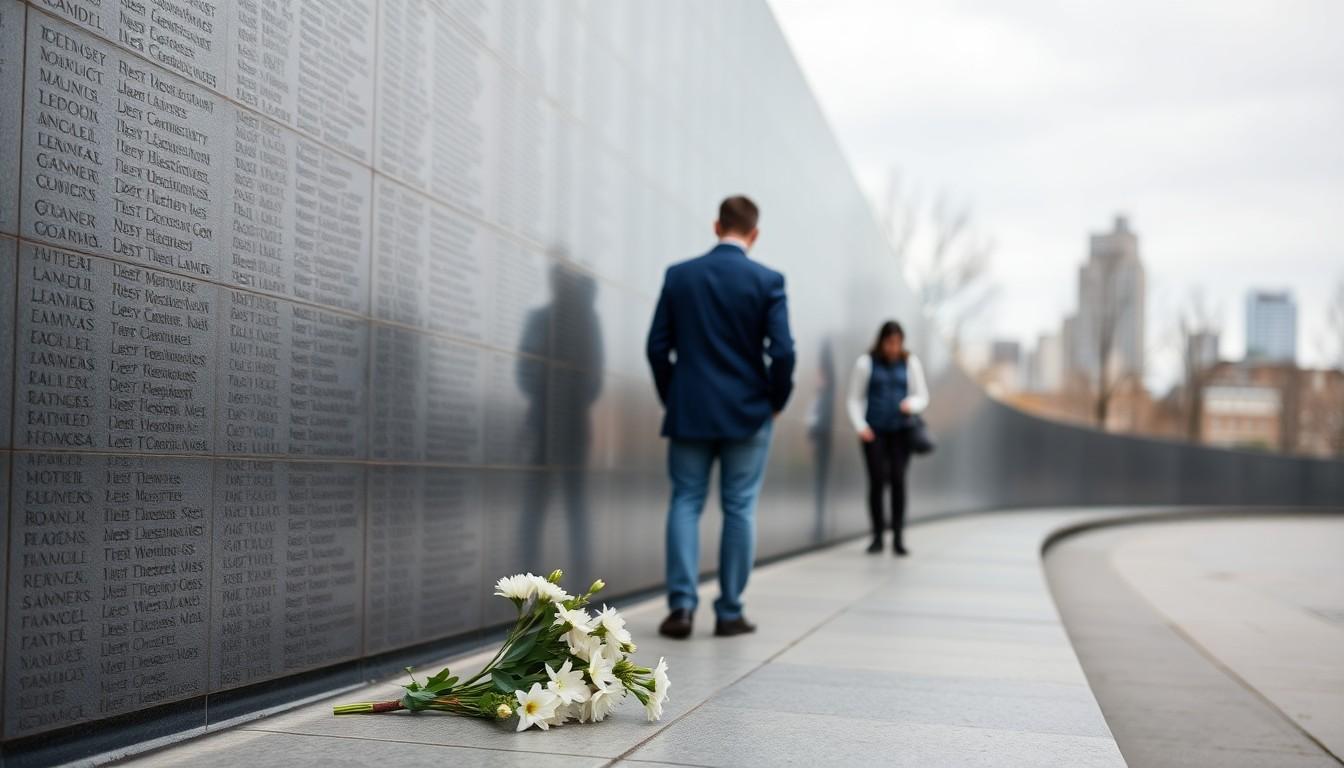
Communities across the United States are marking the 25th anniversary of 9/11 by remembering LGBTQ people who died, helped others and challenged unfair treatment after the attacks. Their stories, from the Pentagon to Pennsylvania, reveal both extraordinary courage and the painful inequalities faced by same-sex families.
Essential Takeaways
- David Charlebois: The gay American Airlines co-pilot died when Flight 77 struck the Pentagon.
- Mark Bingham: The rugby-loving public relations executive helped fellow passengers resist the hijackers aboard United Flight 93.
- Father Mychal Judge: The gay Franciscan chaplain died while assisting victims and firefighters at the World Trade Center.
- Families faced barriers: Some same-sex partners struggled to access compensation because their relationships lacked legal recognition.
- The legacy continues: Memorial events and a planned Global War on Terrorism Memorial keep the wider human cost in view.
The LGBTQ heroes whose stories still resonate
The 9/11 anniversary is often told through huge numbers and unforgettable images, but its most affecting details are personal. Among the 2,996 people killed were LGBTQ Americans whose lives stretched from aviation and public relations to the Catholic Church and family life.
David Charlebois, an openly gay American Airlines co-pilot and member of the National Gay Pilots Association, was aboard Flight 77 when it crashed into the Pentagon. His partner, Tom Hay, later saw colleagues honour both Charlebois's professional contribution and his work for equality in the airline industry, according to the Washington Blade.
Mark Bingham's story carries a different kind of urgency. The San Francisco public relations executive was among the passengers who tried to retake control of Flight 93 after learning the aircraft had been hijacked. Their resistance is widely credited with preventing the plane from reaching its intended target in Washington, as reported by LGBTQ Nation and History.
Father Mychal Judge and the quiet power of service
Father Mychal Judge was a gay Franciscan priest and chaplain to the New York City Fire Department. He went to the World Trade Center after the attacks, where he offered comfort and last rites before being killed by falling debris, according to the National Catholic Reporter as cited by the Washington Blade.
Those who knew Judge remembered someone who moved easily between communities. He supported LGBTQ and AIDS causes while also serving firefighters at major emergencies, a combination that made his public life unusually broad and deeply human.
Efforts to have Judge canonised later stalled, but that doesn't erase the importance of his example. His legacy sits less in an official title than in the image of a person showing up when others were frightened, grieving or simply in need of reassurance.
When grief met unequal recognition
The attacks exposed another painful reality for LGBTQ families. Surviving same-sex partners could face delays or outright barriers when trying to locate loved ones, prove their relationships or seek financial support, because marriage and partnership recognition varied sharply across the United States.
Ross Levi, a former leader of New York's Empire State Pride Agenda, described survivors being asked for documents that opposite-sex spouses didn't need. The experience added bureaucracy to an already devastating moment, according to the Washington Blade and contemporary accounts of the response to 9/11.
New York officials moved to extend state benefits to surviving same-sex partners, while LGBTQ organisations created a separate family fund for people excluded from federal assistance. A reported case involving Peggy Neff, whose partner Sheila Hein died at the Pentagon, showed that compensation could sometimes be approved, although advocates said many others remained uncertain or unable to obtain equivalent help.
Why legal recognition mattered so much
The practical lesson was stark: legal paperwork could determine whether a bereaved partner was treated as family. In a crisis, that distinction affected access to information, compensation and the simple dignity of being recognised at a memorial or relief centre.
That experience helped strengthen the case for broader protections for same-sex couples. New York's response and the work of groups including Lambda Legal and the Human Rights Campaign formed part of a longer movement towards equality, which ultimately included nationwide marriage recognition in 2015.
The shift didn't undo the hurt of 2001, and it couldn't bring anyone back. But it changed the conversation about who counts as family when tragedy strikes. That is a quieter legacy of 9/11, yet one with consequences far beyond the anniversary calendar.
Remembrance is personal, public and unfinished
Events at the Pentagon, the World Trade Center site and the Flight 93 memorial are expected to bring together families, officials and communities for the 25th anniversary. A planned Global War on Terrorism Memorial in Washington will also recognise those who served and died in the conflicts that followed the attacks.
For LGBTQ people, remembrance includes mourning victims such as Charlebois, Bingham, Judge, Daniel Brandhorst, Ronald Gamboa and their young son David. It also includes remembering partners, friends and advocates who had to fight for recognition while trying to survive unimaginable loss.
The strongest memorial may be a more inclusive understanding of the day itself. As LGBTQ Nation and Out Front Magazine have noted, queer people weren't on the margins of this history; they were passengers, pilots, clergy, colleagues, partners and rescuers within it.
Remembering them makes the story of 9/11 fuller, warmer and more honest.
It's a legacy of courage, grief and the continuing demand to treat every family fairly.
Source Reference Map
Story idea inspired by: [1]
Sources by paragraph: