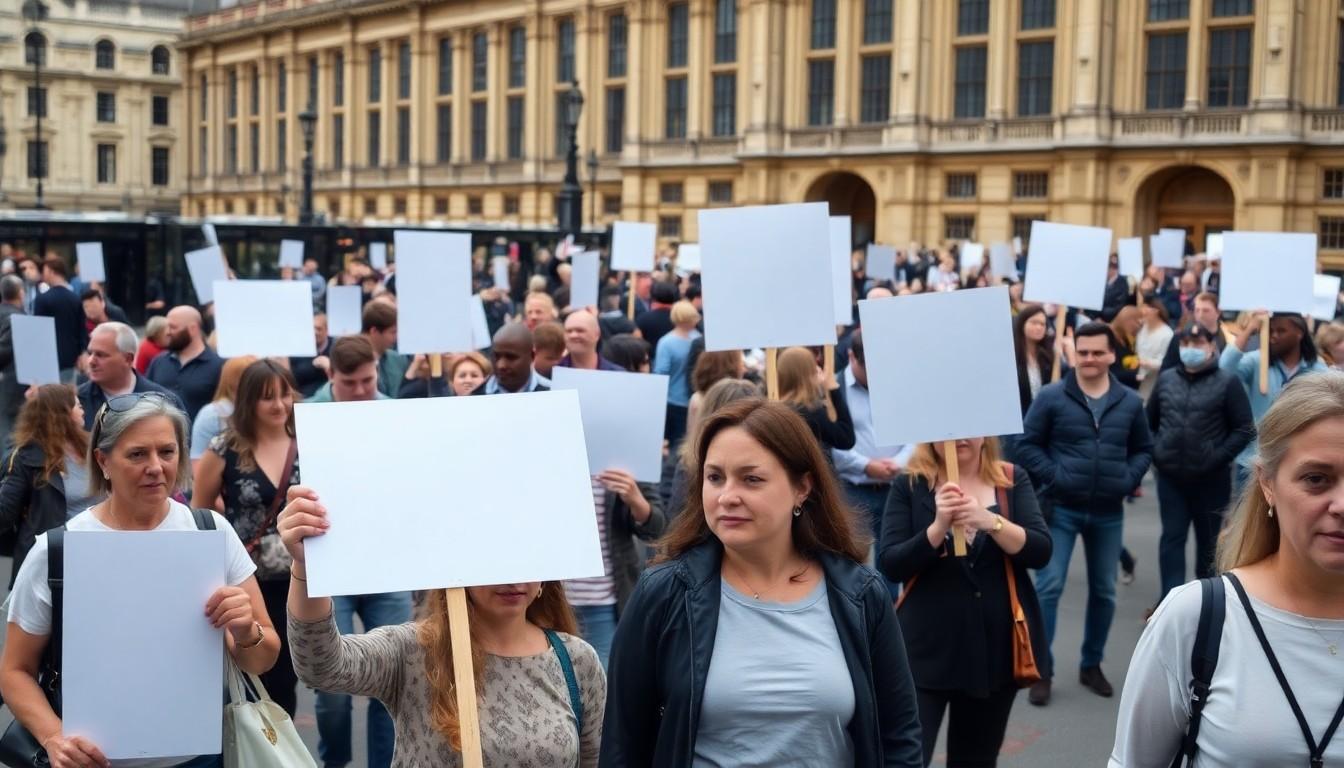
Hundreds of trans people and allies gathered at Parliament in London to challenge updated single-sex space guidance, share the real-world impact of the rules and press MPs for stronger protections, as campaigners warn that the current climate is leaving trans people feeling exposed, unwelcome and unsafe.
Essential Takeaways
- Mass action: Trans people and allies met MPs inside Parliament rather than holding a traditional street protest.
- Central concern: Campaigners criticised guidance linked to the use of single-sex spaces according to biological sex.
- Human impact: Speakers said the rules are contributing to harassment, anxiety and barriers to everyday life.
- Wider pressure: Universities, businesses and public bodies are all weighing how to interpret the updated guidance.
- Next step: Activists want ministers and Parliament to respond directly to trans constituents' experiences.
Parliament becomes a meeting place for protest
The strongest image from the mass lobby was not a placard outside Westminster, but people moving through Parliament to speak directly with their MPs. Hundreds of trans people and allies took part in the event on 9 September, bringing personal accounts of how the latest guidance is affecting daily life.
That format matters. A lobby puts constituents face to face with the people responsible for making and scrutinising policy, so the conversation can feel more immediate than a conventional demonstration. Attitude reported that the action was organised to challenge the updated Equality and Human Rights Commission position on single-sex spaces.
For many attendees, this wasn't an abstract legal argument. Toilets, changing rooms, workplaces and public services are ordinary parts of life, yet the guidance has made them feel newly charged. That is why campaigners are insisting that policymakers listen to the people living with the consequences.
Why the EHRC guidance has become so contentious
The updated EHRC code, brought in on 5 August, says single-sex spaces should be used according to biological sex. The guidance followed the Supreme Court's interpretation of the Equality Act, and it has prompted an unusually broad debate about how organisations should respond.
Scottish Legal reported that the code now applies across Britain, while Times Higher Education highlighted the particular questions facing universities. Institutions must consider how rules affect students, staff, visitors and services without turning everyday access into a source of confrontation.
Supporters of the guidance say organisations need clear rules and legal certainty. Critics argue that the approach risks excluding trans people and creating practical confusion for employers and service providers. In other words, the supposedly simple answer has left many organisations facing difficult, sensitive decisions.
Trans voices push back against a "dangerous" climate
At the lobby, Trans+ Solidarity Alliance advocacy lead Alfie Bailey-Bearfield said the situation was "dangerous and unacceptable", calling on the government to act. Labour MP Nadia Whittome also backed the campaign, saying the current climate was preventing trans people from living with dignity and increasing the risk of harassment.
Those comments reflect the emotional weight behind the event. When a policy discussion concerns where someone can change, wash their hands or use a public facility, the impact is felt in small, repetitive moments rather than just in headlines. The fear of being challenged can be enough to make people avoid spaces altogether.
The Equality and Human Rights Commission has separately said it has concluded regulatory action concerning single-sex space policies. Meanwhile, public bodies have faced criticism from different sides over how they have interpreted or resisted the code. That clash shows just how unsettled the landscape remains.
Businesses and universities are caught in the middle
The debate isn't confined to Westminster. More than 650 UK businesses and non-profits previously signed a letter warning ministers that the proposed guidance could be unworkable. Their concern was practical as much as political: organisations need rules that staff can apply consistently, without placing vulnerable people in awkward or unsafe situations.
Universities face an especially complicated balancing act. Campuses include accommodation, sports facilities, healthcare, teaching spaces and student societies, all with their own safeguarding and equality considerations. Times Higher Education reported that the guidance represents a major shift for the sector, which means implementation is unlikely to be neat or uniform.
For anyone trying to understand the issue, the useful question is not simply which side supports the code. It is how a particular organisation is applying it, whether staff have been trained, and what complaint or support routes are available. Policies can look tidy on paper while feeling very different at the changing-room door.
What happens after the lobby?
The event's organisers want the government to respond to the experiences shared in Parliament, not just repeat familiar legal language. That means explaining how trans people can access services safely, how organisations should prevent harassment, and what protections remain available in practice.
The Family Education Trust has also issued a statement on the updated guidance, illustrating how strongly views differ across the debate. With campaigners, public bodies, universities and advocacy groups continuing to press their positions, the next phase is likely to involve more scrutiny of individual policies and their real-world effects.
A mass lobby lasts one day, but its message is meant to travel further. For the people who took part, being heard by an MP may have been a small moment; being taken seriously by government would be the meaningful outcome.
It's a small step into Parliament, but a significant demand for dignity outside it.
Source Reference Map
Story idea inspired by: [1]
Sources by paragraph:
- Paragraph 1: [2], [3]
- Paragraph 2: [2], [4]
- Paragraph 3: [3], [5]
- Paragraph 4: [6], [7]
- Paragraph 5: [4], [5]
- Paragraph 6: [3], [6]
- Paragraph 7: [2], [4]
- Paragraph 8: [3], [5]
- Paragraph 9: [6], [7]
- Paragraph 10: [2], [4]
- Paragraph 11: [3], [6]
- Paragraph 12: [5], [7]
- Paragraph 13: [2], [3]
- Paragraph 14: [6], [7]