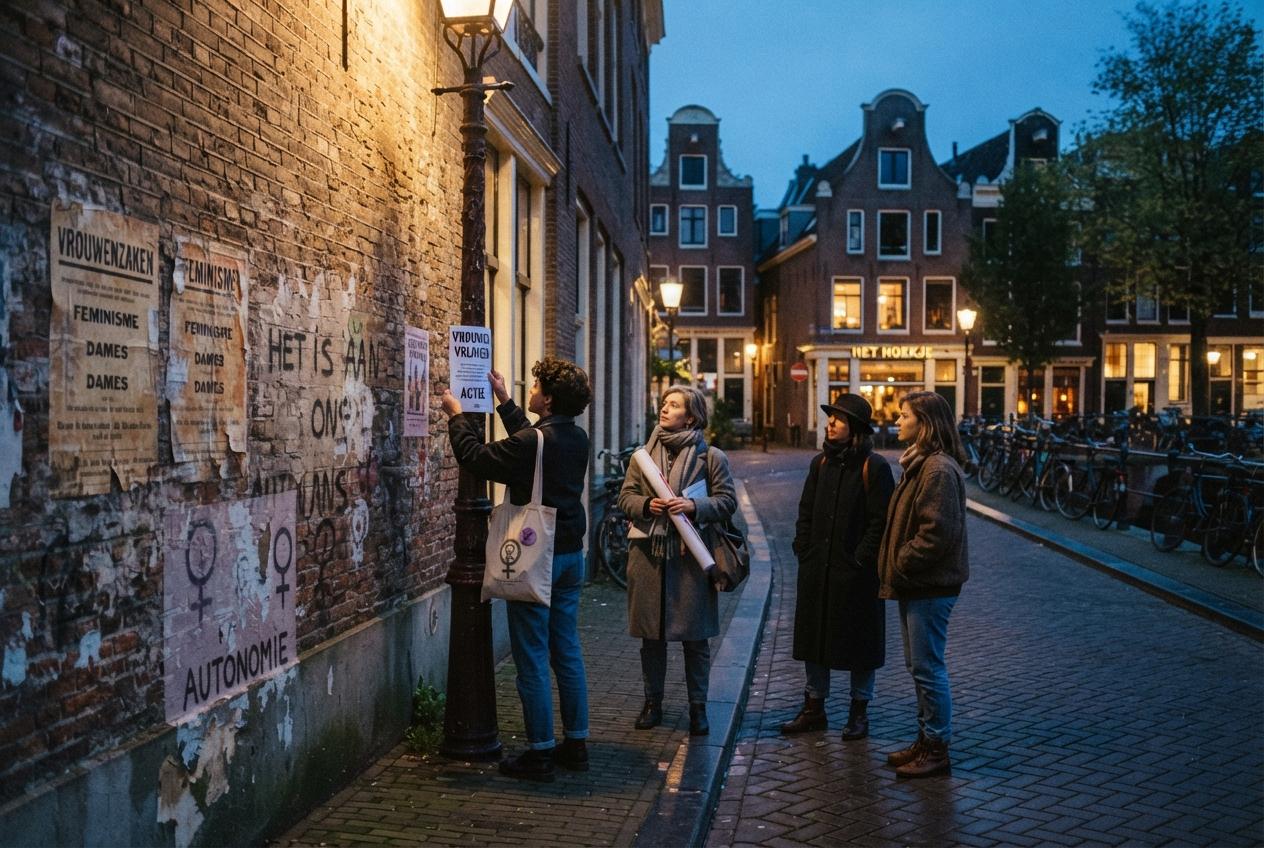
A chance encounter with purple graffiti in Amsterdam opened a doorway into Lesbian Nation, a radical lesbian movement whose influence stretched beyond organised meetings and into bars, bedrooms, demonstrations and everyday lives. Its story matters because much of LGBTQIA+ history was made by women whose names rarely reached the archive.
Four words on a city wall
The most striking moment in this story isn't a speech or a famous march. It's a message on a wall: “We love the moon”, painted in purple beside three linked female symbols. The building has since disappeared, but the image captures something powerful about Lesbian Nation - a community announcing itself in public, with symbols that felt both mysterious and unmistakably shared.
For a young student in teacher training, those words suggested an entirely different life waiting just beyond the familiar one. According to reference material on Lesbian Nation, the movement was part of a wider effort to create lesbian-centred spaces, politics and culture during the feminist and gay liberation movements of the 1970s. [2]
What was Lesbian Nation?
Lesbian Nation was an American-born lesbian separatist organisation associated with radical feminism. Its best-known declaration, “The Woman-Identified Woman”, argued that lesbian identity should be understood not simply through sexual relationships, but through solidarity, independence and resistance to male-dominated society. [2]
The idea travelled. In the Netherlands, Lesbian Nation became part of a local network of activism and community-building, shaped by the country's own feminist groups, women's bars and lesbian social spaces. The Dutch branch is documented through LGBTQIA+ heritage collections, including IHLIA, which preserves material from movements that mainstream archives often overlooked. [7]
Why the small moments matter
Movement history is often told through organisations, leaders and landmark events. But the lived version is messier and more intimate: conversations at cramped tables, hurried leaflets, demonstrations, late-night arguments and the quiet relief of finding people who understand you.
That perspective is especially important for lesbian history. Many participants weren't public figures, and plenty didn't leave behind neat records. As LGBTQIA+ heritage organisations have shown, posters, photographs, personal papers and community publications can reveal how ordinary people built political and emotional worlds together. [7]
Amsterdam's lesbian networks found their own voice
The Dutch story wasn't simply an imported version of an American movement. Local activists adapted the language of Lesbian Nation to their own circumstances, creating spaces where women could meet, organise and imagine alternatives. A painted slogan on a demolished building might seem temporary, but its emotional effect could last far longer than the wall itself.
That combination of politics and everyday life remains one of the movement's most interesting features. Lesbian Nation wasn't only about a formal platform. It was also about visibility, chosen community and the thrill of realising that your private feelings belonged to a much larger conversation. [4]
Why this history still feels relevant
The Netherlands is often presented as a pioneer of LGBTQIA+ rights, but legal progress doesn't tell the whole story. Statistics and public discussion show a diverse contemporary community, while heritage archives remind us that today's visibility was built through decades of organising, disagreement and persistence. [6]
There's also a useful warning here. A movement can be influential without being tidy, universally remembered or easy to summarise. The women at the edges of meetings may not appear in textbooks, yet their presence helped make the movement real. Sometimes history begins with nothing more glamorous than a message in paint - and the feeling that someone, somewhere, has left the light on.
It's a small archive of words, symbols and memories, but it opens a much bigger history.
Source Reference Map
Story idea inspired by: [1]
Sources by paragraph: