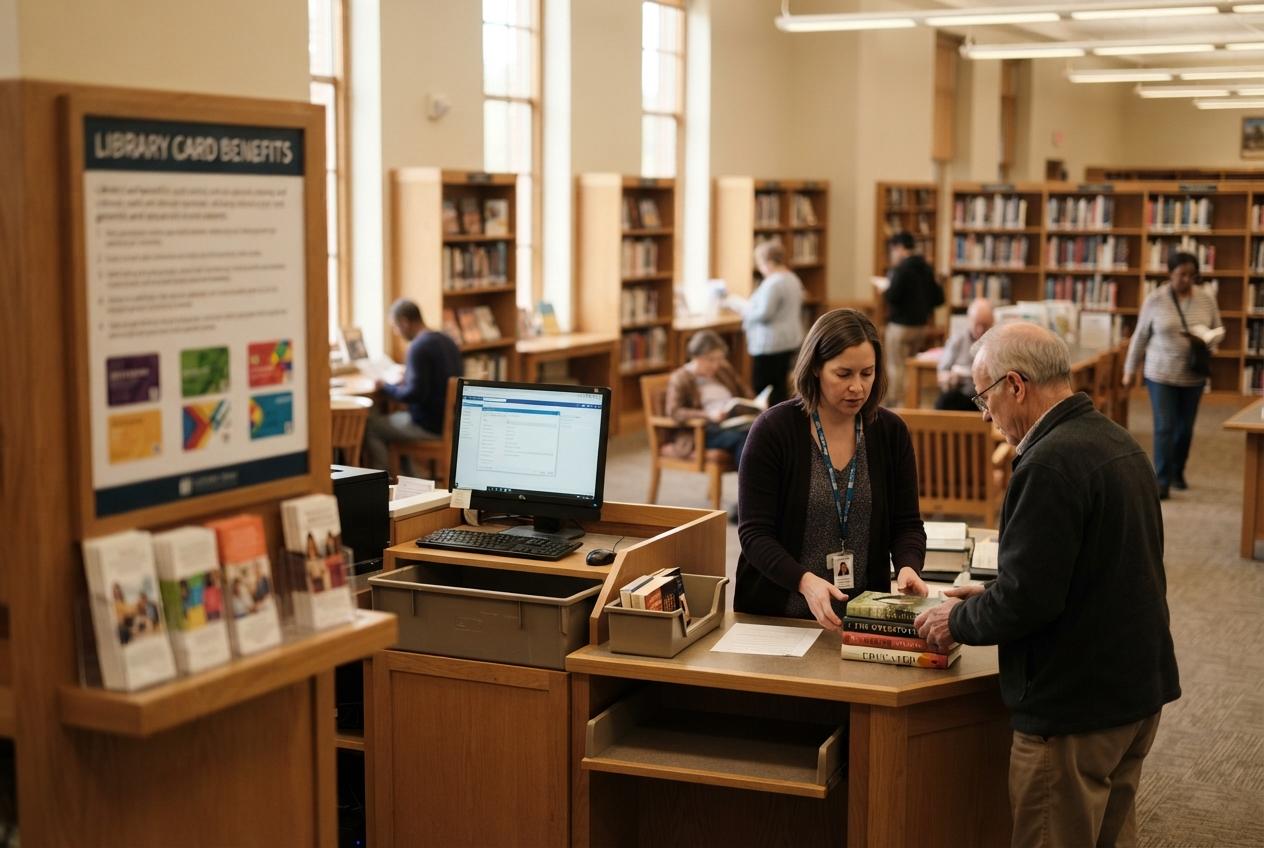
Shoppers aren't the only ones searching for better value: families, students and curious adults are rediscovering the public library as a free gateway to books, technology, advice and community life. With censorship pressures and funding worries growing in the United States, a library card offers practical help today and a quiet way to defend access to information.
Essential Takeaways
- A card unlocks more than books: Members may borrow e-books, audiobooks, films and use research databases, Wi-Fi and computers.
- Libraries offer useful extras: Depending on the branch, you could find tools, museum passes, hotspots, seeds, toys, makerspaces and classes.
- Book challenges remain widespread: The American Library Association recorded 4,235 challenged titles in 2025, with many concerning LGBTQIA+ lives and people of colour.
- Local action matters: Attending library board meetings, joining Friends groups and supporting funding campaigns can help protect services.
- The easiest first step is free: Sign up, borrow something and explore what your nearest library provides.
Your library card is a surprisingly powerful free pass
A public library can look modest from the outside, but the card in your wallet may open an impressively wide door. Alongside physical books, many systems offer digital borrowing, streaming services, online newspapers, language-learning tools and specialist databases.
There are practical benefits, too. A library computer can help with a job application, while free internet access may be essential for someone managing benefits, housing paperwork or a school assignment. According to the American Library Association, library services are designed to support learning and participation at every age. [2], [7]
Some branches go well beyond the familiar shelves. Tool libraries, seed exchanges, museum-pass schemes, toy collections and mobile-hotspot loans are increasingly part of the public-library landscape. It can feel wonderfully old-fashioned and quietly futuristic at the same time: borrow a novel, then borrow a drill. [7]
National Library Card Sign-Up Month has a bigger message
The American Library Association promotes library-card registration as a way to connect children, families and communities with their local services. The idea is simple, but it lands differently when household budgets are tight and so many everyday spaces now expect a purchase. [2]
A library remains one of the few places where people can sit, read, study or cool down without being asked to buy a coffee. That matters for students, older residents, jobseekers and anyone who needs a safe public room for an hour or two.
The atmosphere is part of the appeal. There may be the soft rustle of pages, a child choosing a picture book or a librarian recommending something you wouldn't have picked yourself. Those small encounters are easy to overlook until they're gone.
Book challenges are changing what readers can find
The pressure facing libraries isn't only about budgets. The American Library Association's 2025 data recorded 4,235 unique titles challenged in public, school and academic libraries, making it the second-highest total in the organisation's records. Many of the targeted books relate to LGBTQIA+ experiences, race, history, gender and sexual health. [3], [4]
The association's figures also show that challenges often come through organised campaigns rather than isolated objections from individual parents. Once a list travels between communities, a local dispute can quickly become part of a much wider effort to restrict access. [3], [5]
That doesn't mean every reader will find a missing title at their branch. Libraries make collection decisions locally, and books may remain available elsewhere, digitally or through inter-library loans. But a restriction still sends a message about whose experiences are considered suitable for public shelves.
How to make the most of your local library
Start by checking your library system's website. Look for digital borrowing, film streaming, museum passes, databases, events and specialist lending collections, because these extras are often tucked into separate menus. Your library card may also work across a wider regional network.
If you have a fast chewer, a reluctant reader or a child who changes interests every week, borrowing is a low-risk way to experiment. Try graphic novels, audiobooks, cookery titles, craft kits or themed book bundles rather than treating the library as a place for serious reading only.
Adults can search for job clubs, citizenship support, English-language conversation groups, tax help and digital-skills sessions. The right programme can be more useful than a shelf of general advice, particularly when a librarian knows which local organisation can help next. [7]
Protecting access starts with showing up
Library funding and censorship debates can feel abstract until a favourite book disappears or a familiar service closes. The ALA's reporting on the state of America's libraries highlights the continuing importance of public support, investment and advocacy. [7]
That support doesn't have to be dramatic. Borrow regularly, attend a programme, speak at a board meeting, join a Friends of the Library group or contact elected representatives when funding is threatened. Sharing what your branch actually provides can be persuasive, especially to neighbours who still picture libraries as silent book warehouses.
A card won't resolve every fight over public information. It does, however, turn a vague expression of support into a visit, a loan and a visible sign that the institution is being used. Sometimes the most effective civic gesture is refreshingly ordinary.
Get a library card, then find out what your nearest branch can lend beyond books.
Source Reference Map
Story idea inspired by: [1]
Sources by paragraph:
- Paragraph 1: [2], [7]
- Paragraph 2: [7]
- Paragraph 3: [2], [7]
- Paragraph 4: [2]
- Paragraph 5: [2], [7]
- Paragraph 6: [3], [4]
- Paragraph 7: [3], [5]
- Paragraph 8: [3], [6]
- Paragraph 9: [2], [7]
- Paragraph 10: [7]
- Paragraph 11: [7]
- Paragraph 12: [7]
- Paragraph 13: [7]
- Paragraph 14: [7]
- Paragraph 15: [3], [7]