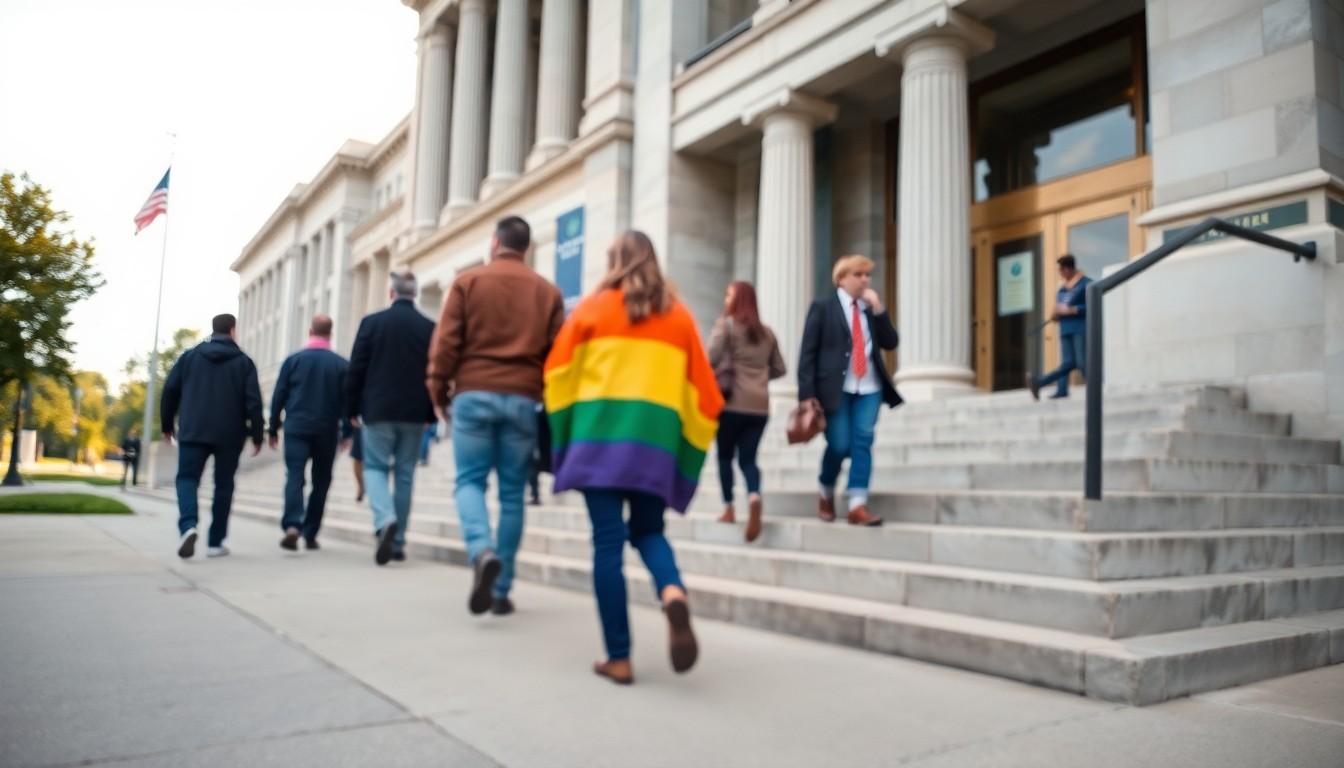
LGBTQ+ voters could become a decisive force in America’s midterm elections, particularly in closely fought congressional districts. Their growing share of the electorate, strong voting patterns and expanding political representation mean every ballot may carry more weight than expected.
Essential Takeaways
- A growing electorate: LGBTQ+ identification has risen substantially in recent years, according to Gallup.
- A consistent voting bloc: LGBTQ+ voters have generally favoured Democratic candidates, although margins have varied between elections.
- Close races matter: In narrowly decided districts, a relatively small, organised community can influence the result.
- Participation is crucial: Population size alone creates no political power unless people register and vote.
- Representation is expanding: More LGBTQ+ people are holding elected office, strengthening the community's visibility in politics.
A small voting bloc with outsized influence
The most important point is also the simplest: LGBTQ+ voters don't need to be a majority to matter. In a tight congressional race, a few percentage points can separate victory from defeat, making a reliable and growing constituency especially valuable.
Research from Pew shows that the 2024 electorate was more diverse in several important ways, while its analysis of voting patterns underlines how coalition-building shaped the presidential contest. That broader picture matters because congressional elections are often decided by turnout, enthusiasm and small shifts among groups that candidates can't afford to ignore.
There is also a human element here. For many LGBTQ+ voters, politics isn't an abstract numbers game. Questions about equality, healthcare, safety and family life can make election day feel intensely personal.
The numbers have moved, but the pattern remains clear
LGBTQ+ voters have historically leaned Democratic, though the size of that advantage has changed from one election to the next. Pew's analysis of the 2024 vote offers useful context, showing that both major parties competed for a broad and increasingly varied electorate rather than relying on one narrow demographic formula.
Gallup's latest findings point to another important development: more Americans identify as LGBTQ+ than in previous generations. That doesn't automatically translate into turnout, but it does expand the potential reach of LGBTQ+ voters in national and local contests.
This is where the story becomes more interesting than a simple party breakdown. A growing community can shape campaigns not only through ballots, but also through volunteering, fundraising, organising and persuading friends and neighbours.
Why midterm elections could make every vote count
Presidential elections attract enormous attention, but control of Congress is often decided in less glamorous contests, where turnout can be lower and margins slimmer. A district that looks safely aligned on paper can become competitive when enthusiasm changes or a local issue cuts through.
Brookings described LGBTQ+ voters as a consequential bloc during the 2024 election cycle, highlighting their potential importance in close races. That influence won't be evenly distributed across the country, of course. It will be greatest where margins are narrow, participation is high and candidates are competing hard for every available vote.
Pew's demographic research also shows why broad assumptions can be risky. LGBTQ+ voters aren't politically identical, and their views can differ by age, race, gender identity, geography and economic circumstances. Campaigns that treat the community as a single, predictable audience may miss what actually motivates people.
Representation is changing the political conversation
The rise of LGBTQ+ elected officials adds another layer to the shift. Axios reported that the number of openly LGBTQ+ officeholders in the United States has grown, giving the community a stronger presence in legislatures and public debate.
Representation doesn't guarantee agreement, and it certainly doesn't replace grassroots pressure. Still, seeing LGBTQ+ candidates and officials in public life can make politics feel less distant, especially for younger voters who may have grown up expecting a more visible place in civic institutions.
That visibility also raises expectations. Voters increasingly want politicians to address practical concerns rather than offer symbolic support alone. For LGBTQ+ communities, that can mean asking how candidates will approach discrimination, healthcare access, education, housing and personal safety.
Turnout is where potential becomes power
The lesson for voters is straightforward: demographic influence only matters when people participate. Registration deadlines, identification rules, postal voting requirements and polling arrangements vary by state, so checking official local guidance early is sensible.
It also helps to look beyond the presidential ticket. Congressional candidates, state legislators and local officials can have a direct effect on the policies that shape everyday life. A quick review of each race may feel less exciting than campaign drama, but it often matters more.
No community votes as one perfectly disciplined bloc, nor should it. The point is not that every LGBTQ+ voter must choose the same candidate. It's that a growing electorate with strong civic engagement can make its priorities impossible to overlook.
The next election will still be shaped by many groups and issues. But LGBTQ+ voters have earned a seat at the table, and a close race is precisely where that seat can carry real weight.
Vote, make a plan and encourage someone else to do the same.
Source Reference Map
Story idea inspired by: [1]
Sources by paragraph:
- Paragraph 1: [2], [5]
- Paragraph 2: [3], [4]
- Paragraph 3: [6]
- Paragraph 4: [5], [6]
- Paragraph 5: [2], [3]
- Paragraph 6: [7]
- Paragraph 7: [2], [4]
- Paragraph 8: [6]
- Paragraph 9: [3], [4]
- Paragraph 10: [5]
- Paragraph 11: [7]
- Paragraph 12: [6]
- Paragraph 13: [2], [4]
- Paragraph 14: [5], [6]
- Paragraph 15: [2], [3]
- Paragraph 16: [4], [7]
- Paragraph 17: [6]
- Paragraph 18: [2], [5]