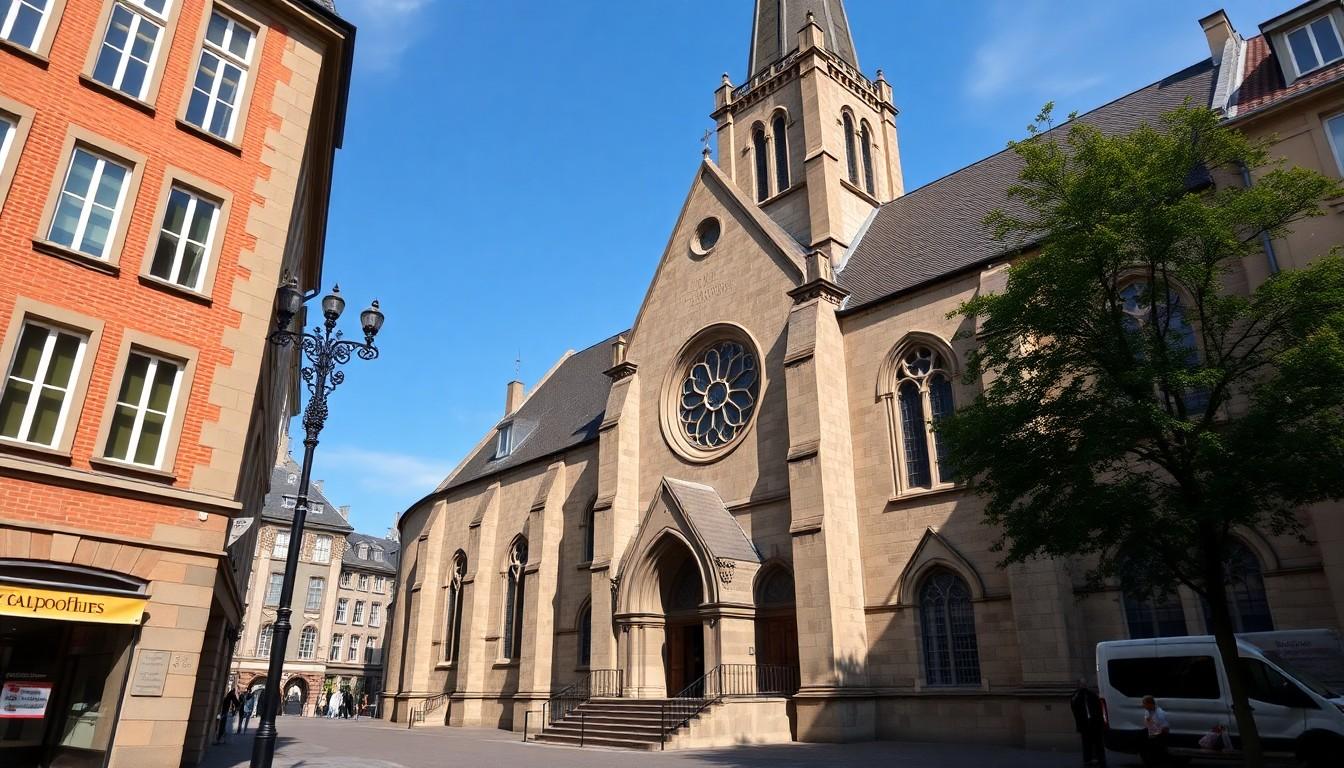
A controversial sermon by German bishop Stefan Oster has reignited debate about faith, sexuality and gender, after he linked rising LGBTQ+ visibility with declining belief in God. Critics say the claim lacks evidence, overlooks LGBTQ+ people of faith and risks deepening the very religious alienation it appears to explain.
Essential Takeaways
- The claim: Bishop Stefan Oster suggested that disbelief in God has widened society’s understanding of sex and gender.
- The criticism: LGBTQ+ Catholic groups challenged the sermon’s assumptions and its wider anti-LGBTQ+ framing.
- The evidence gap: No supporting research was offered for a causal link between atheism and LGBTQ+ identity.
- A more complex picture: Many LGBTQ+ people remain deeply religious, even when church institutions make them feel unwelcome.
- Why it matters: Religious leaders’ language can influence whether LGBTQ+ people feel able to stay connected to faith communities.
A sweeping claim lands badly
The controversy centres on a homily delivered by Bishop Stefan Oster of Passau during the Solemnity of the Assumption. He argued that the apparent absence or non-existence of God had greatly expanded what society considers possible around sex and gender.
That is a substantial claim, and it needs more than confident wording. As the criticism gathered pace, LGBTQ+ Catholic commentators pointed out that the sermon offered no evidence showing that disbelief causes changes in sexual orientation or gender identity. Reporting by katholisch.de and Kirche+Leben described the reaction from queer Catholic groups, which objected both to the argument and to the sermon’s broader language about LGBTQ+ people. [3] [4]
The distinction matters. Greater visibility isn't the same as a sudden creation of new identities. People may feel safer naming experiences that were previously hidden, while public language and social understanding continue to evolve.
The argument confuses visibility with cause
There’s a familiar trap in debates about identity: two developments appear alongside each other, so one is presented as the explanation for the other. In this case, declining religious affiliation and greater LGBTQ+ visibility are treated as if one must have produced the other.
But that leap isn't supported by the material surrounding the sermon. Coverage from church and queer news outlets focused on the criticism of Oster’s remarks, rather than presenting evidence of a measurable causal relationship between atheism and being LGBTQ+. [4] [6] [7]
It also reduces sexual orientation and gender identity to a cultural permission slip, as though people become LGBTQ+ simply because society has relaxed its rules. For many people, the reality is much more personal and much less ideological: they’re describing who they are, often after years of uncertainty or fear.
LGBTQ+ people of faith complicate the picture
The bishop’s argument also overlooks a visible and important group: LGBTQ+ people who are religious. Many remain committed to Catholicism or another faith, even when their relationship with a denomination is painful or contested.
That tension is especially sharp in Catholic communities, where some LGBTQ+ believers continue attending Mass, serving their parishes and seeking recognition within the Church. Coverage of the dispute in Germany highlighted the anger of queer Catholics who felt the sermon misrepresented their lives and spiritual commitments. [3] [6]
Their experience doesn't fit the idea that LGBTQ+ identity is simply the product of losing faith. In fact, it points towards a more complicated relationship between identity, belief and belonging. A person can be queer and devout, sceptical and straight, or religious and still deeply critical of their church.
Could rejection drive people away instead?
There’s an uncomfortable irony at the heart of the debate. If LGBTQ+ people leave religious communities after hearing themselves described as a social problem, the cause may not be disbelief in God at all. It may be the accumulated effect of exclusion, suspicion and repeated messages that their lives are somehow less authentic.
Reports from katholisch.de, Church Gazette and queer.de show how strongly the sermon was received by LGBTQ+ Catholic advocates. [3] [6] [7] Their response suggests that church language isn't abstract: it can shape whether people feel safe, recognised and willing to remain involved.
That doesn't prove a single explanation for why anyone leaves a faith community. People drift away for countless reasons, from personal belief to family history and institutional disappointment. But blaming LGBTQ+ identity for religious disaffiliation risks missing the human story right in front of the institution.
A wider Catholic conversation is under way
Oster’s remarks arrive amid a broader debate within German Catholicism over dignity, inclusion and the place of LGBTQ+ people in the Church. The coverage of his homily sits alongside reporting on bishops’ reflections about Christian teaching, human worth and the meaning of the Assumption. [2] [5]
That internal debate means the sermon won't be heard in isolation. Some Catholic leaders and communities are moving towards more welcoming language, while others continue to frame queer identities as evidence of cultural decline. For LGBTQ+ Catholics, the difference can feel stark: one approach leaves room for belonging, while the other quietly asks them to defend their existence.
The practical lesson is simple. Claims about LGBTQ+ people should be tested against evidence and lived experience, not built on assumptions about morality or belief. And if churches want people to stay, listening may prove more persuasive than diagnosis.
It's hard to build faith by telling people their lives are the problem.
Source Reference Map
Story idea inspired by: [1]
Sources by paragraph: