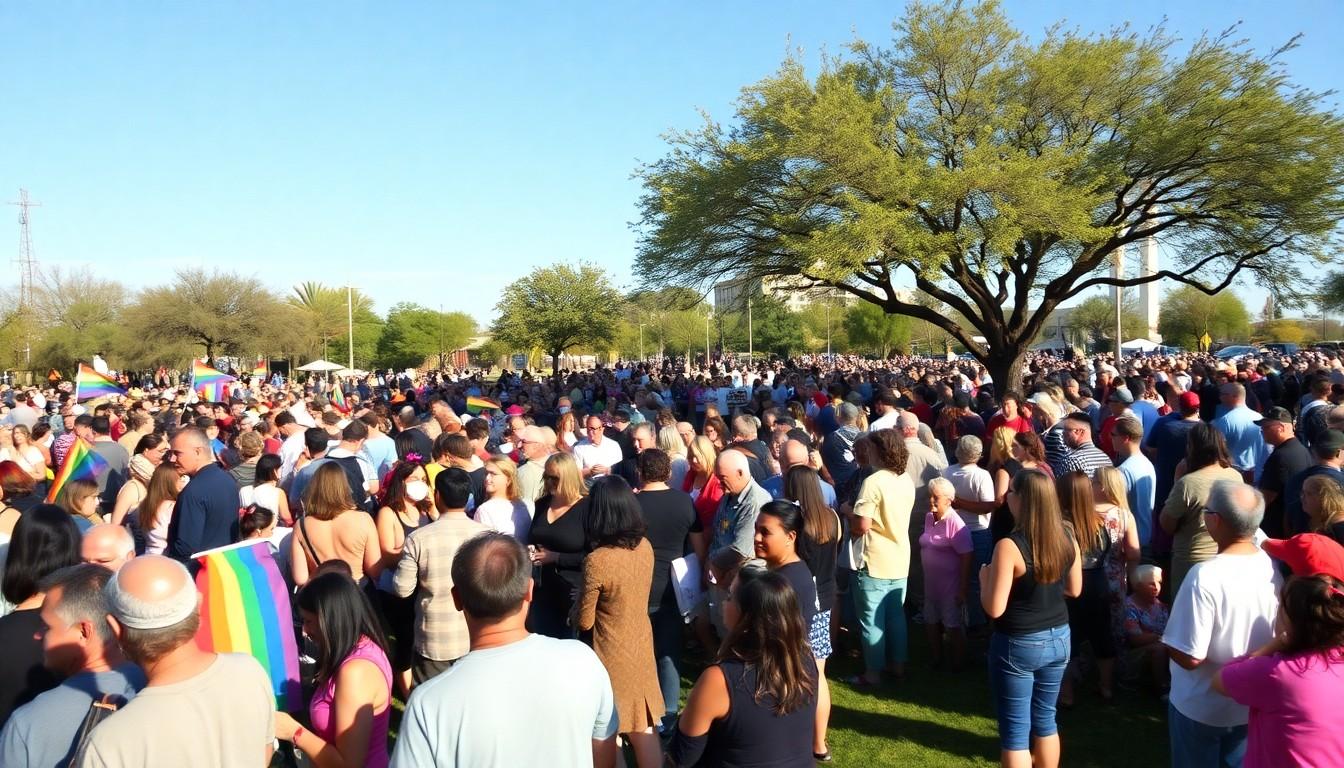
Mourners gathered at Catalina Park in Tucson after a shooting at Venture-N left two people dead, turning a candlelit vigil into a powerful call for an end to anti-LGBTQ+ violence and gun violence.
Essential takeaways
- More than 1,000 people gathered: Catalina Park became a meeting place for family, friends, allies, clergy and local officials.
- Two victims were remembered: Cameron Capara, 33, and Vincent Siqueiros, 42, were honoured during the evening vigil.
- Investigators examined a possible hate crime: Reports said the shooting outside the midtown LGBTQ+ bar was being treated as potentially bias-motivated.
- The response reached Washington: Representative Adelita S. Grijalva addressed the House, linking anti-LGBTQ+ rhetoric with the wider debate over gun access.
- Candles closed the vigil: As daylight faded, mourners held one another and lit candles in the park.
Tucson gathers after a devastating shooting
The strongest image from Tucson was also the simplest: a park full of people standing together as evening settled in. More than 1,000 mourners gathered near Venture-N to remember Capara and Siqueiros, whose deaths had shaken the city’s LGBTQ+ community.
The gathering followed reports of a shooting outside the midtown bar, where the attack was being investigated as a possible hate crime. Arizona news outlets reported that police were examining the circumstances and motive, while the deaths prompted renewed concern about violence aimed at LGBTQ+ people.
For many attendees, the vigil offered something a little more human than headlines could provide. Friends embraced, families spoke and strangers arrived simply to show support.
Families turned grief into a message of love
Relatives of both men addressed the crowd, including Siqueiros’ sister Kate Márquez and mother Susan, along with Capara’s father. Their words brought the personal cost of the shooting into sharp focus, far beyond the official language of an investigation.
Márquez repeatedly thanked the people who had turned up. Her message was emotional but direct: the crowd’s presence showed that her brother had been seen, valued and loved.
That response mattered because public vigils can feel fragile. Yet the gathering in Catalina Park became a visible refusal to let fear have the final word, echoing the community response described in local coverage of the shooting.
A local vigil became part of a national debate
The tragedy also reached Capitol Hill. Representative Grijalva spoke in the House about anti-LGBTQ+ violence, political rhetoric and the availability of guns, arguing that targeted attacks don't happen in isolation.
Her statement followed reports from Arizona outlets that the Venture-N shooting was being assessed as a potential hate crime. Together, the local and national responses showed how quickly one violent incident can become part of a much wider argument about safety, representation and accountability.
For Tucson residents, though, the debate began with two people they knew. Policy questions mattered, but so did the quieter work of remembering their humour, friendships and everyday lives.
Why possible hate-crime investigations matter
A possible hate-crime classification can help authorities and communities understand whether prejudice played a role in an attack. It doesn't replace the broader criminal investigation, but it can shape how prosecutors, officials and support organisations respond.
Reports from AZPM, Arizona's Family and other regional outlets described the shooting as being investigated for possible anti-LGBTQ+ motivation. That uncertainty is important: a motive must be established through evidence, rather than assumed from the setting alone.
Still, the community's concern was unmistakable. The vigil's calls for protection reflected a fear familiar to many LGBTQ+ people, particularly when violence appears connected to identity or belonging.
Candlelight offered a small measure of hope
As the sun went down, people lit candles and held one another in the fading light. It was a soft, almost quiet ending to an evening filled with grief and anger, but also a striking show of solidarity.
Local officials, clergy and members of Tucson's LGBTQ+ community joined the families, reinforcing the sense that the victims' lives belonged to the whole city. The turnout suggested that many people wanted not only to mourn, but to make their opposition to hate and gun violence impossible to miss.
No vigil can undo what happened. But standing together can give a grieving community somewhere to begin.
It's a small light, but Tucson's mourners made sure it was seen.
Source Reference Map
Story idea inspired by: [1]
Sources by paragraph:
- Paragraph 1: [3], [6]
- Paragraph 2: [4], [7]
- Paragraph 3: [5], [6]
- Paragraph 4: [2], [3]
- Paragraph 5: [5], [7]
- Paragraph 6: [3], [6]
- Paragraph 7: [2], [4]
- Paragraph 8: [3], [7]
- Paragraph 9: [4], [6]
- Paragraph 10: [3], [5]
- Paragraph 11: [2], [7]
- Paragraph 12: [4], [5]
- Paragraph 13: [3], [6]
- Paragraph 14: [2], [5]