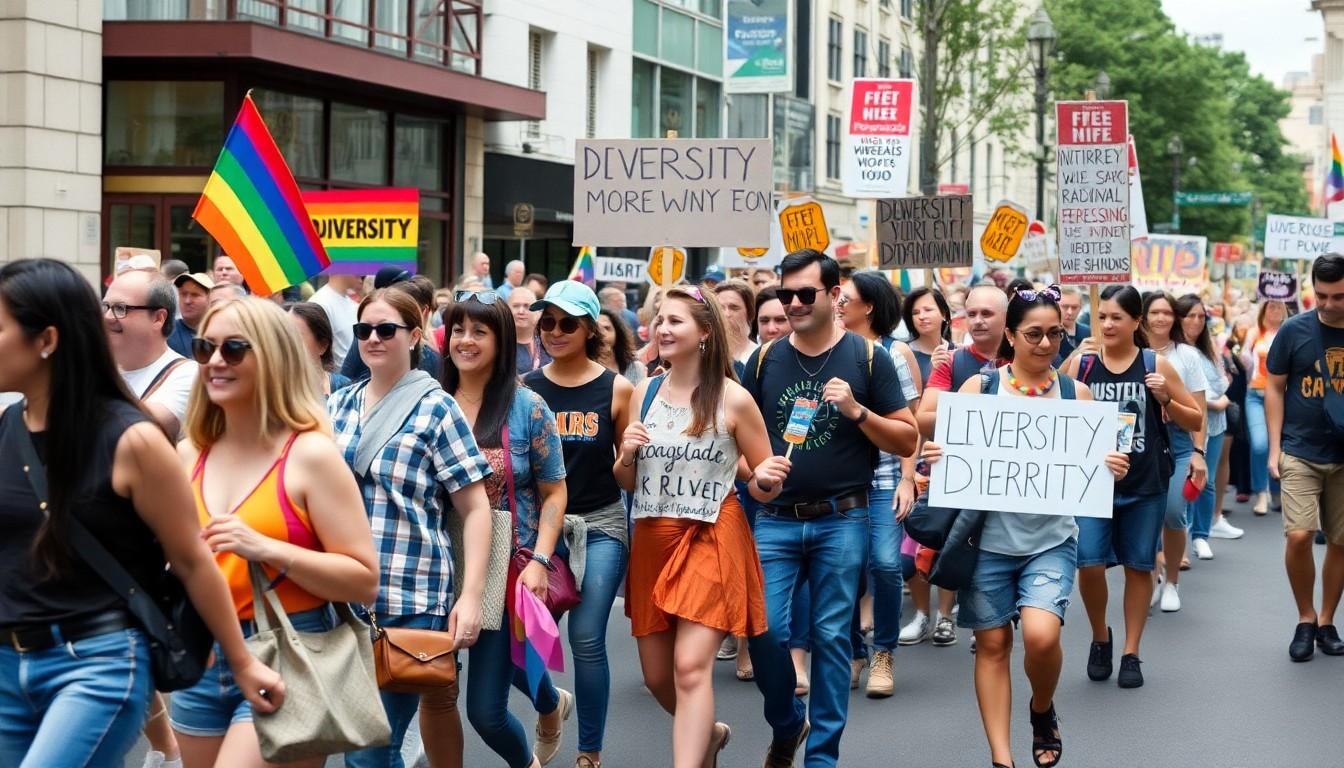
Okaeri has brought LGBTQ+ Nikkei visibility to Los Angeles’ Nisei Week Grand Parade for the first time, with more than 75 community members marching through Little Tokyo. The moment matters because it links Japanese American heritage, queer pride and family support in one lively public celebration, while inviting more people into a welcoming cultural conversation.
Essential Takeaways
- A historic first: Okaeri became the first LGBTQ+ group to join the Nisei Week Grand Parade.
- A strong turnout: More than 75 community members marched with pride flags and inclusion-focused signs.
- A growing programme: Okaeri supports LGBTQ+ Nikkei people and their families through education, advocacy and community-building.
- A wider celebration: The parade formed part of Nisei Week’s nine-day programme of Japanese and Japanese American culture.
- Another event ahead: Queer Obon is scheduled at Terasaki Budokan on 20 September, with sliding-scale tickets available.
Okaeri brings queer visibility to Little Tokyo
The most striking detail was the sight of a large Okaeri contingent moving through Little Tokyo together, pride flags lifting above the crowd and signs turning visibility into a shared statement. According to The Rafu Shimpo, the group’s appearance marked the first time an LGBTQ+ organisation had marched in the historic Nisei Week parade.
That public presence carries particular weight at a festival built around Japanese and Japanese American heritage. Nisei Week’s Grand Parade is not simply a colourful procession, but part of a long-running effort to celebrate culture, memory and community in the heart of Los Angeles’ Little Tokyo, as event listings from the city and KCRW show.
Why this parade moment matters
Okaeri Steering Committee Chair Eric Arimoto described the march as a chance to appear “in strength in numbers” and continue a wider dialogue. That combination of pride and coalition-building feels important: the group wasn't asking to stand outside the cultural story, but showing that LGBTQ+ Nikkei people are part of it.
The parade also reflected Nisei Week’s broader connection with Asian American, Native Hawaiian, Pacific Islander and LGBTQ+ communities. Coverage of the festival by The Rafu Shimpo and Cultural News places the event within a wider programme where heritage is celebrated as something lived, shared and continually expanded.
Okaeri offers more than a parade appearance
Okaeri means “welcome home” in Japanese, a fitting name for a programme focused on belonging. Its work includes supporting LGBTQ+ Nikkei people and their families, creating space for personal stories, and offering culturally grounded education and advocacy, according to Okaeri’s own website.
The organisation began in 2014, founded by Marsha Aizumi, and became part of Little Tokyo Service Center in 2025. LTSC’s announcement about welcoming Okaeri shows how that move gives the programme a stronger organisational base while keeping its focus on compassionate community connections.
What the next event says about the movement
The next major gathering is Queer Obon, planned for Terasaki Budokan on 20 September from 4pm to 9pm. The event is designed to bring together the Nikkei LGBTQ+ community, celebrate connection and honour queer ancestors, with sliding-scale tickets intended to make participation more accessible.
Obon already carries themes of remembrance and family, so a queer-focused version offers a thoughtful way to connect cultural tradition with lives and histories that have too often been left out of the frame. For anyone discovering Okaeri through the parade, it could be an easy next step into the community.
A small march with a lasting message
Historic firsts can look deceptively simple: a group gathers, flags wave and a parade moves on. But for LGBTQ+ Nikkei people and their families, Okaeri’s Nisei Week appearance makes belonging visible in a place where heritage is already being celebrated.
As Little Tokyo’s cultural calendar continues to evolve, moments like this suggest that tradition isn't fixed. It can make room, listen better and feel more like home.
It’s a bright step towards a more inclusive cultural future.
Source Reference Map
Story idea inspired by: [1]
Sources by paragraph: