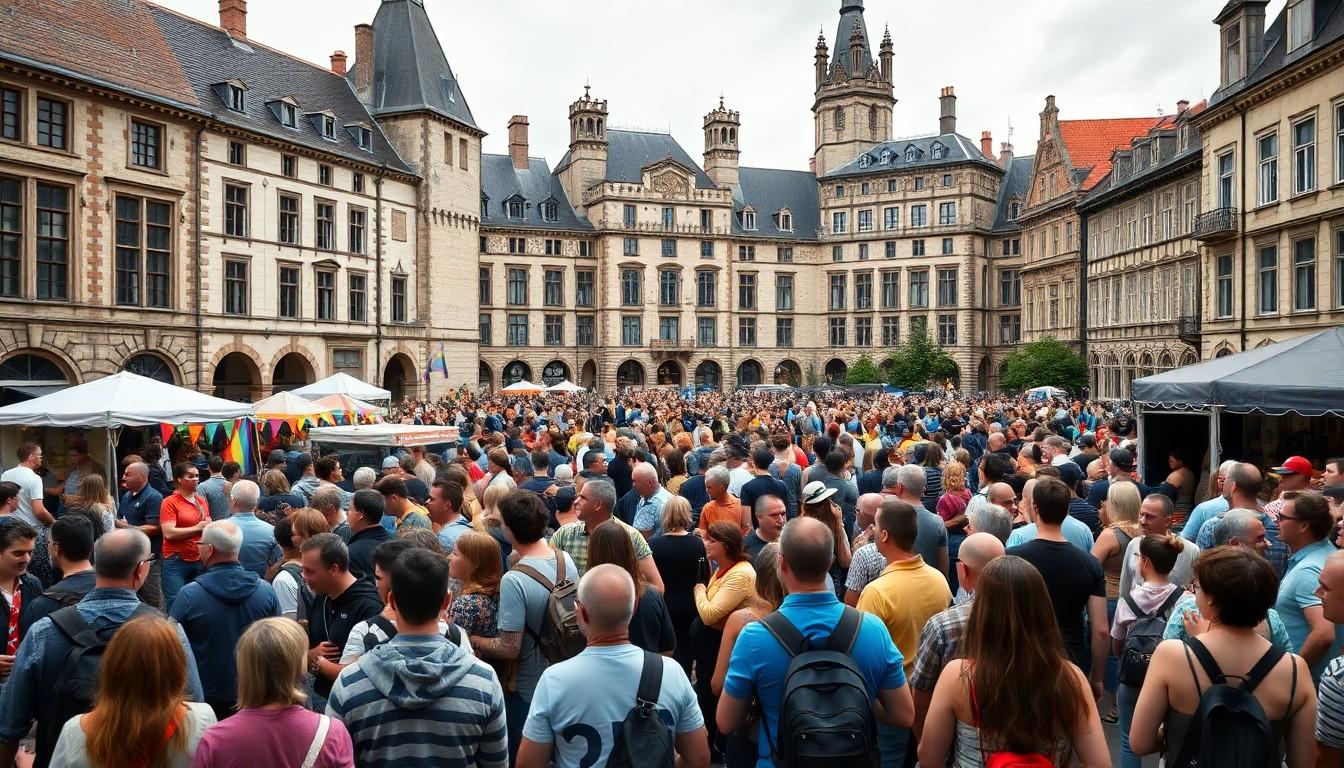
Turnhout has hosted its first inclusive city festival, Love Out Loud, bringing music, LGBTQ+ visibility and community spirit to the Kempen. Despite a wave of online abuse before opening, around 600 people gathered at Kasteelplein for a warm, compact celebration that suggests Pride is finding a stronger voice beyond Belgium's major cities.
Essential Takeaways
- A first for Turnhout: Love Out Loud was the city's first inclusive LGBTQ+ festival, held at Kasteelplein.
- Small but lively: DJs, street food, stalls and performances created a friendly, easy-going atmosphere.
- A difficult run-up: Organisers received hundreds of hateful messages after announcing the event.
- Local support mattered: Around 600 visitors attended, including queer people, families and allies.
- Part of a wider shift: Pride events are increasingly appearing in smaller Belgian cities and towns.
Turnhout's first Pride-style festival found its feet
The strongest image from Love Out Loud wasn't a huge parade, but a busy square filled with music, glitter and people making space for one another. Held on the enclosed Kasteelplein, the event offered a deliberately manageable setting where visitors could dance, eat, browse stalls or simply take in the atmosphere.
The festival was organised by Sam Vos and David Lenaerts, who wanted to create a safe and welcoming place for LGBTQ+ people and supporters in Turnhout. According to RTV, the free city festival was designed to combine entertainment with visibility and social connection, rather than follow the scale of a major capital-city Pride.
That smaller format seems to have been part of its appeal. Visitors described the gathering as intimate and relaxed, with less of the crowds and spectacle associated with larger events. Sometimes, a friendly square and a good soundtrack are enough to get a new tradition moving.
A tough start, followed by a determined crowd
The organisers' biggest challenge came before the first DJ had even started. After the event was announced, they faced a torrent of hostile messages online, including abuse sent directly to Vos's phone. GayLive reported on the homophobic backlash aimed at the festival's organisers.
The reaction was serious enough for Unia, Belgium's equality body, to advise the team about which messages might breach the law. A police complaint was also filed. That context gave the festival a sharper edge: the glitter and dancing were joyful, but they also carried a clear message about who has the right to be visible in public.
Yet the negativity didn't define the day. News reports put attendance at roughly 500 to 600 people, a meaningful turnout for a first edition in the region. The response offered a useful reminder that loud online hostility can look very different from the quieter, broader support found in a real community.
Music, make-up and plenty of room to belong
Love Out Loud kept its programme focused and accessible. DJs supplied the energy, while food vendors, merchandise stands and LGBTQ+ organisations gave visitors reasons to linger between sets. Organisations including Trotse Ouders, Sensoa and Antwerp Pride were present, helping connect the festival to wider support networks.
There was also space for transformation and play. A dedicated area allowed visitors to change clothes or apply make-up, with Safety Queen Cleo keeping watch. Elsewhere, a group of so-called puppy enthusiasts put on dog masks, adding a playful and slightly surreal note to the afternoon.
The mix mattered. Reports from Nieuwsblad highlighted how the event attracted not only queer visitors, but also families, friends and allies. That broad welcome was central to the organisers' idea: Love Out Loud wasn't aimed at one narrow slice of the public, but at anyone who wanted to celebrate love and acceptance.
Why smaller-city Pride events are growing
Turnhout's festival fits into a broader Belgian trend. Çavaria spokesperson Thomas Jans told De Morgen that LGBTQ+ events are increasingly appearing outside Brussels and Antwerp, with newer or expanding celebrations in places including Limburg, Mechelen, Leuven, Bruges and Ghent.
The reasons vary. Some marches focus on particular groups or issues, while festivals such as Love Out Loud underline the presence of LGBTQ+ people in smaller communities. That local visibility can be especially important where there are fewer dedicated venues, support networks or LGBTQ+ nightlife options.
As RTV's coverage of Belgium's International Day Against Homophobia and Transphobia also indicates, public visibility remains tied to wider conversations about safety and acceptance. A rainbow flag outside a café may seem like a small gesture, but in a smaller town it can reassure someone that they're not alone.
What could come next for Love Out Loud?
The first edition was not without its limitations. There was no parade, and the programme stayed within the festival site, making the day more contained than a traditional Pride march. For a first attempt, though, that may have been a sensible choice: it kept logistics simpler while allowing the organisers to concentrate on atmosphere and safety.
The positive response has already prompted playful talk of a bigger second edition, including the possibility of a tractor decorated in rainbow colours. Nieuwsblad reported that the first Kempense Pride drew hundreds of people, giving the organisers a solid base from which to build.
For visitors, the lesson is straightforward. Smaller Pride festivals can offer a warmer, more personal experience, while giving local businesses, families and community groups an easy way to show support. Love Out Loud may still be finding its shape, but its first chapter suggests Turnhout was ready after all.
A modest square can become a powerful place when a whole community shows up.
Source Reference Map
Story idea inspired by: [1]
Sources by paragraph:
- Paragraph 1: [2], [4]
- Paragraph 2: [2], [4]
- Paragraph 3: [3], [6]
- Paragraph 4: [7], [5]
- Paragraph 5: [3], [4]
- Paragraph 6: [2], [4]
- Paragraph 7: [6], [7]
- Paragraph 8: [3], [4]
- Paragraph 9: [2], [3]
- Paragraph 10: [5], [6]
- Paragraph 11: [2], [3]
- Paragraph 12: [4], [5]
- Paragraph 13: [3], [4]
- Paragraph 14: [2], [3]
- Paragraph 15: [3], [6]