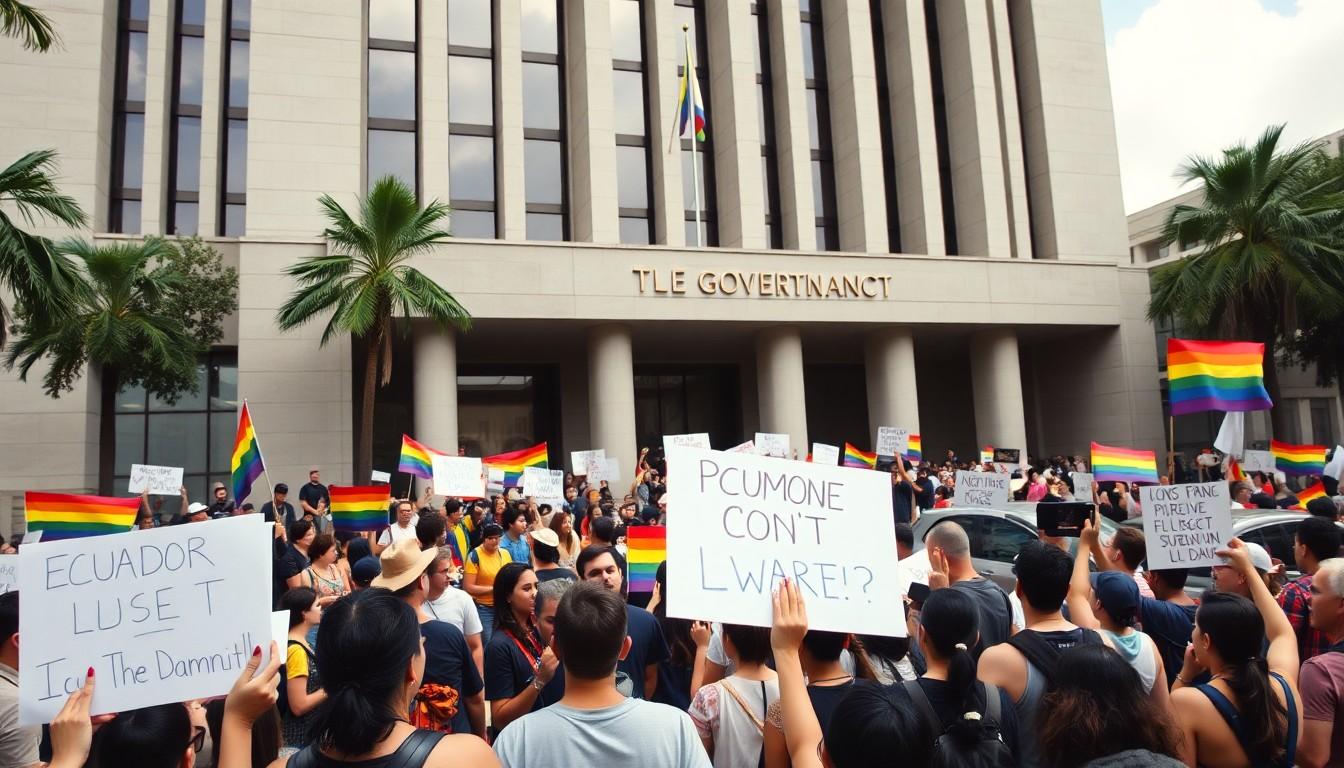
Ecuador has approved an adoption law designed to speed up placements, but its new eligibility rules exclude LGBTQ+ people and put some supportive parents of trans children at risk. The measure arrives as the country’s courts, lawmakers and activists continue to wrestle with the rights of children and families.
A faster adoption process comes with a serious catch
Ecuador’s National Assembly approved the reform by 118 votes to none, with 25 abstentions. The law is intended to cut delays and reduce the adoption process to roughly a year, a goal that sounds practical on paper. The trouble lies in who gets to take part.
Human Rights Watch says the legislation entrenches discrimination by barring same-sex couples and requiring single adopters to be heterosexual. That means a gay, lesbian or bisexual person applying alone could be excluded, despite marriage equality already being recognised in Ecuador.
The contradiction is hard to miss. A system can be streamlined without making sexual orientation a test of parental suitability.
Single adopters now face a blunt legal test
The new rule does more than preserve the existing restriction on same-sex couples. It extends the barrier to single LGBTQ+ applicants, creating a legal distinction between people who may be equally capable of offering a child a stable, loving home.
The Ecuadorian LGBT Federation has argued that heterosexuality is not evidence of parenting ability. It also warns that officials would need some mechanism for deciding whether a prospective single adopter meets the requirement, raising obvious concerns about privacy, stereotyping and arbitrary enforcement.
For children waiting for permanent homes, that could narrow the pool of approved families for reasons unrelated to care, security or emotional readiness.
Why the custody provision has alarmed trans families
The law also includes wording that critics say could be used against parents who support gender-affirming medical care for their trans children. The language around parental “promotion” has been described as vague, which makes its possible application particularly unsettling.
If both parents were to lose parental authority, the child could then become eligible for adoption. That link turns a disputed question about healthcare and parental support into a potential family-separation issue, according to reporting by LGBTQ Nation and JURIST.
Supporters of trans young people say helping a child navigate their identity shouldn't be treated as evidence of neglect. For many families, the fear isn't theoretical: a poorly defined rule can make ordinary decisions feel legally dangerous.
Intersex children are treated differently under the text
Activists have also highlighted an apparent double standard in the legislation. The restrictions do not cover parents who support so-called normalising medical interventions for children with diverse sex characteristics.
Such procedures are often carried out on intersex children before they can give informed consent. Human rights groups and intersex advocates have long raised concerns about complications including loss of sensation, urinary problems, psychological harm and sterilisation.
The distinction has prompted criticism that the law is less about a consistent standard of child welfare than about regulating LGBTQ+ identities and gender-affirming care. That is a troubling basis for any adoption or custody policy.
Ecuador’s rights debate is moving in opposite directions
The adoption reform follows a wider political backlash against LGBTQ+ rights, particularly those of trans people. President Daniel Noboa has backed efforts to keep so-called “gender ideology” out of education and opposed gender-related medical interventions for children.
At the same time, Ecuador’s Constitutional Court has recognised important rights for trans adolescents, including the ability to seek changes to gender markers on identity documents, subject to conditions. The contrast shows a country advancing judicial protections in one area while lawmakers introduce new restrictions in another.
Human Rights Watch researcher Cristian González Cabrera said the adoption system could be improved without using reform as a vehicle for bias. That seems to be the central issue: children need safe, permanent families, but discrimination doesn't make those families safer.
The measure is likely to face continued scrutiny from rights organisations and LGBTQ+ advocates. For prospective parents, meanwhile, the immediate message is painfully clear: Ecuador’s adoption rules now place identity at the centre of a decision that should focus on a child’s wellbeing.
Small administrative improvements shouldn't come at the cost of equal family rights.
Source Reference Map
Story idea inspired by: [1]
Sources by paragraph:
- Paragraph 1: [2], [3]
- Paragraph 2: [2], [6]
- Paragraph 3: [4], [5]
- Paragraph 4: [5], [6]
- Paragraph 5: [2], [4]
- Paragraph 6: [2], [5]
- Paragraph 7: [4], [6]
- Paragraph 8: [2], [5]
- Paragraph 9: [3], [6]
- Paragraph 10: [7], [2]
- Paragraph 11: [2], [4]
- Paragraph 12: [5], [6]
- Paragraph 13: [7], [2]
- Paragraph 14: [2], [4]