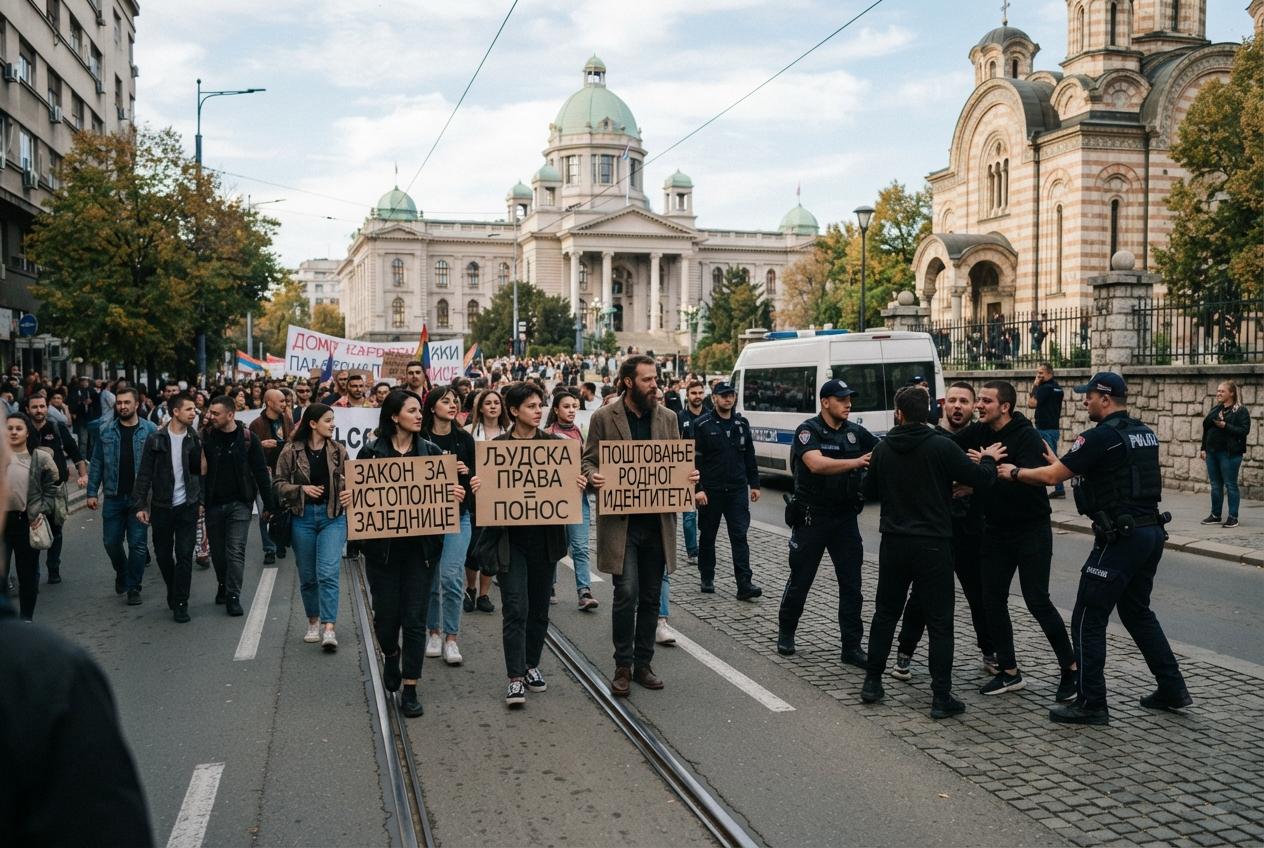
Marchers filled central Belgrade for Pride 2026, marking 25 years since Serbia's first event while renewing calls for legal recognition of same-sex unions and gender identity. The peaceful procession carried a simple message, “There is a room for all of us”, but activists said the country's legal system still leaves LGBT+ people waiting for equal protection.
A milestone march with an unfinished message
Belgrade Pride returned to the streets on 5 September with a mixture of celebration, memory and frustration. Marchers travelled from Manjez Park to the National Assembly and back, creating a bright, determined procession in the heart of the Serbian capital. According to Vreme, the event revived the slogan first used during the troubled inaugural Pride in 2001. [2]
That anniversary gave the march extra emotional weight. Twenty-five years on, the route is more established, but the central demand remains strikingly familiar: LGBT+ people want their relationships and identities recognised in law, not merely tolerated in public life.
What happened along the route?
The march passed largely without serious disruption, although tensions flared near the Ascension Church. Counter-protesters played religious music, burned incense and shouted nationalist slogans, while police intervened in another incident close to the National Assembly. Beta reported that officers helped keep the procession moving safely. [4]
Those moments were unsettling, but they didn't define the day. Pride organisers had published practical guidance ahead of the event, including information on meeting points, the route and safety arrangements. For many participants, the ability to gather openly and return home safely was itself a meaningful marker of progress. [5]
Legal recognition remains the big gap
Activists used the march to press for two long-awaited measures: legislation recognising same-sex partnerships and a legal framework for gender identity. They also called for faster official responses to hate speech, stronger recognition of LGBT+ people in local action plans and better education about sexual orientation and gender identity.
The issue is personal as well as political. Without clear legal protection, couples can face uncertainty over inheritance, healthcare decisions and family rights, while trans people may struggle to have their identity reflected in official documents. The European Union Delegation in Serbia has backed the wider effort to advance LGBTIQ rights, but campaigners say public support needs to be matched by concrete laws. [6]
Why this Pride felt wider than the LGBT+ community
Several speakers framed Pride as part of a broader argument about the health of Serbian democracy. Former Pride patron Olivera Kovacevic said that social conditions have worsened in some respects, while also suggesting that pressures once felt most sharply by LGBT+ people are now affecting a wider section of society, according to Danas. [3]
That observation helps explain the march's broad language. Its message wasn't simply about one community seeking visibility. It was also about whether institutions protect people when they are threatened, harassed or denied equal treatment. As one organiser put it, Pride is a protest because LGBT+ people are also workers, teachers, students and neighbours.
A peaceful event, but no easy victory
The EU Delegation's public support offered a reminder that Serbia's rights record is being watched beyond its borders. Yet international encouragement can't replace domestic action, particularly when activists are still asking for laws that have been discussed for years. [6]
For participants, the day's symbolism mattered. The route connected a historic park with the National Assembly, placing private lives and public policy side by side. It was colourful, occasionally tense and undeniably determined - a reminder that visibility can be a celebration, but it can also be a demand for something still missing.
Belgrade Pride showed progress in the streets, but Serbia's next test will be whether that progress reaches the statute book.
Source Reference Map
Story idea inspired by: [1]
Sources by paragraph: