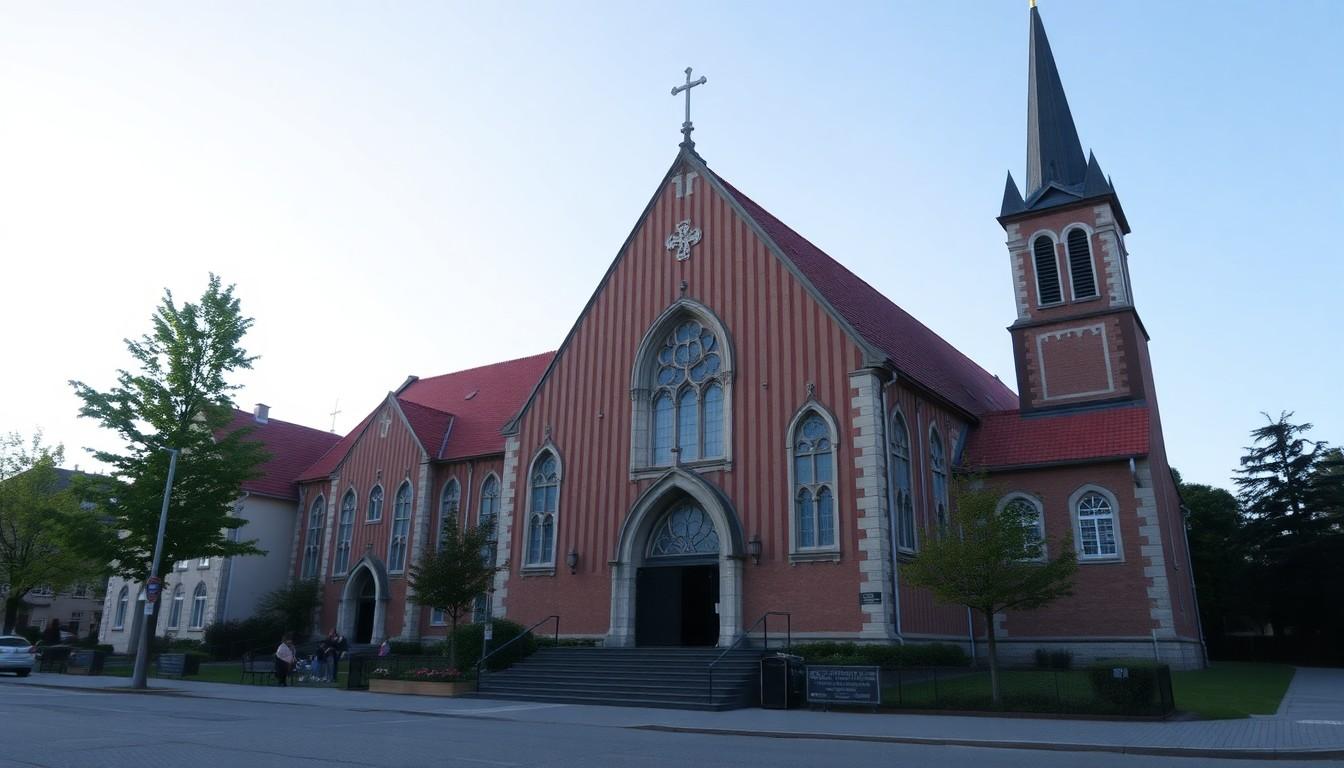
A Norwegian debate over same-sex relationships, church teaching and state funding is forcing a difficult question into the open: when does religious freedom stop protecting discrimination, and should public money support it?
Essential takeaways
- The central tension: Religious communities can hold theological views, but those views can still cause real harm.
- A public-health concern: Research links hostile attitudes towards LGBTQ+ people with greater mental-health risks, particularly among young people.
- State support matters: Norway provides grants to eligible religious communities based partly on registered membership.
- Congregations are changing: Some members have reportedly left churches during recent disputes over same-sex relationships.
- The debate is personal: For LGBTQ+ teenagers, a sermon about “sin” can feel less like doctrine and more like a judgement on their identity.
A royal speech became something larger
Few political speeches have the staying power of an apparently simple description of everyday life. When King Harald spoke about girls loving girls, boys loving boys and people loving one another, he wasn't offering a policy platform. He was presenting an image of Norway as a country broad enough to include everyone.
That message has gained extra weight since his death. It now sits at the centre of a wider argument about whether religious communities across southern Norway are prepared to extend the same sense of belonging to LGBTQ+ people. The question is no longer simply what a denomination believes, but what those beliefs mean in practice for young people growing up inside it.
The pressure is especially visible where churches describe opposition to same-sex relationships as an expression of care. For someone hearing that their feelings must be resisted or prayed away, the language of concern may sound painfully different from the intention behind it.
Why this is more than a theological disagreement
Religious teaching doesn't exist in a vacuum. It reaches families, schools, youth groups and social circles, often during adolescence, when identity can already feel like a room with the lights flickering.
Norwegian research on sexual orientation and gender diversity, commissioned by the Norwegian Directorate for Children, Youth and Family Affairs, has documented higher levels of suicidal thoughts and suicide attempts among LGBTQ+ people than in the wider population. Trans people face particularly serious risks, while international research has also associated negative, religiously justified attitudes at home with a higher risk of suicide attempts among LGBTQ+ young people.
That doesn't mean every person of faith who holds a traditional view intends harm. It does mean communities need to take responsibility for the consequences of what they teach, especially when young members are listening closely. Good intentions aren't a substitute for safety.
The membership question is becoming impossible to ignore
The dispute is also about money. Norway's system supports registered religious and life-stance communities, with grants tied to eligible membership. That makes membership more than a private spiritual choice: it can carry financial and institutional consequences.
Government information explains how support is calculated for eligible members, while recent reporting has highlighted the scale of religious membership and the public funding connected to it. Critics argue that taxpayers shouldn't be expected to finance organisations that deny equal dignity to a protected minority. Religious leaders, meanwhile, are likely to view state funding as part of a broader principle of equal treatment between communities.
This is where the debate becomes genuinely awkward. Freedom of religion protects the right to believe and worship, but it doesn't automatically settle the question of public money. A society can defend religious liberty while still asking whether state support should come with conditions on discrimination, governance or safeguarding.
Congregations are feeling the fallout
The argument isn't staying on social media or in opinion columns. Some congregations have seen members leave after disagreements over same-sex relationships, according to reports from Norwegian religious media. One church has reportedly lost around 90 members since the summer, while another faced a noticeable wave of departures after its position became a public issue.
Those exits matter because they send two messages at once. First, disagreement exists inside religious communities, rather than only between believers and non-believers. Secondly, silence isn't necessarily neutrality: staying can be interpreted as acceptance, while leaving can become a visible statement.
There are other routes, too. Members can raise the issue in church meetings, ask leaders to explain their policies and support LGBTQ+ people within the congregation. The Church of Norway's own evolution shows that traditions can change, although reform is rarely quick or comfortable.
What should happen next?
The most useful next step is a more precise conversation. Communities should distinguish between a private theological conviction and practices that pressure people to suppress, change or deny their sexual orientation or gender identity. Those are not abstract differences when teenagers are involved.
Norway's authorities have already had to examine accusations of discrimination involving religious organisations. In one case, the state concluded that the facts did not support the allegation in the way critics had claimed, while other disputes have centred on whether controversial declarations should be clarified or amended. Together, these cases show how difficult it is to balance autonomy, equality and public accountability.
For families, the practical test is fairly simple: can a young person ask questions without being shamed, find support without hiding and remain part of the community without being told that love makes them morally defective? If the answer is no, the language of welcome needs more than a polished statement.
A country can protect worship and still insist that LGBTQ+ citizens deserve safety, dignity and equal standing. That isn't an attack on faith. It's the minimum standard for living together.
It's worth asking not only what communities believe, but what their members experience.
Source Reference Map
Story idea inspired by: [1]
Sources by paragraph:
- Paragraph 1: [2], [4]
- Paragraph 2: [3], [5]
- Paragraph 3: [6], [4]
- Paragraph 4: [7], [2]
- Paragraph 5: [3], [5]
- Paragraph 6: [4], [7]
- Paragraph 7: [6], [3]
- Paragraph 8: [2], [5]
- Paragraph 9: [4], [5]
- Paragraph 10: [3], [7]
- Paragraph 11: [6], [4]
- Paragraph 12: [2], [5]
- Paragraph 13: [4], [7]
- Paragraph 14: [6], [3]
- Paragraph 15: [2], [4]