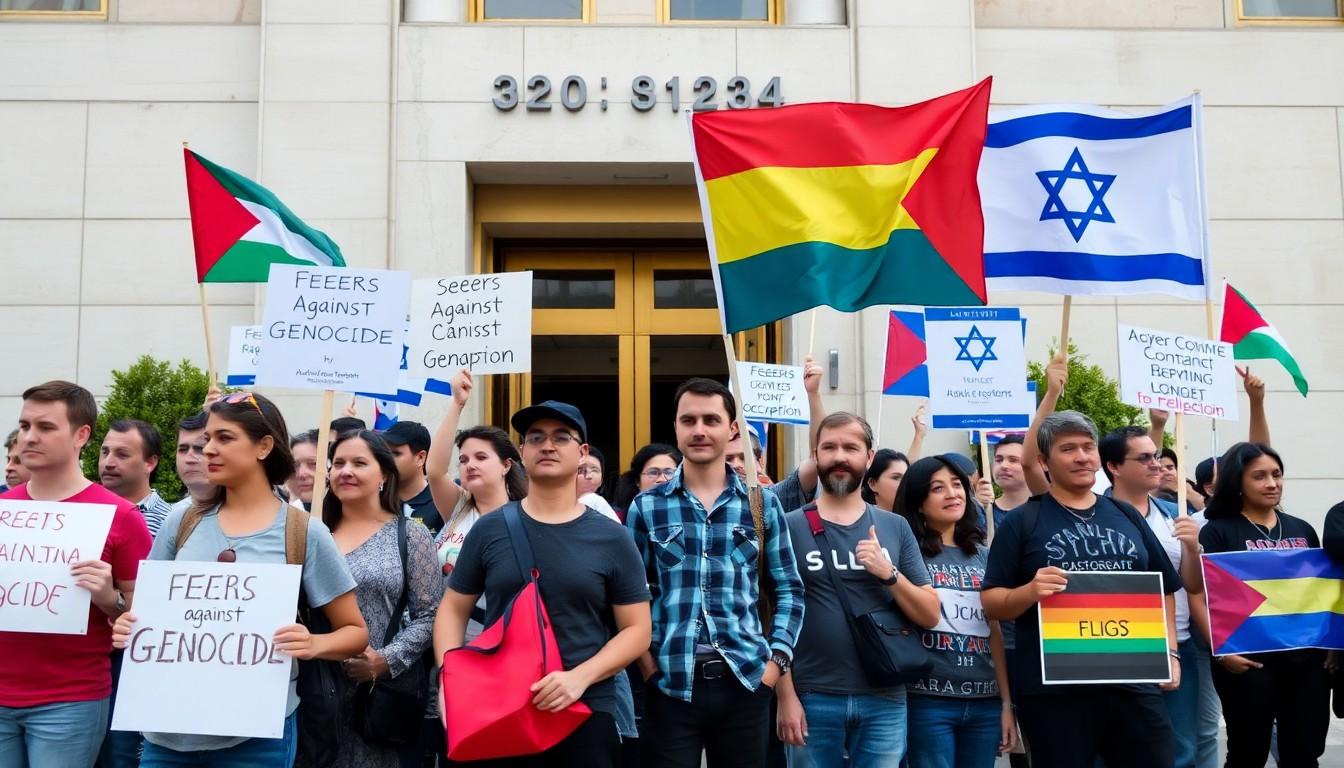
Israel’s LGBTQ community is taking centre stage as the country heads towards a crucial 2026 election. From Pride marches in Jerusalem to anti-war protests, queer Israelis are debating democracy, Gaza, military service and political identity, revealing a movement that’s both proudly visible and deeply divided.
Essential Takeaways
- Pride has become political: Israeli LGBTQ events are increasingly focused on democracy, government policy and the war in Gaza.
- Identity doesn’t dictate one view: Queer Israelis hold sharply different opinions on nationalism, military service and Palestinian rights.
- The election adds urgency: With the Knesset dissolved and a general election approaching, campaign-season tensions are rising.
- The debate reaches beyond Israel: Queer Palestinians and international activists challenge the use of LGBTQ rights in Israel’s global messaging.
- Public protest remains visible: Marches, placards and stickers have turned LGBTQ activism into a recognisable part of the political landscape.
Pride in Israel is no longer just a parade
The most striking change is easy to spot. At demonstrations in Israel, rainbow flags sit alongside signs calling for democracy, an end to the occupation and a ceasefire in Gaza. The atmosphere is less festival sparkle and more political pressure cooker, with queer activists making it clear that visibility alone isn't enough.
Reuters reported that Jerusalem's Pride parade has shifted towards explicitly political issues ahead of the election. That change reflects a broader mood: many activists now see LGBTQ rights as inseparable from the health of Israel's democratic institutions and its conduct during wartime.
For some participants, the message is straightforward. A government that threatens democratic checks and balances, they argue, also creates a less secure environment for minorities. Others are wary of tying Pride too closely to a single political camp, especially when national security remains the dominant concern for many voters.
The war has sharpened old arguments
The Gaza war has made these disagreements more difficult to avoid. Some LGBTQ Israelis have joined protests against the government's military campaign and settler violence in the West Bank, while others see national security and military service as essential parts of their civic identity.
The Guardian has reported on the clash between queer Palestinian activism and Israeli Pride messaging, particularly accusations that LGBTQ rights are being used to present Israel in a favourable light while Palestinian rights are sidelined. The criticism has made the phrase "pinkwashing" part of a wider international argument about human rights and foreign policy.
That debate can feel uncomfortable because it refuses a neat storyline. Israel has legal and social spaces that are more accepting of LGBTQ people than those available in many parts of the region, but activists say that progress shouldn't be used to excuse occupation or civilian suffering. Meanwhile, queer Israelis who have served in the reserves may feel that international criticism overlooks the fear and trauma shaping their decisions.
A community divided by politics, not erased by it
The idea of one unified LGBTQ voting bloc is increasingly hard to sustain. Some queer Israelis prioritise liberal democracy and Palestinian rights. Others put security, Jewish identity or a strong military response first. Many sit somewhere between those positions, frustrated by both the government's conduct and what they see as simplistic criticism from abroad.
The Jerusalem Post and the Times of Israel have both covered Pride activism as part of a larger political struggle, with marchers taking their message beyond the usual city-centre route and towards the Knesset. That physical movement matters. It turns a cultural celebration into a direct appeal to lawmakers, and it gives campaign slogans a harder edge.
Still, internal disagreement hasn't erased solidarity. Even people who disagree over Gaza or military policy may share concerns about proposed restrictions, religious influence or the possibility of democratic backsliding. Sometimes a community's unity is less about holding the same opinions than about refusing to disappear from public life.
Why the election could change the conversation
Israel's political timetable has added a ticking-clock quality to the debate. Al Jazeera reported that the Knesset was dissolved ahead of a general election in October, putting issues of governance, security and social rights back at the centre of national campaigning.
That means LGBTQ voters and organisations face a familiar challenge: how do you demand attention for equality when parties are focused on war, hostage negotiations and national survival? The answer, for many activists, is to argue that minority rights aren't a side issue. They are a test of how a country behaves under pressure.
The campaign could also expose the limits of symbolic inclusion. Politicians may appear at Pride events or use rainbow imagery, but activists are likely to ask harder questions about budgets, policing, religious exemptions, asylum policy and protection from discrimination. A colourful backdrop is pleasant; policy is where the real work begins.
The wider meaning of queer activism
The politics of LGBTQ identity in Israel now reaches well beyond Pride season. It touches questions about citizenship, military service, nationalism, Palestinian rights and the country's image overseas. Associated Press reporting on the regional conflict has underlined how quickly domestic political arguments become entangled with the wider war.
For international observers, the story is a reminder that LGBTQ communities aren't political props or a single-minded audience. They contain competing histories, loyalties and fears. Treating queer Israelis as automatically liberal, or queer Palestinians as automatically represented by one movement, flattens a debate that is already painfully complex.
As the election approaches, the rainbow flag will continue to appear in streets, marches and campaign imagery. But behind it are people asking very different questions about what safety, freedom and equality should look like. That's a much more revealing picture of modern Israeli politics than any slogan alone.
The election may decide who governs, but these activists are also arguing over what kind of society deserves to be defended.
Source Reference Map
Story idea inspired by: [1]
Sources by paragraph: