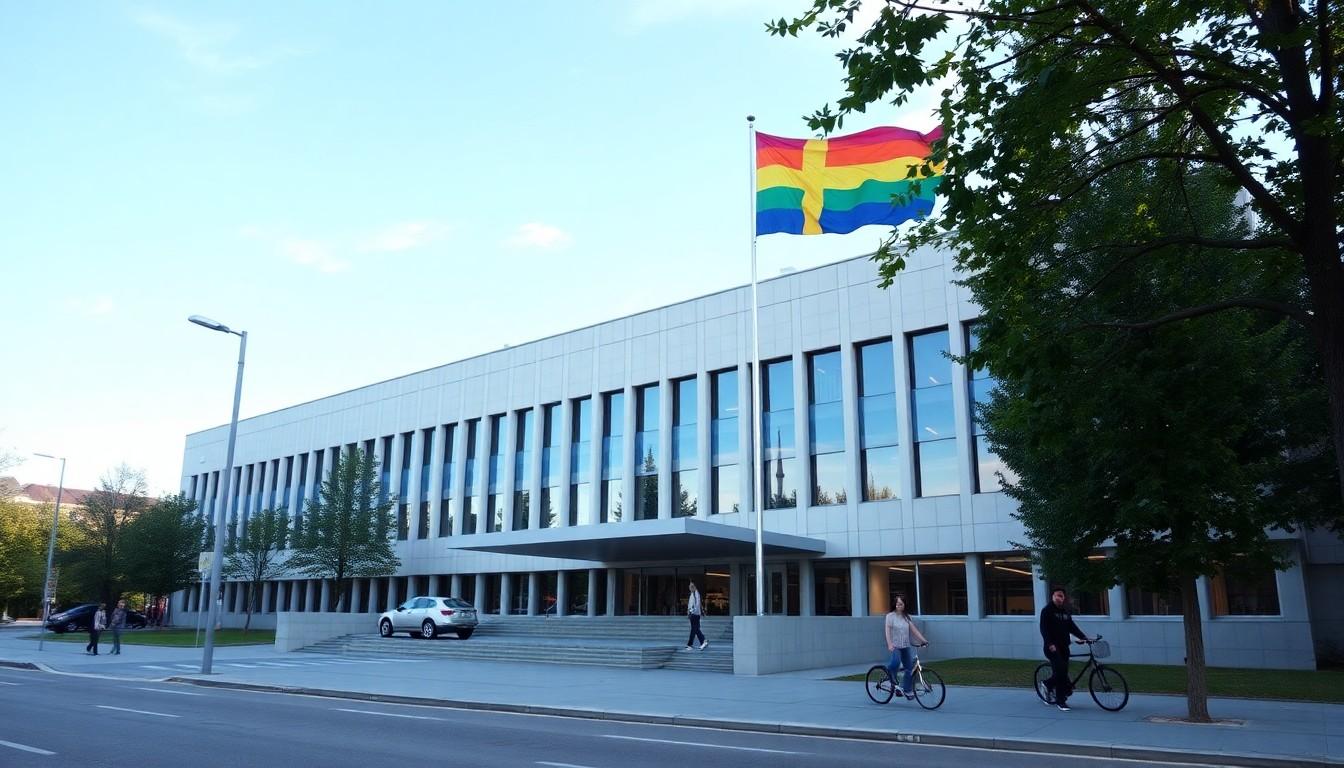
Campaigners are urging Sweden to go further than its new law on psychological violence, arguing that conversion practices targeting LGBTQIA+ people need an explicit ban. The debate matters because these attempts often happen behind closed doors, within families, faith communities and trusted networks, where pressure can be difficult to recognise and even harder to report.
A new law offers protection, but leaves questions
Sweden’s updated rules on psychological violence, which came into force on 1 July, have been presented as a possible safeguard for people subjected to conversion practices. The legislation targets repeated insults, controlling behaviour and other forms of psychological abuse, according to Aftonbladet and the Swedish Gender Equality Agency.
That could help in serious cases, particularly where someone is isolated or repeatedly told that their identity is unacceptable. But it may not cover every conversion attempt. A single incident can be profoundly humiliating and damaging, even when it doesn't form part of a longer pattern.
The distinction is important. Protection shouldn't depend on someone enduring repeated abuse before the law takes notice.
What conversion practices actually involve
Conversion practices aren't legitimate therapy, counselling or neutral guidance. They are attempts to change a person's sexual orientation or gender identity, often by presenting who they are as a problem that needs fixing. RFSL describes the practice as harmful and linked to shame, coercion and discrimination.
The pressure can come from someone close, such as a parent or relative. It can also involve a religious leader or a person connected with a conservative organisation. That familiarity can make the experience especially difficult to challenge, because the person applying pressure may also control housing, money, social contact or emotional support.
RFSL has estimated that about one in 20 LGBTQ people in Sweden has experienced conversion practices, while warning that the true figure may be higher. The number is troubling, but the hidden nature of these situations means surveys are unlikely to capture the whole picture.
Should public money ever support organisations involved?
Sweden introduced new rules for civil society funding in 2024. Under the framework, public support can be withdrawn when organisations carry out conversion attempts against children. That's a meaningful step, but campaigners argue the principle should apply to adults as well.
The case for that broader approach is straightforward. Taxpayers shouldn't unknowingly fund organisations that pressure people to reject their identity, regardless of whether the target is a child or an adult. Public funding is meant to support participation and wellbeing, not exclusion dressed up as care.
There is, however, a familiar counterargument: adults should be free to choose the advice or spiritual guidance they want. Personal autonomy does matter. Yet choice becomes complicated when a person depends on the organisation or individual offering that guidance, particularly where family expectations, faith and social belonging are involved.
Why an explicit ban could make a difference
RFSL has welcomed moves towards criminalising conversion practices, while stressing that protection should not be limited to repeated conduct. A specific offence could give victims, police and support services a clearer framework, rather than asking them to fit every case into broader rules on abuse or coercive control.
Clear wording would also send a strong public message. Conversion practices aren't simply an uncomfortable disagreement about values; they're an effort to undermine a person's dignity and sense of self. That clarity could help professionals recognise warning signs earlier, from demands to attend so-called treatment to pressure to confess, pray or distance oneself from LGBTQ friends.
No law can solve the problem alone. Training, confidential support and reliable reporting routes still matter, especially for people who fear losing their family or community. But legislation can draw a line where ambiguity has allowed harm to remain hidden.
Europe needs a stronger response
The issue extends beyond Sweden. Across Europe, LGBTQIA+ rights remain contested, with anti-LGBTQ rhetoric, exclusionary policies and reports of conversion practices continuing in some countries. RFSL's guidance makes clear that the practice can appear in medical, religious and informal settings, which makes a consistent response difficult but necessary.
The European Union already links funding and cooperation to democratic standards, but advocates argue it should apply that pressure more firmly when governments restrict minority rights or weaken the rule of law. Cutting state-level funding would be a dramatic measure, so any such mechanism would need careful legal safeguards and a precise threshold.
Still, the wider point is hard to dismiss. Rights shouldn't depend on where someone happens to live, or on whether the abuse is carried out by a professional, a relative or a faith leader. A liberal society can respect freedom of belief while refusing to legitimise attempts to erase someone else's identity.
A direct ban wouldn't end every harmful conversation overnight. It could, though, make the standard unmistakable: nobody needs to be cured of being themselves.
A clear law, backed by support and accountability, would make that principle harder to ignore.
Source Reference Map
Story idea inspired by: [1]
Sources by paragraph:
- Paragraph 1: [2], [4]
- Paragraph 2: [6], [4]
- Paragraph 3: [2], [3]
- Paragraph 4: [5]
- Paragraph 5: [5], [2]
- Paragraph 6: [2], [3]
- Paragraph 7: [2], [3]
- Paragraph 8: [6], [4]
- Paragraph 9: [2], [5]
- Paragraph 10: [5]
- Paragraph 11: [2], [3]
- Paragraph 12: [5], [6]
- Paragraph 13: [2], [3]
- Paragraph 14: [5], [2]
- Paragraph 15: [2], [3]