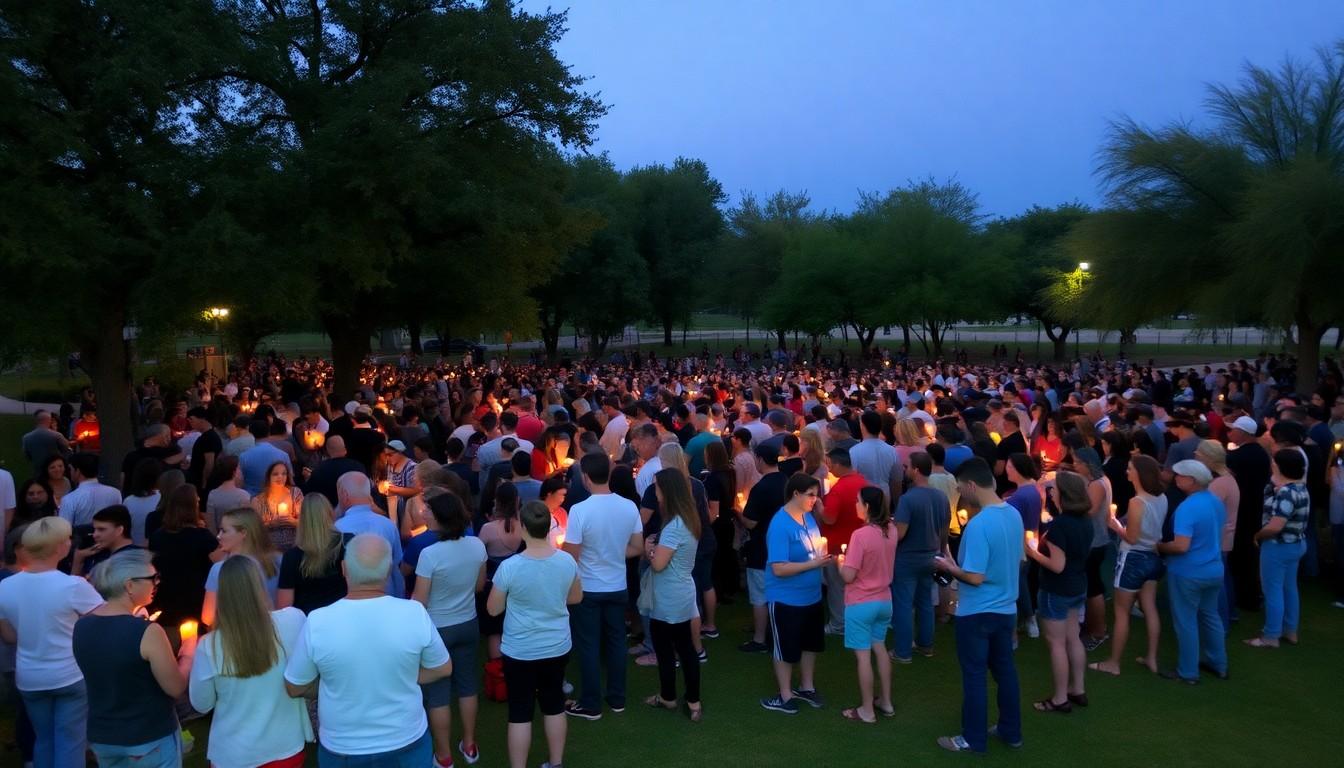
A Tucson vigil brought around 1,000 people together after Vincent Anthony Siqueiros and Cameron Davis Capara were killed outside Venture-N, an LGBTQ+ bar. Their deaths have shaken the local queer community, while the investigation continues into whether the shooting was motivated by hate.
Essential Takeaways
- Two men were killed: Vincent Anthony Siqueiros and Cameron Davis Capara died outside Venture-N in Tucson.
- A possible hate crime: Police are investigating whether anti-LGBTQ+ bias played a role.
- A large public response: Around 1,000 people attended a vigil at Catalina Park.
- Community remembered their spirit: Friends described both men as unapologetically themselves.
- The case remains under investigation: Authorities have not yet established a final motive.
Tucson's LGBTQ+ community faces a devastating loss
The shooting outside Venture-N struck at one of the places where Tucson's LGBTQ+ community gathered to feel visible, welcome and safe. The deaths of Siqueiros and Capara have left friends and neighbours grieving, with the bar's familiar social warmth replaced by shock and sorrow.
According to the Associated Press, the incident is being treated as a possible hate crime. Investigators are still working to establish exactly what happened and whether hostility towards the victims' identities was a factor.
That uncertainty makes the loss feel even heavier. For many people, LGBTQ+ venues aren't simply nightlife spots; they're places to find friendship, chosen family and a sense of belonging.
A thousand people answered grief with solidarity
At Catalina Park, about 1,000 people gathered for a vigil honouring the two men, according to AZ Luminaria. The scale of the turnout offered a striking picture of public grief, but also of a community determined not to let the victims be reduced to a headline.
Candles, memories and quiet conversation replaced the usual noise of a Friday night out. In moments like these, a crowd can become more than an audience: it becomes a visible promise that the people affected won't be forgotten.
The Guardian reported that the shooting had deeply unsettled Tucson's LGBTQ+ community. That reaction is understandable. Violence outside a queer venue can make an entire community question spaces that once felt dependable and familiar.
Friends remember two men who lived openly
People who knew Siqueiros and Capara through Venture-N remembered them as men who didn't soften their personalities to please others. Brian King, a friend of both, told The Advocate that they were genuine, independent and comfortable being themselves.
That tribute carries particular weight after a suspected hate crime. The qualities that made the men memorable - their confidence, honesty and refusal to conform - are also part of the wider struggle for LGBTQ+ people to live openly without fear.
AZ Luminaria's coverage of the vigil captured how personal the mourning was. This wasn't an abstract debate about public safety or hate-crime statistics; it was a gathering of people who had shared rooms, friendships and ordinary moments with two individuals they loved.
Why the possible hate-crime designation matters
A hate-crime investigation examines more than the immediate act of violence. It asks whether prejudice or hostility connected to a victim's identity may have influenced the attack, a distinction that can affect how authorities investigate and prosecute the case.
Arizona Public Media reported that police were examining the shooting as a possible hate crime. That wording is important: it reflects an active line of inquiry, not a final conclusion. The motive will need to be established through evidence and the legal process.
For LGBTQ+ residents, though, the possibility alone can feel frightening. A violent incident near a queer bar can ripple far beyond those present, affecting whether people feel comfortable going out, travelling home or expressing themselves in public.
Tucson's response sends a message
The vigil's turnout suggests that grief has not driven the community into silence. Instead, people came together publicly to remember the victims and support one another, creating a moment of care in the middle of a painful investigation.
Local reporting from Tucson has kept attention on both the facts of the case and the people at its centre. That balance matters. Responsible coverage can inform the public without losing sight of the human lives behind the police reports.
The next steps will depend on investigators and prosecutors, but the community has already made its position clear: Siqueiros and Capara mattered, and their lives deserve to be remembered with more than sorrow.
Their memory now stands alongside a simple act of solidarity: showing up for one another.
Source Reference Map
Story idea inspired by: [1]
Sources by paragraph:
- Paragraph 1: [2], [4]
- Paragraph 2: [3], [6]
- Paragraph 3: [5], [6]
- Paragraph 4: [2], [3]
- Paragraph 5: [4], [5]
- Paragraph 6: [5], [6]
- Paragraph 7: [2], [3]
- Paragraph 8: [4], [6]
- Paragraph 9: [3], [5]
- Paragraph 10: [2], [4]
- Paragraph 11: [5], [6]
- Paragraph 12: [3], [4]
- Paragraph 13: [2], [5]
- Paragraph 14: [3], [6]
- Paragraph 15: [4], [5]