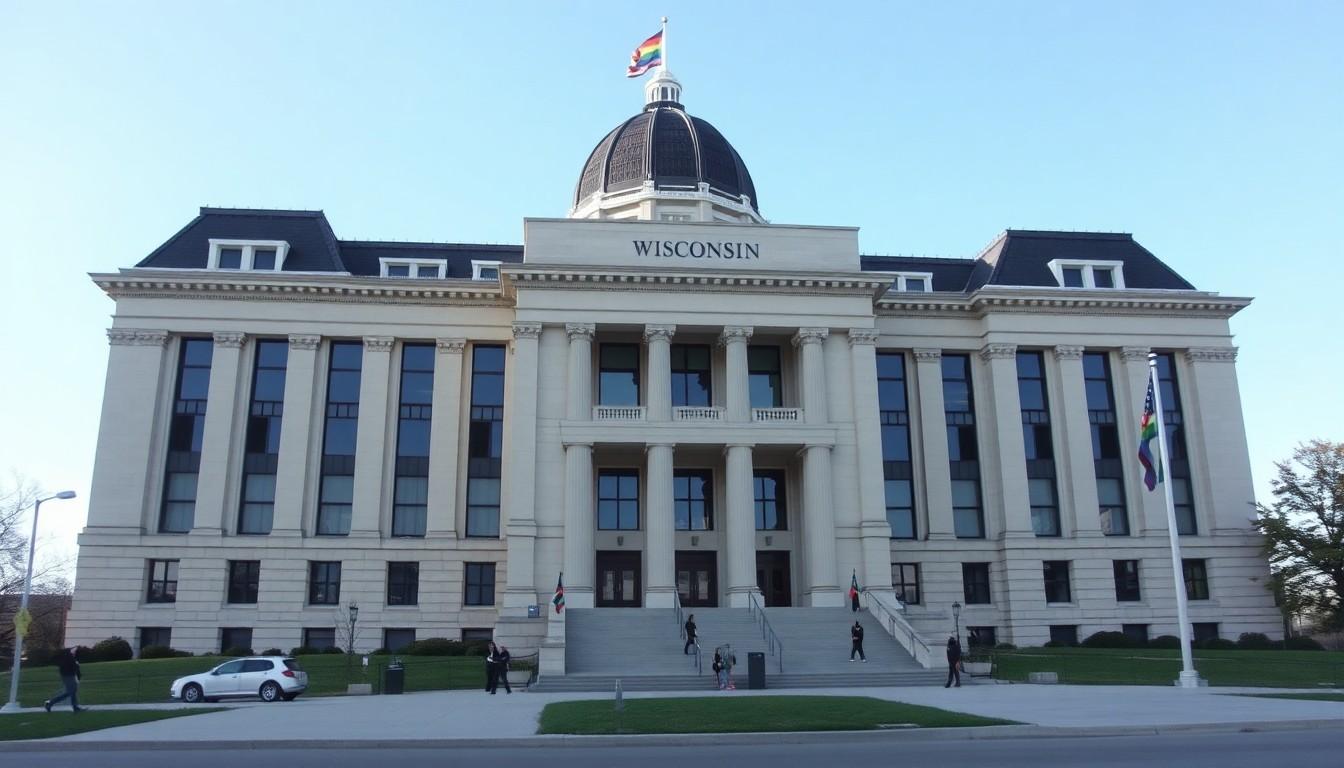
Democratic candidate David Crowley is facing renewed scrutiny in Wisconsin after securing support from the Human Rights Campaign PAC. The endorsement has revived arguments over transgender healthcare, parental rights and girls' sport, while Crowley's wider campaign gathers pace in a closely watched governor's race.
Essential Takeaways
- New backing: The Human Rights Campaign PAC has endorsed David Crowley for Wisconsin governor.
- Republican criticism: Wisconsin Republicans say the endorsement highlights disagreements over gender-transition care, sport and parental authority.
- Crowley's record: Critics have pointed to his previous support for a proposed Transgender Equality Task Force.
- Race heats up: Crowley has relaunched his campaign as Democratic contenders compete for attention and funding.
- Bigger picture: The dispute shows how cultural issues are likely to shape the governor's contest.
A fresh endorsement puts culture-war issues centre stage
The endorsement has landed like a spark in an already highly charged race. Human Rights Campaign PAC support gives David Crowley a prominent ally, but it also provides Wisconsin Republicans with an opening to attack his policy record.
The Heartland Post reported that the group has opposed Republican-backed efforts involving Medicaid funding for gender-transition care, restrictions on treatment for minors, girls' sport and parental rights. Those issues remain deeply polarising, with supporters describing them as questions of equality and healthcare, while opponents frame them around safeguarding, fairness and family authority.
That contrast is likely to matter as voters decide whether Crowley represents a pragmatic centre or a more progressive agenda. The argument, in other words, isn't only about one endorsement. It's about what the endorsement is said to reveal. (Sources: [3], [4])
Republicans say the backing tells a different story
Republican Party of Wisconsin chairman Brian Schimming argued that Crowley's allies undermine his attempt to present himself as a moderate. His criticism focused on the Human Rights Campaign's past opposition to Republican proposals affecting gender-transition procedures and school policies.
Those claims will form part of a familiar election strategy: link a candidate to national organisations, then use that relationship to define the candidate before voters have fully made up their minds. It's a powerful approach, particularly when the subject involves schools, healthcare and children.
Crowley's campaign has not simply appeared from nowhere. Local reporting has described his return to the governor's contest and his position as Milwaukee County executive, giving him an established political profile as the Democratic primary takes shape. (Sources: [6], [7])
Crowley's earlier record is back under the microscope
The Republican criticism also points to Crowley's time as a state legislator. He co-sponsored legislation that would have created a taxpayer-funded Transgender Equality Task Force, with a remit covering areas including healthcare, K-12 education, policing, housing and employment.
Supporters could describe that proposal as an attempt to review how state policy affects transgender people. Opponents, however, are likely to present it as evidence that Crowley has long supported a broader progressive programme than his moderate branding suggests.
This is where campaign labels meet legislative detail. Voters may hear the word moderate repeatedly, but they tend to judge it against a candidate's record, allies and priorities. A past bill can suddenly become very relevant when an election turns sharply towards cultural questions. (Sources: [3], [5])
Why the Democratic primary matters
The endorsement arrives as Democrats compete for visibility, money and momentum. Wisconsin Public Radio has reported on advertising activity in the governor's primary, a sign that candidates are already trying to shape the conversation well before the general election.
Crowley's campaign website also lists endorsements, giving voters a direct view of the support he is highlighting. That matters because endorsements can do more than provide a headline. They can help with fundraising, volunteer networks and credibility among particular groups, while also giving opponents material for attack adverts.
For voters, the practical lesson is simple: look past the endorsement logo. Check the organisation's policy positions, read the candidate's own platform and compare those statements with their voting or legislative history. Political packaging is sleek, but the detail is where the real differences usually sit. (Sources: [2], [4])
The campaign is likely to get louder
With Crowley back in the race and social issues already dominating the exchange, Wisconsin's governor contest appears set for a combative run. The Republican message is clear: the groups supporting Crowley supposedly reveal his governing instincts. Democrats are likely to argue that the same issues concern civil rights, healthcare access and equal treatment.
Neither side is likely to leave this ground voluntarily. Questions over minors' healthcare, school policy, parental decision-making and women's sport are emotionally powerful, easy to understand and difficult to settle in a short campaign advert.
For Wisconsin voters, that may make the coming months both revealing and exhausting. The clearest way to cut through the noise will be to compare specific proposals rather than rely on broad claims about being moderate, progressive or conservative. (Sources: [4], [5], [7])
A single endorsement has become another test of what David Crowley stands for.
Source Reference Map
Story idea inspired by: [1]
Sources by paragraph: