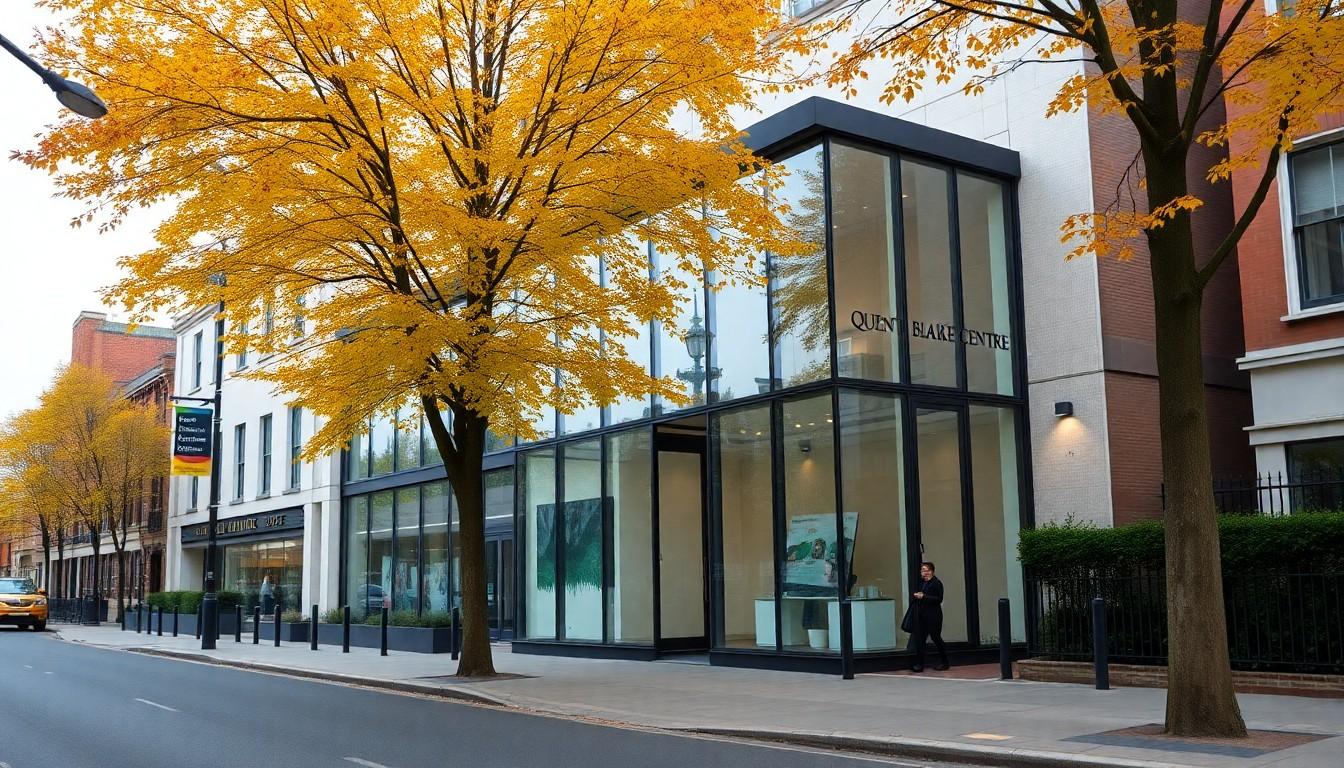
Shoppers are swapping sun loungers for gallery benches as UK autumn art exhibitions bring queer comics, immersive sculpture, music history and spectacular fashion to cities across Britain. From free library displays in Manchester to Freddie Mercury's legendary wardrobe in London, this season offers plenty of reasons to embrace cooler afternoons indoors.
Essential Takeaways
- Free options abound: The Portico Library and Freddie Mercury's V&A exhibition offer no-cost entry.
- Expect plenty of variety: Highlights span comics, photography, fashion, music, sculpture and social history.
- Book popular shows early: Anish Kapoor and Richard Dadd are likely to attract busy autumn crowds.
- Plan around closing dates: Several exhibitions finish in October, so don't leave them until winter.
- Make a day of it: Many shows sit near good cafés, shops and other cultural attractions.
Autumn's gallery season starts with a little bit of everything
The best UK autumn art exhibitions aren't confined to one mood. You can spend an afternoon puzzling over warped steel mirrors, then move on to comic-book history or a library time capsule, with each show offering a very different kind of escape.
At Manchester's Portico Library, Everything and Nothing looks at the institution's 220-year history through objects, memories and stories. The accompanying time capsule, which won't be opened until 2076, adds a lovely sense of mischief. According to the Portico Library, visitors can contribute their own memories, turning a historical exhibition into something quietly personal.
That emphasis on participation feels especially timely. As more people rediscover physical books, records and other tangible objects, galleries and libraries are offering experiences that can't be replicated by scrolling. It's a small but welcome excuse to put your phone away for an hour.
Queer comics prove that panels can change culture
At the Quentin Blake Centre for Illustrations, Queer as Comics traces LGBTQ+ storytelling from early gay comic strips and zines to contemporary graphic novels. Art Fund describes the exhibition as a survey of queer comics history, bringing together work that has often had to push against censorship and limited representation.
There's a pleasing contrast between the format's apparent simplicity and its political force. A few panels, a sharp caption and a memorable character can say what mainstream media once refused to acknowledge. The show also includes Moomin drawings and rarely seen material, so even visitors who don't consider themselves comics specialists should find plenty to explore.
For a slower, more atmospheric experience, Anish Kapoor's exhibition at Hayward Gallery takes over the building with reflective steel, visceral forms and intense colour. The Southbank Centre's description of the show highlights Kapoor's interest in scale, perception and the physical response of the viewer. In practice, that means expect to feel slightly off-balance, which is rather the point.
Victorian fantasy meets contemporary spectacle
Richard Dadd's Beyond Bedlam at the Royal Academy offers a darker sort of wonder. The exhibition brings together more than 100 works by the Victorian artist, whose densely detailed fairy paintings and imaginative worlds remain surprisingly strange to modern eyes.
The Royal Academy presents Dadd's work alongside the story of his life and time in psychiatric hospitals. That context matters, but the paintings shouldn't be reduced to biography alone. Look closely and the pleasure is in the tiny details, the crowded scenes and the sense that every inch contains another secret.
At the Design Museum, Es Devlin: Other Worlds shifts attention from finished spectacle to the creative machinery behind it. The Design Museum says the exhibition includes sketches, diaries, models, films and a recreation of Devlin's studio, alongside a large circular desk charting three decades of work.
It's a useful reminder that major cultural moments rarely appear fully formed. The polished stage show is only the visible tip; beneath it are rough drawings, practical decisions and plenty of experimentation. For anyone interested in design careers, it's one of the more genuinely instructive shows this autumn.
Fashion and music are sharing the spotlight
Freddie Mercury: A World of His Own at the V&A focuses on the performer through his clothing, from stage costumes to pieces from his personal wardrobe. The V&A says the exhibition includes eight significant looks, offering a view of both Mercury's flamboyant public persona and his private style.
Naturally, this is the show for anyone who thinks subtlety is occasionally overrated. The clothes are theatrical, but they also reveal how deliberately Mercury built an image that could move between rock excess, camp humour and extraordinary confidence.
The 90s: Art and Fashion at Tate Britain takes a broader look at the decade when music, photography, fashion and art collided. The exhibition brings together figures including Corinne Day, Juergen Teller, Steve McQueen, Sarah Lucas, Alexander McQueen and Vivienne Westwood, making it a strong choice for visitors who like their cultural history loud, stylish and a little unruly.
Meanwhile, The Music Is Black at V&A East follows Black British musical culture from jazz and reggae through grime and drum and bass. Its soundtrack of more than 120 tracks is designed to be heard through headphones as visitors move around the exhibition. That listening-led approach matters: this isn't simply a display of costumes and memorabilia, but an attempt to recreate the atmosphere and influence of the music itself.
Choose your exhibition by the experience you want
If you want spectacle, Tim Walker: Fairyland at the National Portrait Gallery promises dreamlike photography, theatrical styling and portraits of queer activists, artists, performers and writers. Walker's work tends to make reality feel slightly enchanted, so this is one for visitors who enjoy leaving the gallery with their eyes still adjusting to ordinary life.
For something quieter, Gwen John's Strange Beauties at the National Gallery of Scotland offers a major retrospective of the Welsh artist. The exhibition follows her path from Wales to Paris and includes drawings and watercolours that have rarely been shown. Its appeal is more intimate than explosive, but that restraint is precisely what makes it linger.
Ana Mendieta at Tate Modern provides another thoughtful route through themes of identity, displacement and belonging. Tate's presentation centres her earth, water, fire and flower works, many of which were temporary and survive through photography and film. Allow time for this one; it rewards attention rather than a brisk circuit.
There are also exhibitions with a strong community focus. Rudy Loewe's show at the Wellcome Collection explores Black experiences of the UK's mental-health system and imagines more caring alternatives. Developed with grassroots organisations, it sounds less like a conventional white-wall display and more like a space for listening, reflection and possibility.
A few practical tips before you set off
Check the closing date first. Several tempting shows finish in early or mid-October, while others run well into 2027. Booking ahead is sensible for major London exhibitions, particularly at weekends, but free entry doesn't always mean you can simply walk in without checking arrangements.
Think about the energy level you want, too. Anish Kapoor and Tim Walker are big sensory experiences, while Gwen John and the Portico Library suit a slower visit. If you're travelling across the country, grouping two nearby exhibitions can turn one ticket into a satisfying full day, rather than a rushed dash between venues.
Finally, don't ignore the smaller or pay-what-you-can options. Shows such as Ffasiwn at National Museum Cardiff and community-led projects can offer some of the freshest perspectives in the autumn programme. Sometimes the most memorable gallery visit is the one you hadn't initially circled in bold.
It's a strong season for getting indoors, looking closely and letting art make the weather feel irrelevant.
Source Reference Map
Story idea inspired by: [1]
Sources by paragraph:
- Paragraph 1: [2], [4]
- Paragraph 2: [2], [3]
- Paragraph 3: [4], [5]
- Paragraph 4: [5], [6]
- Paragraph 5: [6], [7]
- Paragraph 6: [7], [3]
- Paragraph 7: [3], [4]
- Paragraph 8: [5], [6]
- Paragraph 9: [7], [4]
- Paragraph 10: [2], [3]
- Paragraph 11: [4], [5]
- Paragraph 12: [6], [7]
- Paragraph 13: [2], [3]
- Paragraph 14: [4], [5]
- Paragraph 15: [6], [7]
- Paragraph 16: [2], [3]
- Paragraph 17: [4], [5]
- Paragraph 18: [6], [7]
- Paragraph 19: [2], [3]
- Paragraph 20: [4], [5]