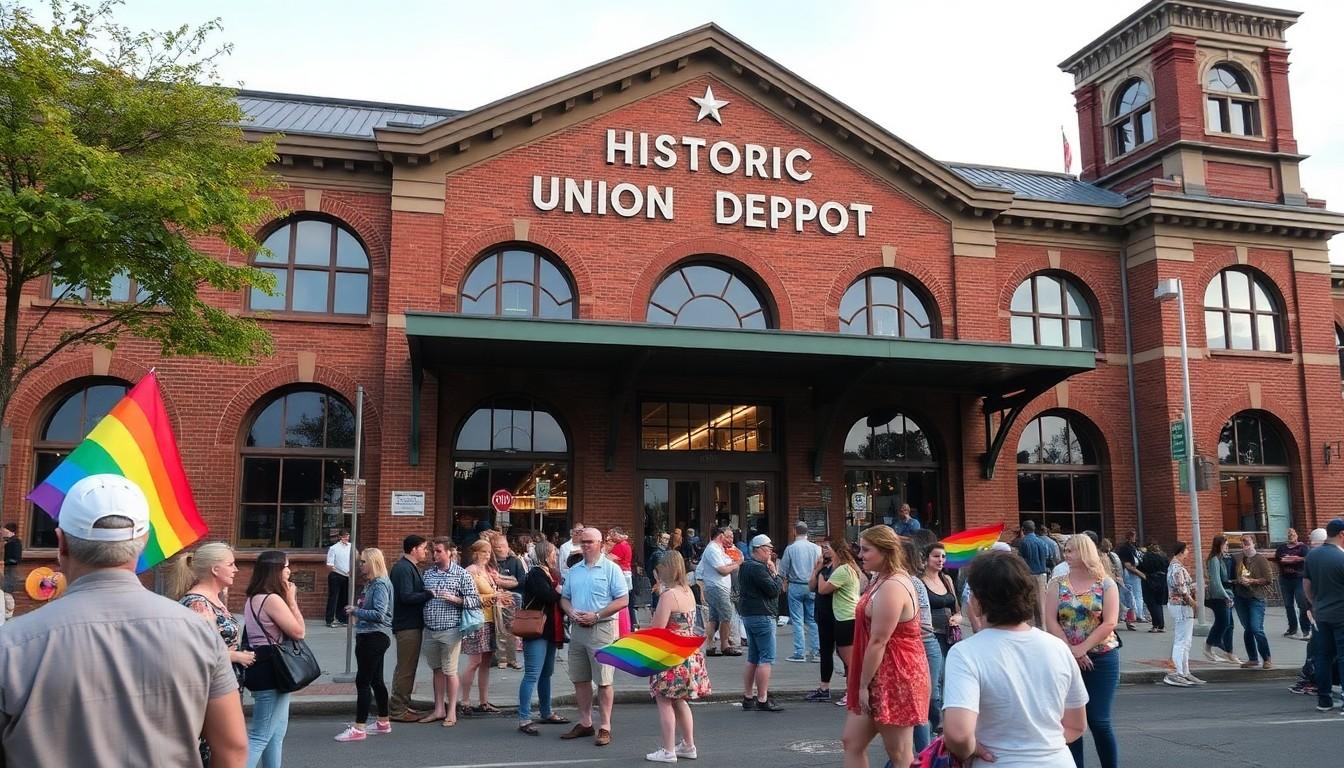
Shoppers aren't the only ones planning ahead this summer. Duluth-Superior Pride is drawing locals and visitors to the Twin Ports for celebration, history and community spirit, with its long-running Mayors' Reception offering a warm reminder of why visibility still matters. Here's what to know before joining the festivities.
Essential Takeaways
- A long-running tradition: The Mayors' Reception has brought Twin Ports leaders and residents together for roughly two decades.
- A historic setting: The event takes place at Duluth's Historic Union Depot, a prominent gathering place near the heart of the community.
- Pride has deep roots: Superior's festival is described by local leaders as Wisconsin's first Pride festival and one of the region's earliest.
- Celebration meets resistance: Speakers acknowledged that support has grown, but hostility still appears in public debate and online comments.
- More than a festival: Awards, speeches and community gatherings highlight the people who helped make LGBTQ+ visibility safer and more accepted.
Why Duluth-Superior Pride Still Feels Personal
The most striking thing about Duluth-Superior Pride isn't simply the rainbow bunting or the cheerful crowd. It's the sense that the gathering carries memory with it, from early political setbacks to the everyday victories that now feel possible.
At the annual Mayors' Reception, community members gathered beneath a rainbow arch at the Historic Union Depot, sharing small bites and conversation before local leaders took the microphone. According to the Duluth Superior Pride website, the wider celebration remains a major annual fixture for the Twin Ports. [2]
That setting matters. The depot has long been a visible meeting point, so opening Pride there gives the event a feeling of welcome rather than secrecy. It's a bright, public statement that LGBTQ+ residents belong in the centre of civic life.
The Twin Ports' Pride History Runs Deep
Duluth Mayor Roger Reinert used his speech to look back at the city's early attempts to formally support Pride. He said resolutions were proposed in 2001, 2002 and 2003, with the first two vetoed before the city council eventually overrode the third veto.
The Mayors' Reception followed in 2005, when former mayor Herb Bergson helped establish the event. That history gives the reception more weight than a standard civic gathering. It's not just an annual photo opportunity; it's part of a longer story about institutions learning to stand publicly with their LGBTQ+ communities.
Superior Mayor Jim Paine also put his city's role front and centre, describing Superior's Pride festival as the first in Wisconsin and the first in the Twin Ports. Regional visitor information similarly presents Duluth-Superior Pride as a key cultural event, making it useful for travellers who want to combine festival activities with a wider weekend in the area. [3]
What Visitors Can Expect During Pride
For newcomers, the appeal lies in the mix of formal and informal events. There are civic receptions and awards, but also the more relaxed pleasures of meeting people, exploring the waterfront and finding a busy local venue where the atmosphere feels easy-going.
The official Pride organisation is the best place to check current dates, programme details and accessibility information. Plans can change, and popular events may have limited capacity, so checking ahead is particularly sensible if you're travelling from outside Duluth or Superior. [2]
Visitors can also use local tourism guides to plan beyond the main celebrations. Duluth's food, lake views and walkable attractions make it easy to build a fuller itinerary, while the Twin Ports' close connection means you don't have to choose between the Minnesota and Wisconsin sides. [3]
Pride Is Joyful, But It Hasn't Forgotten the Work
The speeches at the reception struck a careful balance. Mayor Paine encouraged advocates to rest and recognise what they've achieved, while also acknowledging that hostile comments and anti-LGBTQ+ sentiment haven't disappeared.
That combination is important. Pride can be colourful, noisy and wonderfully celebratory, but it also exists because earlier generations pushed for the right to live openly, attend school dances and bring partners into public life without hiding. The Pride Fund's work across the region reflects that continuing emphasis on community support and inclusion. [4]
The wider history of Pride in Minnesota shows how public celebrations grew from activism into major civic and cultural events, although the organising work behind them remains just as relevant. CBS News Minnesota's account of Twin Cities Pride offers useful context for understanding how regional Pride movements developed over time. [7]
The People Behind the Celebration Matter Most
The reception also recognised two community figures, Fox 21 news anchor Dan Hanger and Main Club founder Bob Jansen. Those awards underline how Pride is sustained not only by official organisations, but by people who show up repeatedly, create welcoming spaces and keep local stories visible.
That community focus has become especially important as Pride events across the region continue to combine celebration with advocacy. Northern News Now reported on the Duluth-Superior Pride community's sense that life is significantly easier for LGBTQ+ young people than it was for earlier generations, while still acknowledging that progress shouldn't be treated as complete. [5]
For anyone attending, the simplest advice is also the most useful: arrive with curiosity, give yourself time to listen, and support local venues and organisations where you can. Pride is at its best when it feels less like a spectacle to watch and more like a community you're invited to join.
It's a celebration with history in every bright flag and friendly hello.
Source Reference Map
Story idea inspired by: [1]
Sources by paragraph: