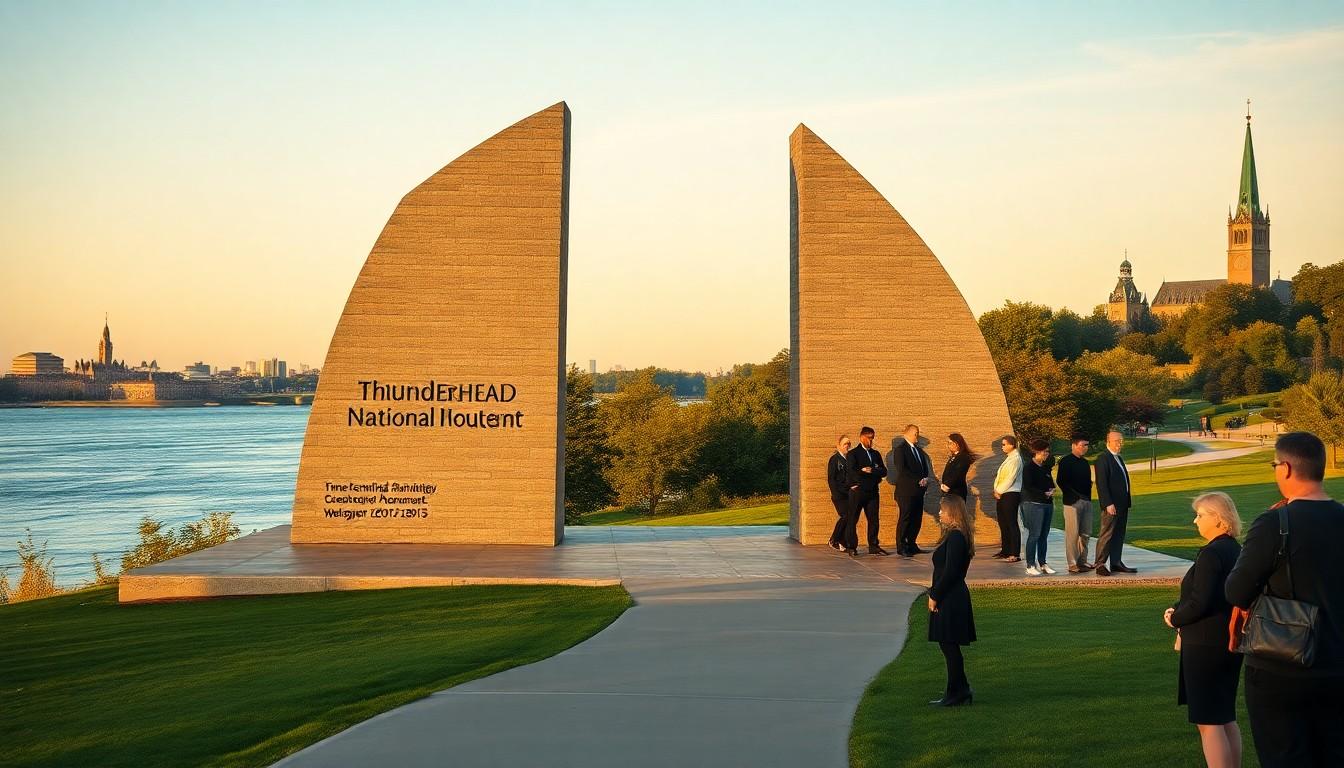
Visitors gathered in Ottawa on 21 August 2026 as Thunderhead, Canada’s first national monument dedicated to 2SLGBTQI+ people, was unveiled beside the Ottawa River. Created to remember the government’s LGBT Purge, the striking memorial offers survivors, families and future generations a place to reflect, gather and keep the story visible.
Essential Takeaways
- A national first: Thunderhead is Canada’s first national monument dedicated to 2SLGBTQI+ people.
- A difficult history: It commemorates the LGBT Purge, a decades-long campaign that targeted queer employees in the military, RCMP and federal public service.
- A powerful setting: The monument stands near the National Archives and Supreme Court of Canada in Ottawa.
- A survivor-led legacy: Settlement funds from the 2018 class action helped support the monument and wider remembrance projects.
- A joyful opening: Music, speeches and an impromptu dance brought celebration alongside remembrance.
A monument born from a painful chapter
Thunderhead stands on the Ottawa River, but its story reaches across more than four decades of Canadian history. From the 1950s to the mid-1990s, government agencies investigated, harassed and dismissed 2SLGBTQI+ employees under the claimed justification of national security.
The campaign, now known as the LGBT Purge, damaged careers, relationships and lives. According to the Government of Canada, the monument is intended to recognise those experiences and acknowledge the wider impact on 2SLGBTQI+ communities.
That setting matters. Positioned below the National Archives and Supreme Court of Canada, Thunderhead places this history close to the institutions connected with public memory, law and government. It isn't tucked away in a quiet corner. The message is deliberately hard to miss.
Why the 2018 settlement still matters
The formal end of the Purge came after legal action in the early 1990s, but meaningful recognition took longer. Survivors secured a class action settlement with the Canadian government in 2018, creating funds for compensation, education and commemorative work.
The LGBT Purge Fund helped turn that commitment into something visible and lasting. The organisation says Thunderhead is part of a broader effort to honour survivors while supporting projects that preserve stories often pushed out of the official record.
For communities outside Ottawa, that funding has also created ways to participate. Calgary-based Unison Choruses Canada, for instance, received support for three choral works exploring the experiences of people affected by the Purge. A monument may be made of stone, metal and design, but its reach can be musical, local and deeply personal.
Thunderhead opened with reflection and celebration
The dedication brought together survivors, advocates, politicians, artists and community members on a bright summer day. The Governor General of Canada, Louise Arbour, attended, alongside former Prime Minister Justin Trudeau, who delivered a formal apology to survivors in 2017.
The ceremony included remarks from queer writers, political figures and representatives of the LGBT Purge Fund. Music came from SoulBear, the Ottawa Queer Youth Choir, Calamine and Jeremy Dutcher, giving the event an atmosphere that was reflective without becoming solemn from start to finish.
According to the Governor General's office, the opening was both a commemoration and a public act of recognition. That balance felt especially apt: remembrance doesn't have to mean standing still, and the gathering ended with an impromptu dance led by the Governor General at the monument's foot.
What visitors can expect from the site
Thunderhead includes an interpretive panel explaining the history behind the monument. For first-time visitors, the nearby National Archives and Supreme Court provide useful context, although the memorial itself is the central point of the visit.
The Government of Canada describes the site as a place for remembrance, learning and reflection. Visitors should allow time to read the text rather than treating it as a quick photo stop. The most significant details are historical and human, not simply architectural.
It's also worth approaching the monument with care. The Purge affected people in different ways, and some survivors and families may experience the site as an important homecoming, while others may find it painful. A little quiet attention goes a long way.
A landmark with work still ahead
The opening of Thunderhead is a major milestone, but it isn't the end of the conversation. The monument remembers a government-led injustice while also pointing towards the continuing need to protect 2SLGBTQI+ rights.
Advocacy Canada described the project as an important national act of recognition, particularly because it places queer history within the country's public landscape. That visibility can help challenge the comforting idea that discrimination was always somewhere else, or happened only long ago.
For survivors such as Calgary's Nancy Miller, and for the people carrying these stories forward, Thunderhead offers something more than a permanent marker. It creates a gathering place where grief, pride and determination can share the same view of the river.
A place of memory can also become a place of momentum.
Source Reference Map
Story idea inspired by: [1]
Sources by paragraph:
- Paragraph 1: [2], [4]
- Paragraph 2: [2], [5]
- Paragraph 3: [2], [7]
- Paragraph 4: [4], [6]
- Paragraph 5: [3], [6]
- Paragraph 6: [2], [5]
- Paragraph 7: [4], [6]
- Paragraph 8: [3], [4]
- Paragraph 9: [2], [7]
- Paragraph 10: [2], [3]
- Paragraph 11: [5], [7]
- Paragraph 12: [2], [6]
- Paragraph 13: [3], [5]
- Paragraph 14: [2], [4]