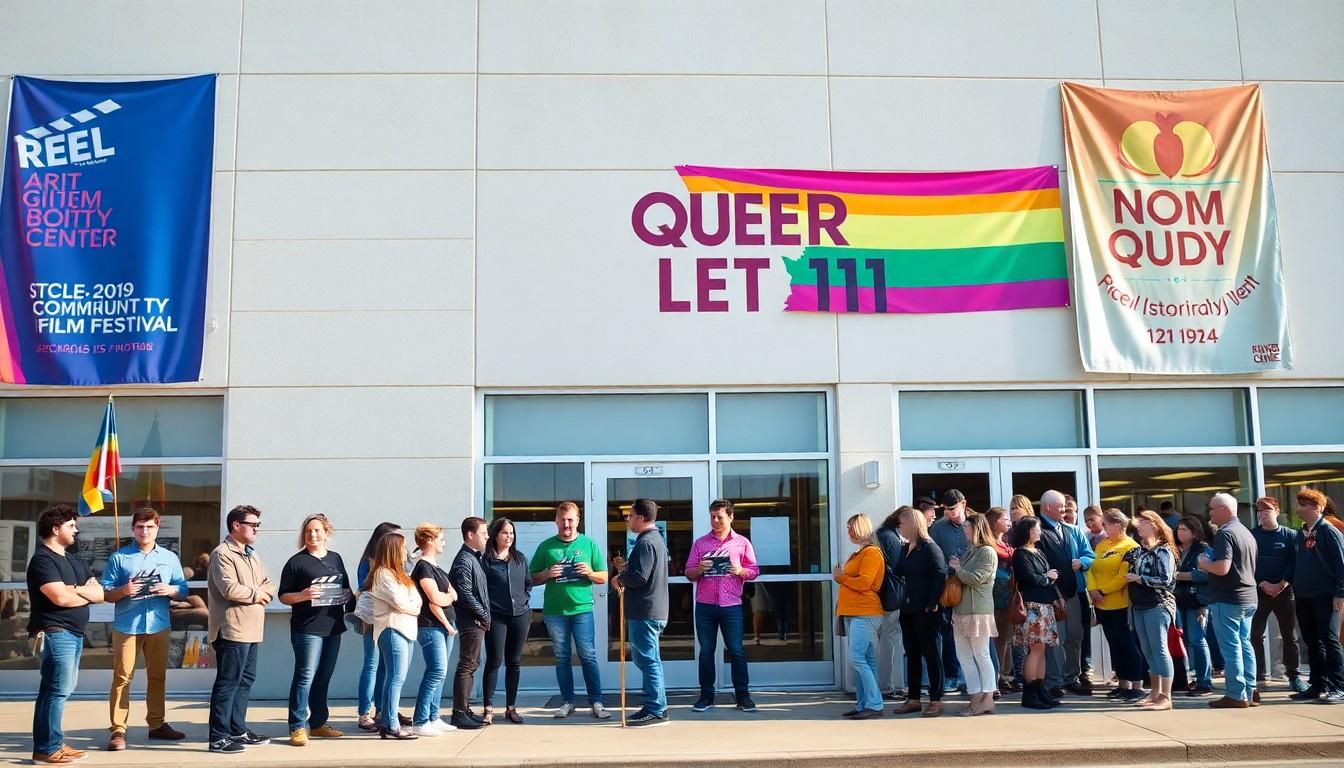
Festivalgoers gathered in Arkansas for a poignant celebration of queer film, community and belonging, just after the reported deaths of Dolly Parton and Tim Curry. Their influence, alongside local storytelling and live performance, gave this year’s Reel Queer Film Festival an especially reflective mood.
Essential Takeaways
- A reflective opening: The festival began amid mourning for two cultural figures strongly associated with queer audiences.
- Local voices took centre stage: Arkansas filmmakers presented shorts and new ideas spanning comedy, surrealism and personal drama.
- Representation has grown: Organisers say the event has moved from struggling to find one local queer film to showcasing several.
- Rocky Horror still resonates: Tim Curry’s Frank-N-Furter remains a touchstone for gender expression and queer visibility.
- Community goes beyond cinema: Mixers, trivia, drag and documentary screenings turned the festival into a wider gathering space.
A sombre beginning gave the festival extra meaning
The Reel Queer Film Festival opened under a cloud of sadness, with conversations naturally turning to Dolly Parton and Tim Curry. For many attendees, the two performers represented different but overlapping routes into queer cultural memory: Parton through generous allyship and flamboyant glamour, Curry through a role that challenged gender norms head-on.
Parton’s connection with LGBTQ+ audiences has been widely remembered since her reported death. Local 10, the Los Angeles Times and the Human Rights Campaign each highlighted her long-standing reputation as a welcoming, supportive figure, particularly for people who saw her music, humour and unapologetic style as a form of encouragement.
Curry’s legacy felt just as present. His performance as Dr Frank-N-Furter in The Rocky Horror Picture Show helped make theatrical gender nonconformity visible to generations of viewers. As Queer Dispatch noted, Parton and Curry offered different kinds of queer cultural touchstones, but both helped audiences feel seen.
Rocky Horror remains a gateway to queer self-expression
There’s a reason Rocky Horror keeps returning to queer film nights, drag stages and midnight screenings. It’s loud, camp and gloriously unconcerned with behaving properly, which makes it feel less like an old film than a continuing invitation to loosen the rules.
Tom’s Guide recently explored how the film helped create a safe space for queer audiences during the 1970s, when mainstream representation was scarce and often hostile. Its legacy isn’t simply about shock value. It’s about the relief of entering a room where difference is celebrated rather than explained away.
That spirit came alive when local performer Athena Sinclair appeared in a Dr Frank-N-Furter costume, complete with corset, fishnets and towering platform shoes. The performance connected a classic queer text with a contemporary Arkansas audience, and offered a reminder that some cultural moments stay powerful because people keep remaking them.
Arkansas filmmakers are changing the conversation
The strongest argument for the festival may be its commitment to local work. Rather than treating queer cinema as something imported from larger cultural centres, Reel Queer gives Arkansas filmmakers room to tell stories rooted in their own communities.
This year’s programme included more than half a dozen short films by Arkansas creators, while a pitch competition brought a packed audience ideas ranging from broad comedy to surreal experimentation and stories shaped by religious trauma. That mix matters because queer life rarely fits one tidy genre. Sometimes it’s hilarious, sometimes painful, and often both within the same afternoon.
One standout example followed an older closeted waitress whose defensive prejudice begins to soften when two young gay customers recognise what she’s hiding. The premise turns the usual generational script around, allowing younger queer people to offer help to someone who grew up without the language or safety they now possess.
The festival’s progress is measured in more than screenings
The event’s history reveals how quickly language and expectations can shift. Organisers once avoided using the word queer in the festival title, aware that older audiences might associate it with abuse and stigma. Younger people, meanwhile, were beginning to reclaim the term as a source of pride.
That tension still matters. Progress doesn’t erase the experiences of people who grew up hearing queer identity used as an insult, and a festival can become a meeting point between those memories and a more confident present.
The programme also reached beyond the cinema itself, with social gatherings, a trivia night, a drag performance and a documentary about the Sisters of Perpetual Indulgence. Their work combines charity, protest, theatrical costume and religious parody, showing how queer activism has often relied on creativity as much as confrontation.
A festival can feel like home
The closing documentary, Hunky Jesus, traced decades of the Sisters’ community work and protest, placing humour alongside serious campaigning. Its inclusion widened the festival’s focus from films about queer lives to the organisations and traditions that have helped protect those lives.
That sense of continuity ran through the whole event. Older cultural icons, established performers, emerging directors and first-time festivalgoers all occupied the same space, with each generation bringing its own memories and questions.
For some, the emotional centre was a familiar Rocky Horror song. For others, it was seeing local filmmakers take the stage in a state where queer representation can still feel hard-won. Either way, the festival made a persuasive case that cinema is not merely something to watch. It can be a doorway, a meeting place and, occasionally, a home.
A welcoming film festival can turn remembrance into connection, and that’s a legacy worth carrying forward.
Source Reference Map
Story idea inspired by: [1]
Sources by paragraph:
- Paragraph 1: [2], [3]
- Paragraph 2: [4], [5]
- Paragraph 3: [6]
- Paragraph 4: [7]
- Paragraph 5: [7]
- Paragraph 6: [2], [3]
- Paragraph 7: [4], [5]
- Paragraph 8: [6]
- Paragraph 9: [7]
- Paragraph 10: [2], [4]
- Paragraph 11: [5]
- Paragraph 12: [6]
- Paragraph 13: [7]
- Paragraph 14: [2], [3]
- Paragraph 15: [4], [5]
- Paragraph 16: [6]
- Paragraph 17: [7]