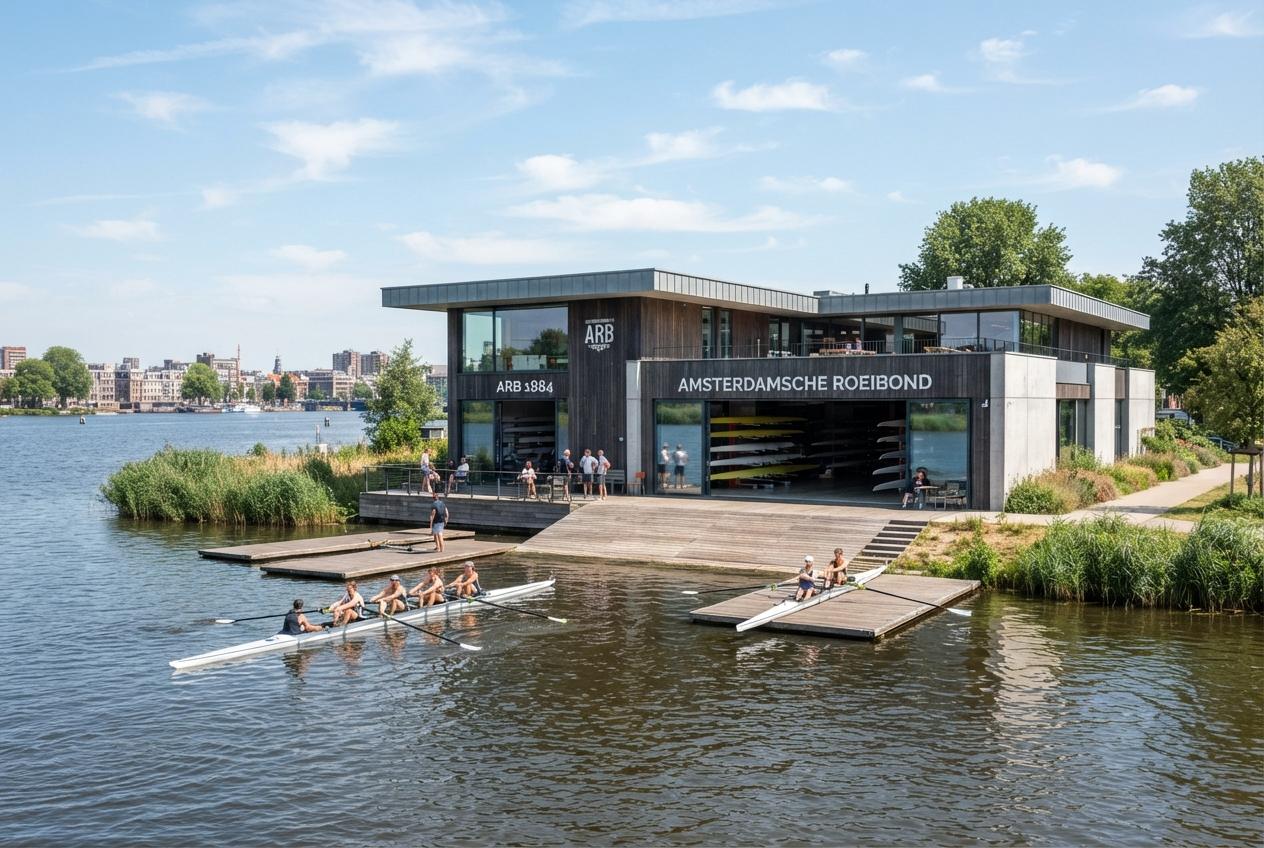
Rowers gathered in Amsterdam for the 2026 World Rowing Championships delivered a striking mix of record-breaking racing and LGBTQ representation. Teal Cohen led the charge for the United States, helping retain the women’s coxless four title, while athletes from America and Germany added medals and momentum ahead of the Los Angeles 2028 Olympic and Paralympic Games.
Essential Takeaways
- Teal Cohen defended gold: The American helped the women’s coxless four set a world-best time of 6:09.87.
- Team USA bounced back: The regatta was the Americans’ strongest World Championships showing since 2018.
- LGBTQ athletes made a mark: Out rowers contributed to at least a third of the US medal haul in Amsterdam.
- More medals followed: Regina Salmons, Nina Castagna, Jess Thoennes and others also reached the podium.
- Los Angeles is next: Germany’s Till Martini remains focused on reaching the Paralympic Games in 2028.
Teal Cohen leads a record-breaking American revival
The loudest splash in Amsterdam came from the US women’s coxless four. Teal Cohen, Azja Czajkowski, Kaitlin Knifton and Molly Bruggeman stormed down the Bosbaan lake in 6:09.87, lowering a world record that had stood since 2014.
It wasn't just a victory, then. It was a statement, delivered with the sort of clean, relentless rhythm that makes rowing look almost effortless from the bank. World Rowing's event coverage highlighted the depth and drama of a championships that produced several memorable finals.
For Cohen, an openly gay athlete from Texas, the result also carried a personal dimension. She previously told Outsports that feeling able to live honestly within her team environment helped her perform at her best, a reminder that belonging can be every bit as practical as it is emotional.
Why this success matters after Paris
The American rowing programme arrived in Amsterdam with something to prove. At the Paris Olympics, the US collected just two rowing medals, both in men's events, leaving the squad searching for a stronger response before Los Angeles.
That response arrived in emphatic fashion. According to NBC Sports' coverage of the championships, the US produced its best overall World Championships performance since 2018, giving athletes and coaches a valuable lift with the next home Games approaching.
Cohen also added a bronze in the mixed eight alongside Czajkowski. The result makes her campaign particularly impressive, but the wider picture matters too: success was spread across several boats rather than resting on one headline crew.
Representation is growing across the rowing world
Cohen wasn't the only openly LGBTQ athlete to reach the podium. Bisexual rower Regina Salmons won bronze in the women's coxless pair with Mia Levy, while Nina Castagna coxed the US women's eight to bronze in an American-record time. Jess Thoennes, also openly bisexual, was part of that crew.
The pattern extended beyond the American team. Germany's pansexual athlete Tabea Schendekehl competed in both the coxless pair and women's eight, while gay German coxswain Till Martini raced in the mixed eight and the PR3 mixed coxed four.
University of Washington coverage also pointed to the scale of the championships' wider success, with alumni bringing home 15 medals. That kind of breadth matters because representation becomes more visible when it appears throughout a squad, not only in one celebrated final.
Is rowing becoming more welcoming?
Rowing still carries a buttoned-up image, with its traditional clubs, formal routines and famously demanding training culture. But the elite scene appears to be changing, especially as more athletes feel able to speak publicly about their identities.
Martini told Outsports that acceptance often comes down to the people around an athlete, rather than the boat itself. He described the German national-team environment as welcoming, while acknowledging that individual experiences can differ.
The numbers suggest a meaningful shift. There were no publicly out rowers at London 2012, followed by two at Rio 2016 and nine at both Tokyo and Paris, alongside a reserve athlete at Tokyo. Visibility doesn't solve every problem, but it gives younger rowers something vital: proof that a serious sporting future and an authentic personal life can sit in the same boat.
The Los Angeles target is already in view
Martini has moved into para-rowing and still hopes to reach the 2028 Games, now with the Paralympics as his goal. His appearance in Amsterdam was an important step, offering senior World Championships experience while keeping that longer-term ambition alive.
For Team USA, meanwhile, the results offer renewed confidence before a home Olympics. Cohen's world title, the mixed-eight bronze and the run of performances across the squad make the next two years look considerably more promising than they did after Paris.
There is something quietly powerful about that progress. A sport once seen as conservative is becoming more open, more visible and, on the evidence of Amsterdam, very quick indeed.
It's a small but significant sign that rowing's future is becoming more inclusive and competitive.
Source Reference Map
Story idea inspired by: [1]
Sources by paragraph:
- Paragraph 1: [2], [6]
- Paragraph 2: [6], [7]
- Paragraph 3: [2], [3]
- Paragraph 4: [4], [6]
- Paragraph 5: [4], [7]
- Paragraph 6: [2], [5]
- Paragraph 7: [2], [7]
- Paragraph 8: [2], [6]
- Paragraph 9: [2], [7]
- Paragraph 10: [2], [6]
- Paragraph 11: [2], [7]
- Paragraph 12: [4], [6]
- Paragraph 13: [2], [5]
- Paragraph 14: [2], [7]
- Paragraph 15: [2], [4]
- Paragraph 16: [2], [6]