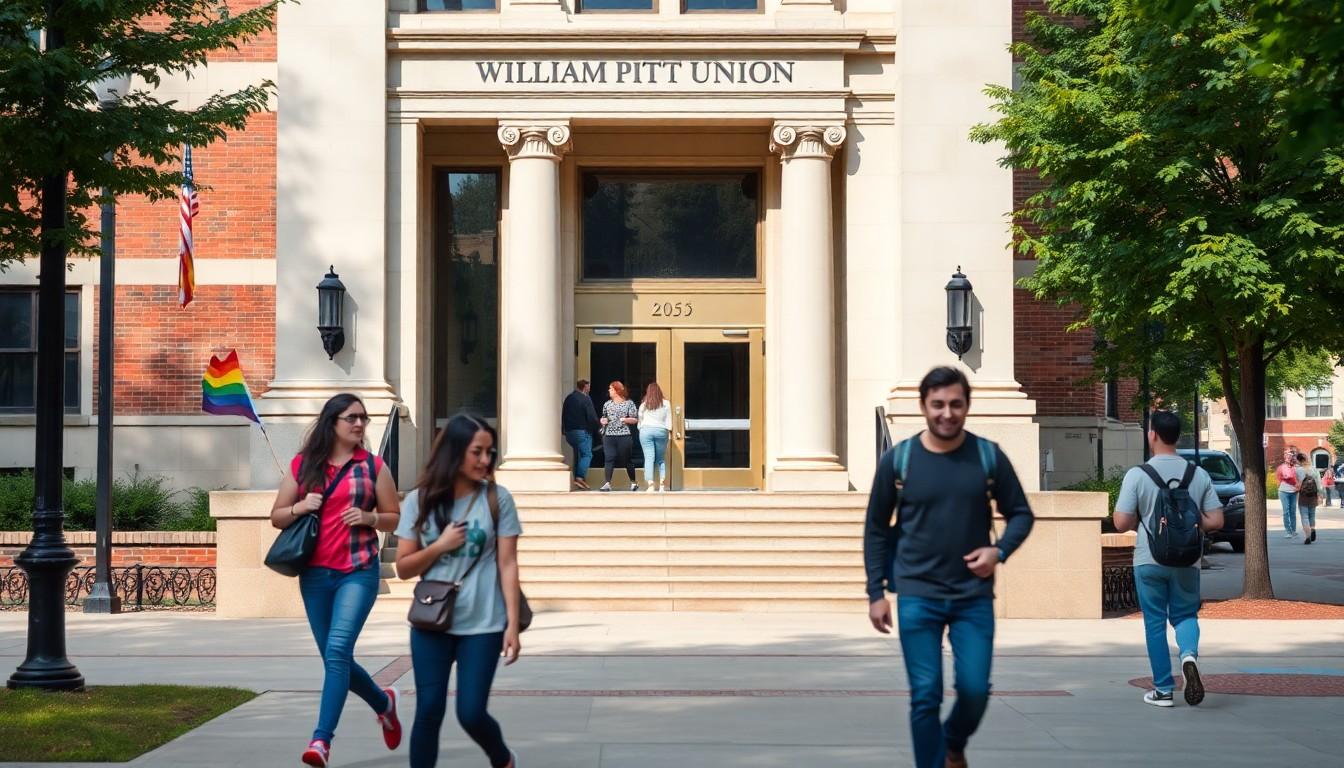
Students at the University of Pittsburgh are finding friendship, creative space and room to explore their identities through Rainbow Alliance. Based in the William Pitt Union, the student group offers a welcoming place to study, relax and meet other LGBTQ+ people, making campus life feel less isolating and more open to possibility.
Essential Takeaways
- A welcoming base: The Rainbow Office gives students somewhere to study, unwind and spend time with people who understand.
- Identity can stay fluid: Students don't need to arrive with every label decided or neatly explained.
- Community grows through activity: Crafts, conversations and collaborations create low-pressure ways to connect.
- Pitt has wider support: Rainbow Alliance sits within a broader network of LGBTQIA+ inclusion and student organisations.
- A simple first step: Turning up, asking questions and joining in can be enough to begin.
A room where students can simply be themselves
The most powerful thing about Rainbow Alliance may be what it doesn't demand. Students aren't expected to perform confidence, arrive with a polished identity or explain every part of themselves before they can take a seat.
QBurgh's visit to the University of Pittsburgh's Rainbow Alliance highlights the group's Rainbow Office on the sixth floor of the William Pitt Union. It's a practical, lived-in sort of space, where studying, making bracelets or taking a quiet break can sit alongside more serious conversations about identity and belonging.
That matters because university life can be exciting and lonely in equal measure. According to Pitt's LGBTQIA+ Inclusion resources, support for LGBTQIA+ students is part of the university's wider inclusion and belonging work.
You don't need every answer before you arrive
For some students, meeting other LGBTQ+ people is the first time they get to test out a new label, talk honestly about uncertainty or see a version of campus life that feels recognisably theirs.
Rainbow Alliance's message is reassuringly uncomplicated: students can turn up before they've worked everything out. That open-door approach takes pressure off what can otherwise feel like a very public process of self-discovery.
Pitt's Rainbow Alliance listing on Career Central presents the organisation as a student community and campus connection point. In practice, that can mean something as small as a friendly conversation, then something bigger over time, such as a circle of friends who make the university feel more manageable.
Creative meet-ups make connection feel easier
Not everyone wants to walk into a room and begin with a deep personal conversation. A bracelet, shared project or casual event gives people something to do with their hands while introductions happen naturally.
That low-pressure rhythm is one of Rainbow Alliance's strengths. The group also works alongside other queer student organisations, helping students discover that LGBTQ+ life at Pitt isn't limited to one club or one room.
Pitt's student organisation resources show how Rainbow Alliance forms part of a broader network of campus groups. Meanwhile, the university's PRISM programme offers another route into LGBTQ+ community and support, giving students more than one way to find a comfortable starting point.
Pitt's wider LGBTQ+ network matters
A student group's impact is easier to sustain when it has a larger campus ecosystem around it. The Rainbow Office, university inclusion services and related organisations can provide different kinds of help, from social connection to information and advocacy.
That wider picture has also helped shape Pitt's reputation. Pittwire has reported on the university's recognition among colleges supporting LGBTQ+ students, reflecting the importance of visible resources and an inclusive campus culture.
Still, rankings only tell part of the story. A student who finds a calm place to sit, a familiar face at an event or the confidence to say, "I'm still figuring it out," experiences inclusion in a far more immediate way.
How to find your place at Rainbow Alliance
The best approach is to start small. Look up current meetings or events, attend with a friend if that feels easier, and give yourself permission to leave after a short while if the setting doesn't feel right.
You can also begin without making a formal commitment. Ask what events are coming up, explore Pitt's LGBTQIA+ inclusion pages or browse the university's student organisation listings. The aim isn't to force instant belonging, but to create a few chances for it to develop.
Rainbow Alliance officers' advice, as shared by QBurgh, is to put yourself out there. That's easier said than done, but it doesn't have to mean making a grand entrance. Sometimes it simply means opening the door, choosing a chair and seeing who is there.
A small invitation can change the whole campus experience
Rainbow Alliance shows how community often begins with ordinary things: a room, a craft, a conversation and the relief of not having to explain yourself. For students navigating identity and university life, that can be a meaningful kind of support.
And for anyone wondering whether they belong, the answer may start with a visit rather than a declaration.
It's a small step, but it can make Pitt feel much more like home.
Source Reference Map
Story idea inspired by: [1]
Sources by paragraph: