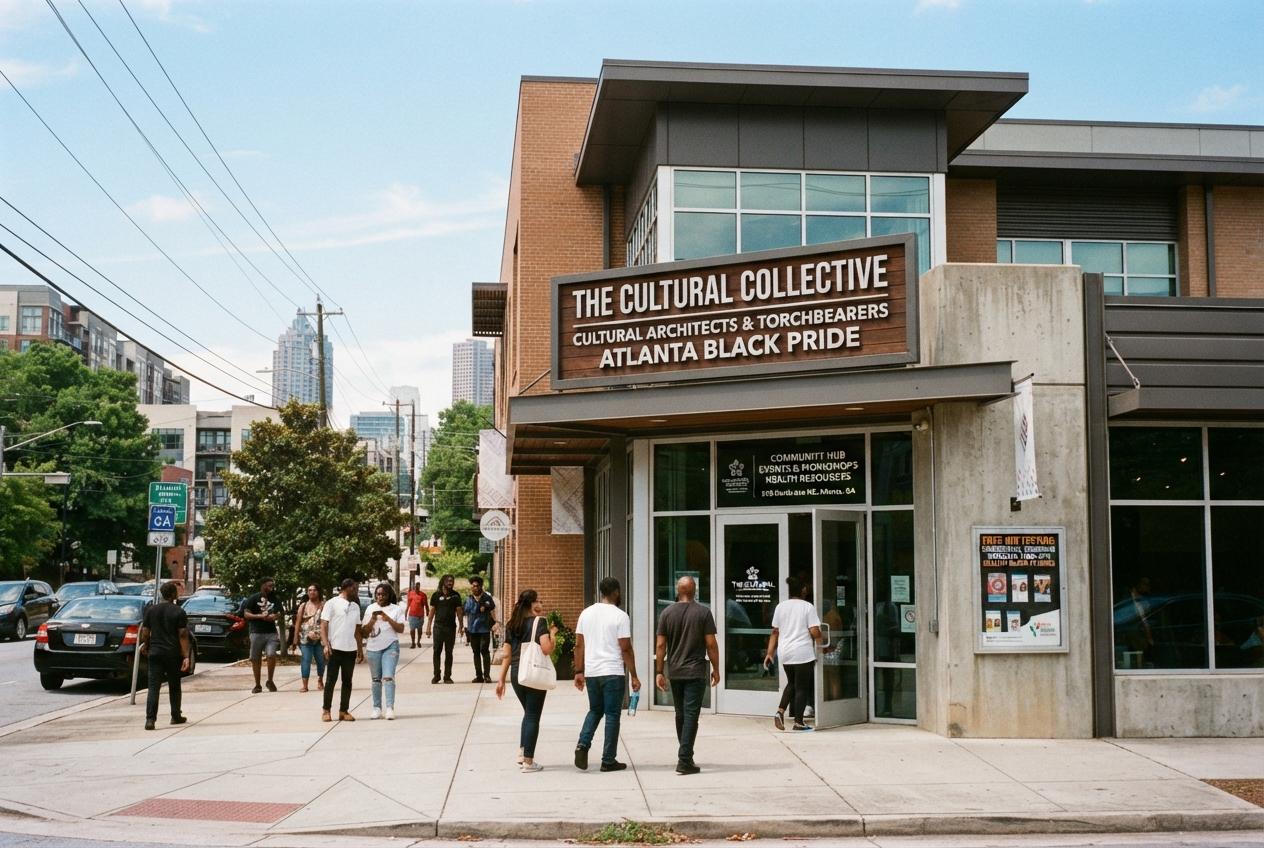
Atlanta Black Pride is creating space for a necessary conversation about the enduring bond between Black women and Black gay and queer men. With Bevy Smith and Patrik-Ian Polk leading the discussion, the event will explore culture, friendship, allyship and health, while asking what it really means to move closer when community tensions grow.
Essential Takeaways
- A timely Atlanta gathering: Cultural Architects & Torchbearers will take place during Atlanta Black Pride on 2 September.
- A powerful metaphor: Producer Nathan Hale Williams describes allyship as “moving your chair” towards someone else's experience.
- Culture is shared work: Black women and Black queer men have shaped fashion, music, language, television and nightlife together.
- Hard conversations matter: The programme will address misogyny, homophobia, transphobia and HIV education.
- The format feels intimate: An invite-only dinner will lead into performances, music and multimedia for around 150 guests.
The simple gesture with a bigger meaning
Sometimes allyship starts with something almost comically ordinary: pulling up a chair. At an Atlanta dinner years ago, Bevy Smith noticed Nathan Hale Williams sitting outside a conversation filled with influential cultural figures. Rather than leaving him at the edge, she invited him in and asked about his story.
That small act became a lasting symbol for Williams, who is producing Cultural Architects & Torchbearers: Muses, Co-Conspirators & Champions during Atlanta Black Pride. The event is designed to celebrate the connection between Black women and Black gay and queer men, not as a footnote to popular culture, but as part of its architecture.
According to the event announcement, the programme will combine conversation, live performance, music, movement and multimedia. It sounds polished, but the emotional centre is wonderfully straightforward: who gets welcomed to the table, and who is expected to remain outside it?
Why this conversation feels especially urgent
Smith and Williams are stepping into a moment when debates about gender and sexuality can become brutally polarised online. Their answer isn't another shouting match. Instead, they're proposing a room where people can listen, disagree and still recognise their shared stake in the wider Black community.
Smith has spoken about remembering what it felt like to be bullied or treated as an outsider. That history informs her belief in making space for people who aren't yet part of the inner circle. It also explains why her story with Williams has such resonance: the invitation wasn't performative, it was personal.
Time's reporting on Black queer culture and ballroom has similarly shown how creativity, survival and community often grow together. The lesson is easy to miss when audiences focus only on the finished look, the hit song or the famous name. Behind the glamour, there are usually networks of support doing the heavy lifting.
Black culture has always been collaborative
The relationship between Black women and Black gay and queer men is visible across fashion, beauty, music, television and nightlife. From styling and image-making to language and performance, each community has influenced the other in ways that are familiar to audiences but not always properly acknowledged.
Who What Wear's coverage of beauty after transition reflects a wider shift in how identity, presentation and self-expression are discussed in public. Meanwhile, Time has explored the long influence of Black women on American style. Put together, those conversations reveal a culture that isn't built in neat compartments.
Williams' own recollection of Smith's deep knowledge of designers and fashion history captures that exchange nicely. She didn't simply recognise labels, he recalled; she understood their origins and creative DNA. That kind of fluency can open doors, especially when someone has the generosity to share it.
Allyship means showing up when it's awkward
The phrase “moving your chair” works because it demands more than approval from a safe distance. Williams frames allyship as the choice to stand up for someone even when they're not in the room, particularly when doing so might cost social comfort or popularity.
That's where the discussion becomes practical. Support isn't only about attending a Pride event or posting a colourful graphic. It can mean challenging a sexist comment, refusing anti-LGBTQ+ gossip, learning the difference between identity and stereotype, or making sure a colleague's contribution is credited.
Those conversations may be uncomfortable, and Smith has acknowledged that tension is inevitable when communities address misogyny, homophobia and transphobia. Still, discomfort isn't automatically a sign that a conversation has failed. Sometimes it's evidence that people have stopped pretending everything is fine.
Health belongs in the room too
The Atlanta programme will also include health and wellness, with a focus on dignity, prevention, testing, care and reducing stigma. That matters because cultural connection and public health aren't separate subjects. Trust often determines whether people seek information, testing or treatment in the first place.
Williams has argued that HIV education remains urgently needed in Black communities. A status-neutral approach, which avoids treating people differently because of their HIV status, can help replace fear with accurate information and compassion.
Atlanta is a fitting setting for that blend of culture and care. The city has a major Black LGBTQIA+ community and Atlanta Black Pride draws people who understand that celebration can also be a form of organising. A good event leaves people entertained, but a meaningful one sends them home with something useful to do.
What happens after the spotlight fades?
The gathering is expected to begin with a dinner for community stakeholders before opening into a more immersive celebration for roughly 150 guests. Its intimate scale may be part of the point. Large platforms can raise awareness, but smaller rooms often make honest conversation possible.
The longer-term test will be whether the “moving your chair” idea travels beyond Atlanta. Can it shape how families respond when someone comes out? Can it influence who gets hired, credited, protected and heard? Can it turn familiar cultural solidarity into deliberate everyday action?
Smith and Williams are right about one thing: communities need one another. A chair moved a few inches won't solve every division, but it can signal that nobody has to remain at the margins alone.
It's a small gesture with the potential to change the whole room.
Source Reference Map
Story idea inspired by: [1]
Sources by paragraph:
- Paragraph 1: [2], [4]
- Paragraph 2: [2], [3]
- Paragraph 3: [4], [6]
- Paragraph 4: [6], [7]
- Paragraph 5: [7], [5]
- Paragraph 6: [4], [6]
- Paragraph 7: [2], [3]
- Paragraph 8: [2], [4]
- Paragraph 9: [3], [6]
- Paragraph 10: [2], [4]
- Paragraph 11: [4], [7]
- Paragraph 12: [5], [6]
- Paragraph 13: [2], [3]
- Paragraph 14: [4], [6]
- Paragraph 15: [2], [4]
- Paragraph 16: [3], [7]