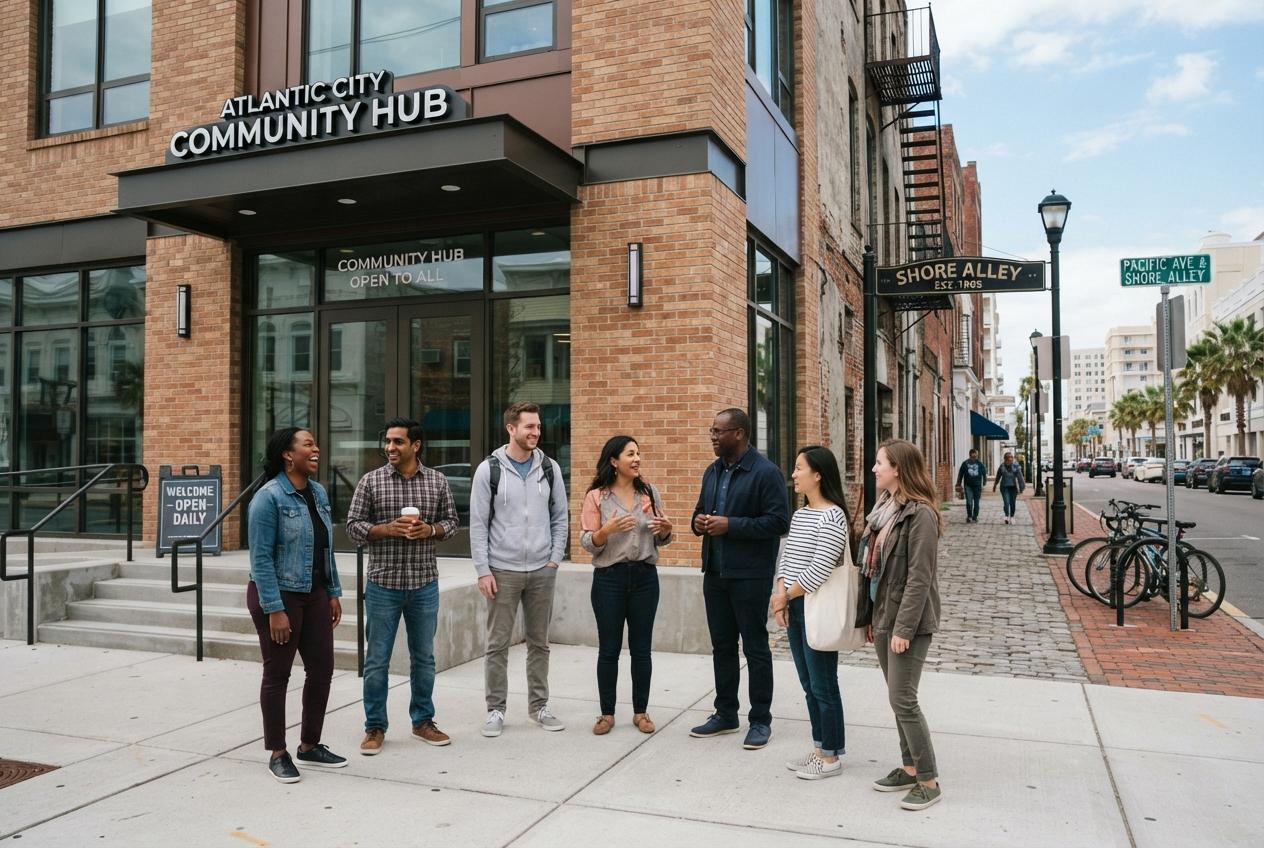
Residents across South Jersey may soon have a welcoming LGBTQ+ community centre closer to home, with Atlantic City chosen as the launch site for a new hub offering support, social events, history projects and practical resources. The initiative matters because many people currently travel to Philadelphia, North Jersey or New York to find connection and care.
Essential Takeaways
- A regional first: The Pride Center of Atlantic City aims to create South Jersey's first permanent LGBTQ+ community centre.
- Atlantic City launch: The city offers strong transport links, an established LGBTQ+ presence and a rich queer history.
- Practical support planned: Future services could include support groups, counselling, social gatherings and help finding local resources.
- History will be central: Organisers hope to preserve photographs, memorabilia and oral histories from the area's LGBTQ+ community.
- Community involvement matters: Volunteers, donors and people with planning, research or fundraising skills are being encouraged to get involved.
A New LGBTQ+ Community Centre Is Coming to Atlantic City
For many LGBTQ+ residents in South Jersey, finding a supportive space can involve a long drive, a bridge crossing or a trip into another state. That makes the planned Pride Center of Atlantic City feel less like another community project and more like essential local infrastructure.
The organisation is working towards a physical centre in Atlantic City, where visitors could eventually find practical guidance, peer support and a friendly place to meet. Its organisers want the space to serve people who are isolated, newly out, seeking sobriety support or simply hoping to meet others without having to plan a major journey.
Atlantic City's official visitor information already presents the destination as a place with a strong diversity and inclusion story, while local LGBTQ+ groups continue to promote events and community activity. That existing network gives the new centre something valuable to build on, rather than asking it to start from an empty room.
Why Atlantic City Makes Sense
Atlantic City was selected for more than its name recognition. It's a transport hub, it already hosts LGBTQ+ events and it has a distinctive queer history that organisers believe deserves greater visibility.
The city has long been associated with LGBTQ+ nightlife, activism and performance. Historical accounts of Atlantic City's queer community describe an active social scene stretching back decades, including bars, clubs and public spaces that helped people find one another when acceptance was far less visible.
That history gives the planned centre a sense of place. Organisers hope to display local art and memorabilia, while oral-history projects could capture memories from older residents before they're lost. It's a thoughtful idea, because a community centre shouldn't just provide a future-facing service; it should also show people what came before.
From Snake Alley to Shared Memory
One part of that story is the former Westminster Avenue, once known locally as Snake Alley and later renamed Schultz-Hill Boulevard. The area was part of an LGBTQ+ corridor that connected with New York Avenue, where queer venues and gathering places once helped shape Atlantic City's social life.
The city also played a role in New Jersey's legal history. A case involving Val's bar contributed to a landmark state Supreme Court ruling in 1967, which prohibited discrimination against LGBTQ+ people in New Jersey. The details may be unfamiliar to younger visitors, but they underline how local spaces can have influence far beyond their front doors.
Atlantic City's tourism and cultural organisations continue to highlight the city's diverse communities and history. A new centre could make that heritage easier to encounter in everyday life, with exhibitions, conversations and intergenerational events rather than a history lesson confined to a website.
What Could Visitors Expect?
The centre's programme is still taking shape, but planned services are expected to focus on connection and practical help. Support groups, counselling, small social events and resource-finding sessions are all being considered, alongside activities that bring different generations together.
That broad approach is important. Someone looking for a therapist may need a very different kind of welcome from someone hoping to make friends, find sobriety support or learn about local organisations. A flexible community hub can meet those needs under one roof, with a softer landing than searching online alone.
People looking for updates can follow AC Pride's official channels and sign up for news about events, fundraising and the eventual opening. Existing LGBTQ+ community-centre models, including those run by established organisations elsewhere in the United States, show how valuable a mixture of social, educational and support services can be.
Building South Jersey's Wider LGBTQ+ Network
The Atlantic City centre is intended as a starting point, not the final destination. Organisers have already held pop-up fundraising events in other South Jersey counties and hope to develop relationships with local groups rather than impose a single model from outside.
That collaborative approach could make the expansion more durable. Local organisers understand their own towns, while a regional centre can connect them with funding, publicity, volunteers and specialist support. Think of it as a network of smaller lights, with Atlantic City acting as the first bright point.
Funding will be crucial, particularly for staffing and day-to-day operating costs. Donations are one route, but people can also contribute through committee work, research, community relations, development and event planning. For anyone with useful expertise, that may be more valuable than simply turning up with a good idea and a folding table.
A Centre Built With, Not Just For, the Community
The most encouraging part of the project is its emphasis on listening. Its leaders have visited other LGBTQ+ centres to study how they operate, how they stay financially sustainable and how they respond to the people around them.
That groundwork suggests a patient launch rather than a rushed one. It also reflects a wider lesson: safe spaces work best when local people help shape them, from the first programme and opening hours to the language used on the front desk.
For South Jersey residents who've spent years travelling elsewhere for belonging, the prospect is understandably emotional. Sometimes a community centre is a counselling room or a noticeboard. Sometimes it's simply the first place where someone realises they aren't alone.
It's a small journey for some, but a life-changing one for others.
Source Reference Map
Story idea inspired by: [1]
Sources by paragraph:
- Paragraph 1: [2], [3]
- Paragraph 2: [2], [5]
- Paragraph 3: [3], [6]
- Paragraph 4: [4], [7]
- Paragraph 5: [4], [3]
- Paragraph 6: [4], [7]
- Paragraph 7: [3], [4]
- Paragraph 8: [2], [5]
- Paragraph 9: [2], [6]
- Paragraph 10: [5], [7]
- Paragraph 11: [2], [3]
- Paragraph 12: [2], [5]
- Paragraph 13: [3], [4]
- Paragraph 14: [2], [6]
- Paragraph 15: [5], [7]
- Paragraph 16: [2], [3]
- Paragraph 17: [2], [5]