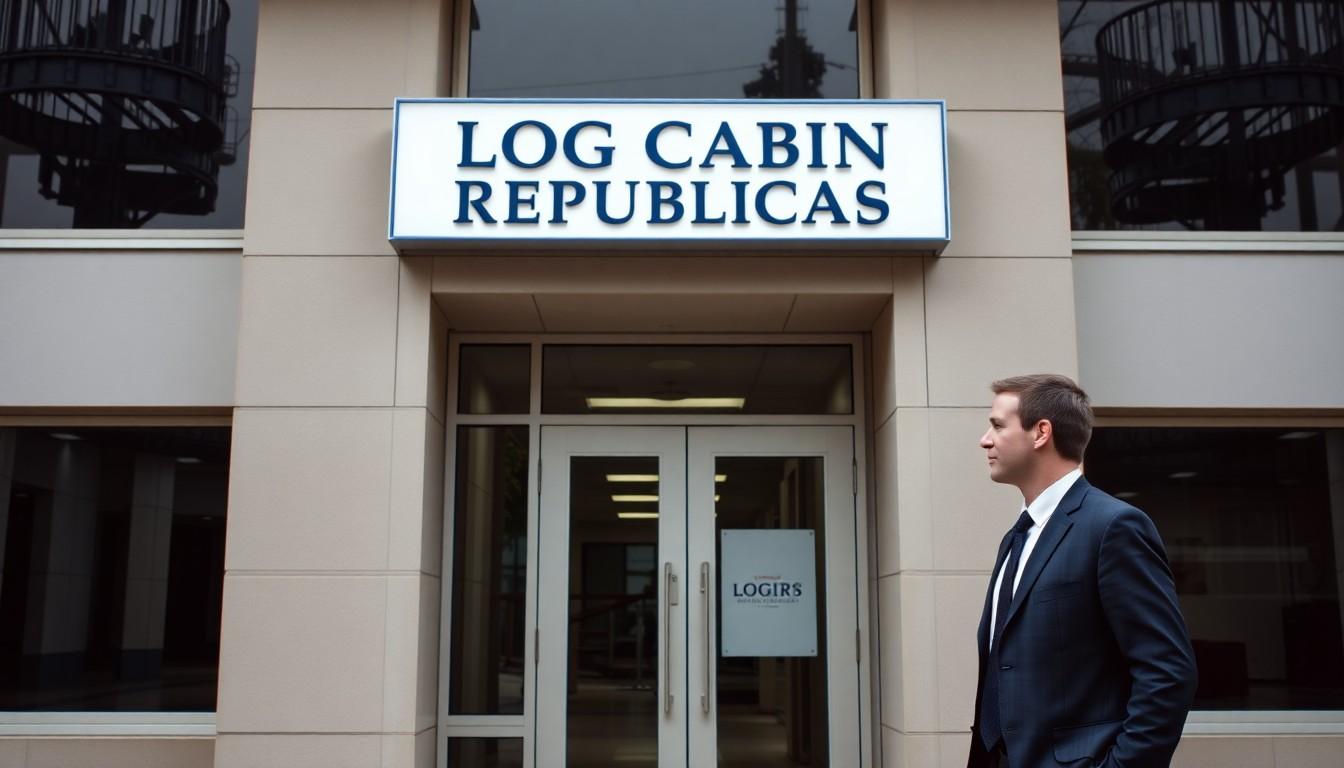
Notice how a single letter can unsettle an entire coalition: Log Cabin Republicans announced this week they will no longer describe themselves as LGBT, instead calling themselves an “LGB advocacy organisation.” That shift matters for party politics, for trans people, and for how conservatives debate family and rights in 2026.
Essential Takeaways
- Who made the change: Log Cabin Republicans, a conservative LGBT group, will now identify as an LGB advocacy organisation.
- Leadership rationale: President Ross Hemminger said the move returns the group to its founders’ mission and a “disciplined advocacy” focused on sexual orientation issues.
- Practical effect: The decision signals a withdrawal from explicit transgender advocacy, narrowing the group’s public priorities to LGB concerns like marriage and adoption.
- Emotional ripple: The change has stirred strong reactions , relief among some conservative members, anger and hurt among many trans people and allies.
- Policy implication: The shift reframes how the group will engage on family, reproduction and education debates within the Republican Party.
What actually happened , and why this letter matters
Log Cabin Republicans quietly but deliberately removed the T from their public description and framed it as a return to “principled” advocacy. The announcement reads less like a rebrand and more like a statement of limits, with leadership signalling they’ll emphasise sexual-orientation issues such as marriage and adoption. That’s a sensory detail worth noting , the move feels like a narrowing of focus, a quieter room in a previously noisy chorus.
For members and observers, the decision isn’t just semantic. It determines whose needs the organisation will champion and whose it won’t, and that has real-world consequences when laws and party platforms are being debated. Expect rapid responses from trans advocacy groups and mixed responses from conservative allies.
How conservatives see it , reclaiming “conservative” language
Supporters will say the change restores ideological clarity: they want an LGB group that fits comfortably inside conservative frameworks, emphasising liberty, marriage and parental rights over the broader set of transgender issues. That’s the argument from inside the organisation , a claim that trimming scope allows more effective advocacy on selected priorities.
But critics argue this is political triangulation, a way to curry favour with conservative voters while abandoning a vulnerable community. The tension reveals something bigger about the GOP in 2026: parties are still sorting which social changes they accept and which they reject, and advocacy groups that straddle identities have to pick battles or risk pleasing no one.
What this means for trans people and allies , immediate fallout
For many trans people the announcement is painful and practical. Dropping explicit support removes a formal ally in conservative circles at a moment when trans rights remain contested in courts, schools and healthcare settings. That absence isn’t hypothetical , it means fewer voices inside certain Republican spaces arguing for trans protections.
Allies now face a strategy decision: push Log Cabin to reverse course, build new conservative pro-trans organisations, or intensify partnerships with non-partisan groups. Each route has trade-offs; none are quick fixes.
The family debate beneath the headlines , adoption, surrogacy, and ethics
Leadership statements suggest emphasis on marriage and adoption, and that opens a larger policy debate about third-party reproduction and what family structures should look like under the law. Critics warn that normalising commercial reproduction can commodify children; supporters counter that loving homes and legal clarity matter most.
Whatever your view, the outcome is that Log Cabin’s pivot puts reproductive technologies and parenting rights at the centre of conservative-LGB discussion. If you’re assessing positions, look at whether proposals protect children’s relationships to biological parents, clarify rights in surrogacy agreements, and safeguard against exploitation.
What to watch next , politics, litigation and membership shifts
Expect quick political signalling: party figures, donors and allied groups will respond, and courts and legislatures may see fresh testimony or new briefs. Membership could shift as people who felt represented by the earlier LGBT framing reassess their affiliation. And the organisation’s credibility inside the GOP will depend on whether it can deliver on the “disciplined advocacy” it promises.
For everyday readers, this is a reminder that labels matter in politics and that organisational changes can reshape debates about rights, families and inclusion.
It's a small but consequential shift with implications for party politics and the people who live in its margins.
Source Reference Map
Story idea inspired by: [1]
Sources by paragraph: