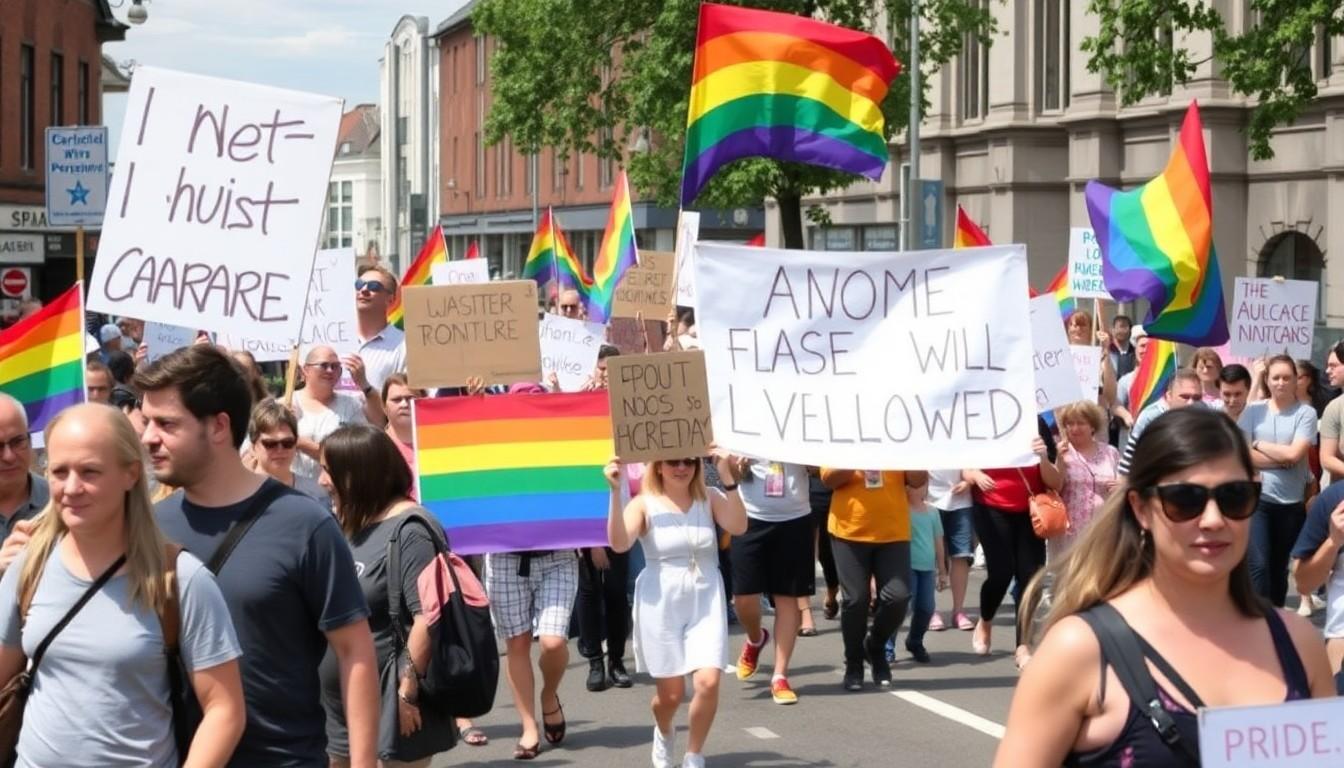
Shoppers and residents noticed a livelier, more political Pride this year as Zwolle swapped a municipal DJ bus for self-made protest signs; hundreds marched from Assendorp to the Grote Kerkplein, asking for real visibility, asylum welcome and a return to protest-rooted Pride.
Essential Takeaways
- Local-led shift: The Pride Walk became a Pride Mars organised by a different group, removing the city’s branded DJ bus and creating a grassroots vibe.
- Handmade impact: Many participants carried homemade protest boards, giving marches a tactile, earnest look and feel.
- Clear messaging: Signs called for better welcome for LGBTI+ asylum seekers and solidarity with people harmed abroad, and the march opened with a minute’s silence.
- Peaceful, supported route: Hundreds walked from Assendorp to the Grote Kerkplein, escorted by police, and received applause from passers-by.
- Community crossover: Events around the week included a colourful festival, city walk and concert, reconnecting Pride with culture and protest.
A brighter, rougher-edged Pride , people noticed the difference first
You could see it in the outfits and hear it in the chants: Pride in Zwolle felt more like protest and less like a commercial parade. Rodrigo Maori’s half-flower, half-black outfit told the story , colour for love, black for hate , and it was visibly handmade and thoughtful. According to local coverage, last year’s event ran into trouble when activists blocked the municipality’s DJ bus, arguing Pride had become too commercial, so this year organisers leaned into a more grassroots, protest-led format.
Why ditching the DJ bus mattered
The missing municipal banner and DJ van changed the tone quickly. Participants said the absence of an official party vehicle made space for genuine messages, not branding. Organisers rebranded the walk as a Pride Mars and encouraged people to craft their own placards in the week leading up to the event, which resulted in an array of creative, tactile banners that made the march feel earnest and human rather than staged.
Protest boards and political asks , what people were carrying
Many placards focused on the practical and the moral: the need to welcome LGBTI+ asylum seekers, solidarity with victims of violence abroad and the right to be different without fear. The route even started with a requested minute’s silence for those persecuted overseas, giving the event a solemn, political beat alongside the colour. That mix of celebration and seriousness is becoming a common theme in smaller Pride events that want to foreground rights over spectacle.
How the community responded , applause, escorts and calm
Despite the more political edge, the march proceeded calmly from Assendorp to the Grote Kerkplein, with police escorting hundreds of participants. Passers-by applauded, and attendees said the atmosphere felt inclusive and unproblematic compared with last year’s disruption. One marcher in a rainbow wig appreciated that the message reached the public without corporate intermediaries, which made voices feel more authentic and heard.
What this means for local Prides and festival clashes
Part of last year’s friction came from timing: Pride coincided with Zwolle’s Straatfestival, which diluted attention and fuelled criticism about commercialisation. This year’s approach , a distinct Pride Mars, community-crafted banners and related cultural events like a closing concert and city walk , avoided that overlap and broadened the conversation to include cultural connection and protest. It’s a model that other towns might look to if they want Pride to centre activists and asylum seekers rather than sponsors.
It's a small change with a noticeable effect: swapping a DJ bus for human voices and handmade signs made Pride feel like a protest again.
Source Reference Map
Story idea inspired by: [1]
Sources by paragraph: